How to Reduce Customer Churn and Keep Growing
TL;DR
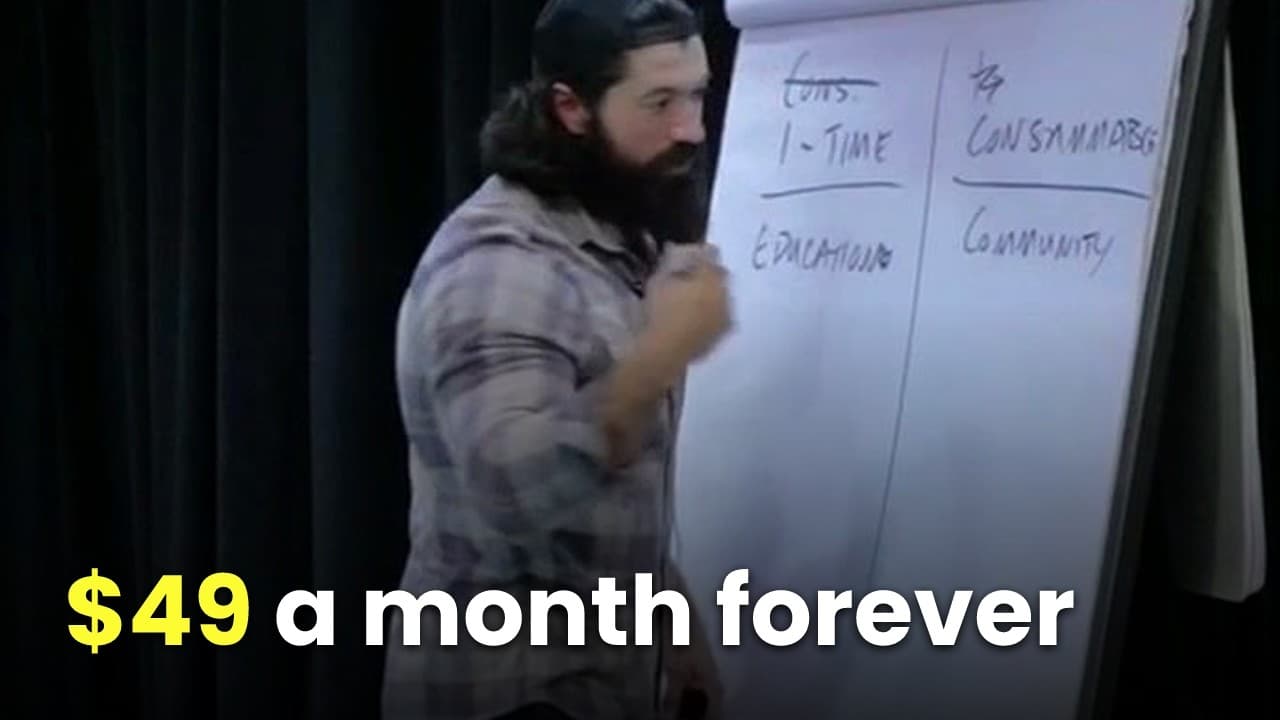
Sustainable growth requires an offer that customers keep paying for, so recurring value must come from ongoing benefits such as community, workouts, meal plans, and accountability. Charge separately for one-time education, then connect it directly to a lower-priced continuation membership without forcing customers through a second buying decision.
Transcript
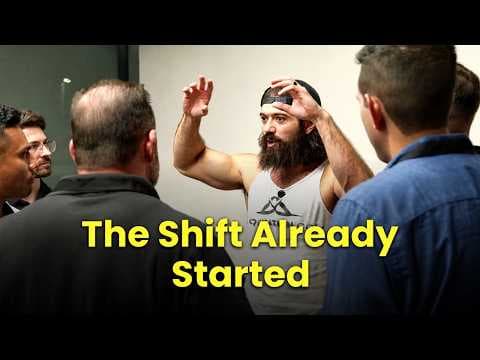
Hey Alex. >> Yeah, over here. >> I have a fitness and nutrition coaching business, but I think our unique value prop is that it's the values in the community. It's just petite women 5'4" and under, and it's kind >> The most 4' and under? >> Petite women 5'4", like short women. >> Okay. >> What I'm wondering is I'm more interested in building this b... Read More
Key Insights
- Customer churn is a structural barrier to growth because a business must repeatedly replace departing buyers before adding net new customers. If customers cycle out every six months, higher revenue depends on continually expanding marketing and sales rather than allowing recurring revenue to accumulate.
- Coaching businesses are not necessarily capped by their format. The limiting factor is often the combination of low lifetime value and weak retention, which makes them behave like generic service businesses that must constantly reload their customer base through additional acquisition.
- Recurring offers work best when they provide value customers continue to consume. Community access, new workouts, meal plans, and accountability can remain useful over time, unlike education that loses incremental value after the customer has already learned the material.
- One-time education should be billed as a one-time purchase because its value is primarily delivered when the customer learns the information. Continuing to charge for the same completed lesson creates a mismatch between the payment schedule and the customer's ongoing benefit.
- The big head, long tail model places high-value, one-time components at the beginning and follows them with a lower-priced recurring service. The upfront payment can cover acquisition costs or sales compensation, while the continuing offer builds durable revenue through retention.
- Monthly churn of 2% to 5% can make a lower-priced continuation offer viable, according to the advice given. Achieving that range requires making the recurring component as sticky as possible and ensuring customers regularly use the benefits included in it.
- A gap between an initial program and a continuation membership creates a second buying loop. Customers must reassess the recurring offer as a separate purchase, which contributed to only 55% of clients entering the $49 monthly membership in the example discussed.
- Onboarding and continuation can be sold as one connected offer: customers pay $3,000 to get started, then $49 per month to maintain access and results. This framing ties the smaller recurring payment to the value of the original purchase and removes a separate conversion step.
- More videos from this channel:
- More from this channel: MoreMozi
Install to Summarize YouTube Videos and Get Transcripts
Explore YouTube Video Summarizer or Get YouTube Transcript Extractor
Questions & Answers
Q: Why does customer churn prevent a business from growing?
Customer churn prevents durable growth because departing customers must be replaced before the business can produce net gains. If customers leave every six months, the company must keep increasing marketing and sales simply to reload its customer base. Doubling revenue then means selling to progressively more new customers instead of benefiting from recurring revenue that accumulates over time.
Q: Are coaching businesses inherently limited in scale?
Coaching businesses are not inherently limited merely because they sell coaching. The underlying constraint is often that they operate like generic service businesses with low lifetime value and low retention. When customers regularly leave, growth depends on continuous acquisition. A coaching company can improve its model by developing recurring benefits that customers have an ongoing reason to use and pay for.
Q: What is the big head, long tail business model?
The big head, long tail model separates a high-priced initial purchase from a lower-priced recurring offer. Valuable one-time education and setup are stacked at the beginning, which can help cover acquisition costs or sales compensation. Ongoing services are then priced lower and designed for retention, allowing recurring revenue to continue after the initial educational value has been delivered.
Q: How should one-time education be priced?
One-time education should generally be charged as a one-time purchase because the customer receives its core value by learning the material. The transcript compares this with learning arithmetic: once someone knows it, a course teaching the same material no longer provides the same incremental value. Pricing should therefore match when the educational benefit is actually delivered rather than extending billing indefinitely.
Q: What services can support a recurring membership?
A recurring membership can be supported by benefits that customers repeatedly consume, including community access, new workouts, meal plans, and accountability. These components continue to provide value after the initial education is complete. The goal is to identify which part of the offer people would pay annually to access, then make that ongoing benefit the core of the recurring service.
Q: How can a business reduce the drop-off into a continuation membership?
A business can reduce drop-off by selling the initial program and continuation membership together instead of asking customers to make a separate purchase later. In the example, the $3,000 program functions as onboarding, followed by a $49 monthly maintenance payment. Connecting both stages removes the second buying loop and frames continuation as part of the original customer relationship.
Q: What was wrong with offering membership after the 90-day program?
The 90-day program created a gap before the monthly membership, forcing clients to reconsider the $49 offer as a new purchase. Only 55% converted into continuation, and the membership experienced roughly 10% monthly churn. The recommended change was not necessarily to shorten the education, but to sell onboarding and ongoing maintenance together from the beginning.
Q: What monthly churn rate can make a continuation offer viable?
The advice identifies monthly churn of approximately 2% to 5% as a range that can make a recurring continuation offer viable. Reaching that range requires making the service as sticky as possible and focusing on benefits customers use regularly. The recurring price may need to be significantly lower than expected, while the initial one-time component may justify a significantly higher price.
Summary & Key Takeaways
-
Coaching businesses are not inherently capped, but short retention makes growth difficult because customers must continually be replaced. When customers leave every six months, doubling revenue requires rapidly increasing sales. A stronger model creates recurring value that stacks over time instead of relying entirely on repeated acquisition.
-
One-time education and recurring services should be priced according to when customers receive value. Education can justify a larger upfront fee, while community, new workouts, meal plans, and accountability can support a lower recurring charge. Combining them at one monthly price can make later payments feel disconnected from ongoing value.
-
The discussed business charges $3,000 for a 90-day program and offers a $49 monthly continuation membership, with 55% converting and roughly 10% monthly churn. The recommendation is to sell both as one connected offer, positioning the initial program as onboarding and the recurring payment as ongoing maintenance.
Read in Other Languages (beta)
Share This Summary 📚
Summarize YouTube Videos and Get Video Transcripts with 1-Click
Try YouTube Summary with ChatGPT & Claude or YouTube Transcript Generator
Explore More Summaries from MoreMozi 📚

Summarize YouTube Videos and Get Video Transcripts with 1-Click
Try YouTube Summary with ChatGPT & Claude or YouTube Transcript Generator