How to Grow Organic Content Through High Volume
TL;DR
Organic growth comes from publishing a large volume of content, reviewing what performs, and applying those lessons to the next batch. Instead of posting many organic variations of the same idea at once, creators should make distinct pieces, re-edit promising failures with stronger hooks, and repeatedly alternate between increasing quality and increasing output.
Transcript
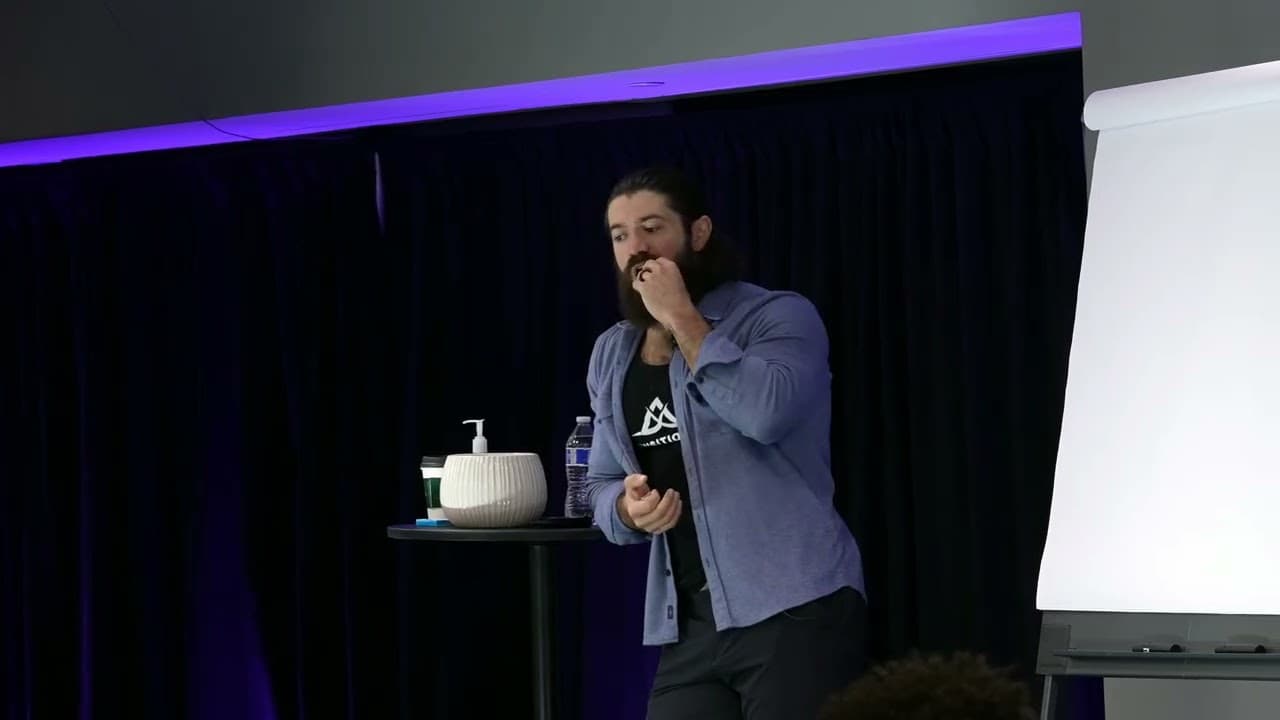
Rock and roll. >> Hey. My name's Gabriel. Sell solar. Also have a personal brand that helps Christian men be better. I have no plan to monetize this at this point. Just simply help people find Jesus and the goal is to gain a following at this time. Um question is on organic content. That's our biggest constraint. We are putting out 350 to 400 piece... Read More
Key Insights
- Organic split testing is different from paid-ad testing because publishing 10 hooks for the same piece of content would make a public profile look repetitive. Creators should instead publish distinct pieces and use overall performance patterns as their testing mechanism.
- A promising organic post can be re-edited with a new hook when the creator believes the underlying idea was strong but the original version performed poorly. This preserves the idea while testing whether its opening limited distribution or viewer interest.
- The core learning process is to publish roughly 100 pieces, review which ones performed well, identify what distinguished them, and add those findings to a production checklist. The next 100 pieces then become a practical test of the revised process.
- Content quality improves through accumulated production rules. The speaker says long-form YouTube videos use extensive checklists, including instructions for visual treatment when Alex begins a story and special attention to the introduction because it is particularly important.
- The normal creative cadence alternates between better and more. A creator may reduce output to spend more time on each post, learn to produce that higher-quality format efficiently, increase volume again, and then refine the strongest results further.
- Posting-frequency mythology should not control an organic strategy. Claims about strict daily limits or ideal posting times are challenged by the example of a Bollywood Instagram account that reportedly publishes 100 times daily and receives nine billion monthly views.
- Frequent posts do not necessarily overwhelm the same followers because the speaker estimates that only 1% of an account's audience sees a given piece. The platform can distribute subsequent posts to other people rather than repeatedly showing everything to the same viewers.
- Social platforms are incentivized to distribute content that people find valuable. Supplying more content gives a platform more opportunities to find suitable viewers, so creators seeking faster organic growth should focus heavily on increasing useful input and maintaining that effort over time.
- More videos from this channel:
- More from this channel: MoreMozi
Install to Summarize YouTube Videos and Get Transcripts
Explore YouTube Video Summarizer or Get YouTube Transcript Extractor
Questions & Answers
Q: How do you test organic content across social platforms?
Organic content should be tested through repeated publishing and retrospective analysis, not by posting 10 nearly identical hook variations to the same public profile. Create distinct pieces, track which ones perform well, and compare them with weaker posts. If a strong idea unexpectedly fails, re-edit it with a different hook. Turn repeated observations into checklist items for future production batches.
Q: Why should organic content not be split-tested like paid ads?
Paid advertising can run multiple hooks, bodies, and calls to action without filling a public profile with repetitive versions. Organic posting is different because viewers could encounter numerous variations of the same content, which would look odd. The suggested alternative is to publish many distinct pieces, let performance reveal useful patterns, and selectively rework promising posts that underperform.
Q: What should creators do when a strong post performs poorly?
A creator who believes an idea was genuinely strong can re-edit the post and replace its hook. This tests whether the opening, rather than the core subject, caused the weak result. The recommendation is not to publish 10 versions simultaneously. Instead, reuse the promising idea selectively while continuing to produce enough distinct content to generate broader performance evidence.
Q: How does the 100-piece content improvement cycle work?
The process begins by producing roughly 100 pieces of content. Afterward, the team reviews which pieces succeeded, compares them with those that did not, and identifies meaningful differences. It then adds about two new points to its production checklist and applies them across the next 100 pieces. Repeating this cycle turns performance observations into consistent production practices.
Q: How can a content checklist improve long-form YouTube videos?
A checklist captures lessons that a team has learned from earlier publishing batches and makes those lessons repeatable. The speaker says the long-form YouTube process uses extensive checklists, including what should happen visually when Alex enters a story. The checklist also gives particular attention to the introduction, which is described as especially important for long-form content performance.
Q: Should creators prioritize content quality or publishing volume?
Creators should alternate between improving quality and expanding volume rather than treating the two as permanent opposites. High output provides enough results to reveal what works. The creator can then make fewer pieces with greater care, become efficient at that stronger format, increase output again, and devote additional effort to the versions that show the most promise.
Q: Do social platforms impose strict optimal posting limits?
The speaker advises creators not to worry about claims that Instagram can handle only two daily posts, TikTok has another fixed maximum, or content must appear at specific times. As a counterexample, he cites a Bollywood Instagram account that reportedly posts 100 times per day and receives nine billion views per month. His conclusion is that creators are generally not publishing enough.
Q: Why can frequent organic posting increase content distribution?
Frequent posting gives a platform more material to match with people who may find it valuable. The speaker estimates that only 1% of an account's audience sees an individual post, so closely timed posts do not necessarily reach the same people. Because platforms are incentivized to distribute valuable material, additional useful content creates more opportunities for broader organic reach.
Summary & Key Takeaways
-
Organic content cannot be split-tested exactly like paid advertising because publishing numerous hook variations for the same piece would look repetitive on a public profile. A more practical approach is to create distinct posts, observe their results, and re-edit a promising piece with a new hook when its performance seems unexpectedly weak.
-
The recommended learning cycle uses batches of roughly 100 pieces. After each batch, creators identify differences between successful and unsuccessful posts, convert those observations into checklist items, and apply the additions to the next batch. Long-form YouTube production can eventually develop extensive checklists for introductions, stories, and visual presentation.
-
Content creators naturally alternate between producing more material and improving each piece. High output reveals patterns, while additional production effort can raise average performance. Posting frequency myths should not distract creators because platforms are motivated to distribute material viewers find valuable, and only a small portion of an account's audience may see each post.
Read in Other Languages (beta)
Share This Summary 📚
Summarize YouTube Videos and Get Video Transcripts with 1-Click
Try YouTube Summary with ChatGPT & Claude or YouTube Transcript Generator
Explore More Summaries from MoreMozi 📚

Summarize YouTube Videos and Get Video Transcripts with 1-Click
Try YouTube Summary with ChatGPT & Claude or YouTube Transcript Generator