How to become a super communicator that connects people
TL;DR
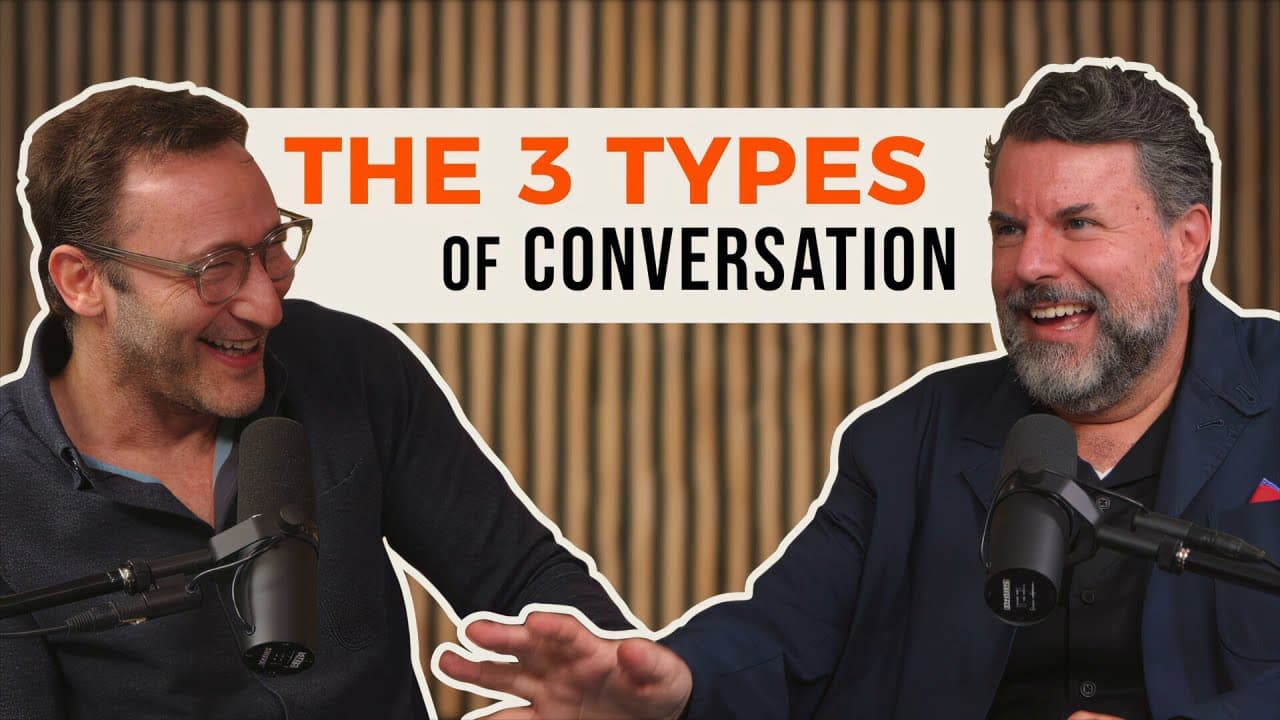
Super communicators are built, not born, and anyone can learn the skills to invite others into a conversation. The book and the interview emphasize telling the right middle of the story, presenting enough evidence, and letting the audience reach the conclusion with you. Honest moments and practical techniques unlock deeper neural entrainment and connection.
Transcript
one of the things that I like about you is your books are different oh thanks you know it's like sometimes writers they they're they write like here's a book and here's another book that's kind of like the other book you know and I I like that your books are different I mean the whole point of I think a good book and I think it's what what's so nic... Read More
Key Insights
- A super communicator is someone who has deeply studied how to communicate and can invite others into the conversation rather than dominate it.
- The goal of communication is to align brain activity and create a shared neural state, which is described as neural entrainment in the talk.
- Effective communicators focus on the middle of the story where the important actions happen, rather than just the beginning or end.
- Great communicators are self made, with no fixed personality type guaranteeing success, and skill can be learned by anyone.
- Observing and understanding the audience’s needs helps tailor messages so that conclusions feel inevitable and obvious to them.
- Honesty in dialogue can salvage conversations, as shown by the CIA recruiter Jim’s moment of candor transforming a recruitment outcome.
- Stories play a crucial role in conveying ideas, building connection, and guiding audiences toward shared understanding.
- The science of communication has improved through neuroimaging and data analytics, making it easier to identify effective strategies and replicate them.
- More videos from this channel:
- More from this channel: Simon Sinek
Install to Summarize YouTube Videos and Get Transcripts
Explore YouTube Video Summarizer or Get YouTube Transcript Extractor
Questions & Answers
Q: What makes someone a super communicator according to the podcast
A super communicator is someone who has thought deeply about how to communicate and can invite others into the conversation. They break through barriers to connect with people, establish flow, and create a shared experience. They also recognize the importance of neural entrainment, where brain activity aligns during dialogue, signaling deep connection.
Q: How does the middle of a story contribute to effective communication
The middle of a story is where the important actions happen, and focusing there helps maintain engagement and relevance. By guiding listeners through the process and evidence, the speaker allows the audience to reach the conclusion alongside them, avoiding a sense of someone simply showing off their own cleverness.
Q: What personal transformation did Charles Duhigg discuss about becoming a better communicator
Charles explains that becoming a better communicator is about learning and practice, not innate talent. He emphasizes that even famous figures like Steve Jobs or Ronald Reagan struggled in their early days, but improved by studying how to communicate, which aligns with the book’s central claim that these skills are teachable.
Q: What role does honesty play in effective communication
Honesty is presented as a critical lever for trust and connection. In the CIA recruitment anecdote, a moment of frank self reflection from Jim leads to a breakthrough, demonstrating that candor can change the trajectory of conversations and open doors that a polished script might miss.
Q: How is neural entrainment relevant to everyday conversations
Neural entrainment refers to synchronized brain activity between speakers and listeners during a conversation. The talk describes it as a sign of genuine connection, where aligned heart rates, pupil dilation, and brain waves indicate that participants are sharing the same mental state, enhancing understanding and empathy.
Q: Why is storytelling important for explaining ideas
Stories help people relate to complex ideas on an emotional level, making abstract concepts concrete. The discussion argues that stories provide a bridge for listeners to experience an idea, making it easier to retain, accept, and apply the message in real life.
Q: What does the book Supercommunicators aim to teach readers
The book aims to teach that great communication is a learnable set of skills. It offers frameworks and examples to help readers build the ability to connect with others, guide conversations, and influence outcomes by focusing on evidence, honesty, and shared goals.
Q: What can listeners take away about becoming a better communicator in daily life
Listeners can take away that anyone can improve their communication by practicing the middle portion of conversations, seeking to understand others, and aligning on shared objectives. By studying real world examples and applying simple techniques, they can foster clearer dialogue, stronger relationships, and more productive collaborations.
Summary & Key Takeaways
-
A reader and listener are guided to see that great communication is a learned practice and not a fixed trait, which shifts the approach from performance to collaboration.
-
The discussion highlights the importance of guiding the audience through the learning journey, rather than delivering a dramatic reveal at the end, to foster alignment and engagement.
-
The CIA recruiter story illustrates that honesty and shared goals can transform a difficult situation into a successful collaboration, demonstrating practical outcomes of communicative skill.
Read in Other Languages (beta)
Share This Summary 📚
Summarize YouTube Videos and Get Video Transcripts with 1-Click
Try YouTube Summary with ChatGPT & Claude or YouTube Transcript Generator
Explore More Summaries from Simon Sinek 📚




Summarize YouTube Videos and Get Video Transcripts with 1-Click
Try YouTube Summary with ChatGPT & Claude or YouTube Transcript Generator