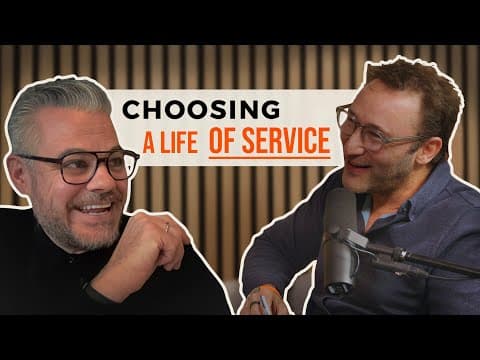
What builds lasting friendship, according to Fredrik Backman

TL;DR
Backman argues that meaningful friendships are built through consistent effort and showing up for others, not luck. He credits a close, decades-long friendship for shaping his views on leadership and empathy and emphasizes that being genuinely happy for others strengthens bonds. The conversation also explores editing each other to grow and the courage to be honest about anxiety in public settings.
Transcript
My best friend and my wife, if they would have if they would have gone on one of like the matchmaking websites or something, if they would have put themselves through an algorithm and said, "Find me a person," they would have never found me. Like, never in a million years would an algorithm have said, "This this lunatic, he's the guy for you." Neve... Read More
Key Insights
- Backman says meaningful friendships are built with intention and repeated effort, not random chance.
- The key to strong friendships is celebrating others’ successes without envy, fostering genuine happiness for each other.
- Leadership in friendship comes from responsibility to others and being of service, not just position or charisma.
- People have a small circle of friends they can brag to, separate from those they vent to during tough times.
- Honesty about anxiety and vulnerability, even in public settings, can deepen trust in relationships.
- Friends who edit and challenge us help us grow, making relationships more resilient over time.
- The best friendships are tested by long histories and shared experiences, not by superficial contact.
- Introverts can build powerful connections by choosing a few deep relationships over many shallow ones.
- More videos from this channel:
- More from this channel: Simon Sinek
Install to Summarize YouTube Videos and Get Transcripts
Explore YouTube Video Summarizer or Get YouTube Transcript Extractor
Questions & Answers
Q: What is the core claim about how great friendships are formed?
The core claim is that meaningful friendships are built through intention and consistent effort rather than luck. Backman asserts that showing up for friends, being there in difficult moments, and investing time and energy into the relationship creates a durable bond. This view contrasts with the idea that strong connections happen by chance or through broad social networks.
Q: How does Backman describe the role of his best friend in his life?
Backman describes his best friend as someone who has significantly influenced his view of leadership and serving others. Their long friendship demonstrates how celebrating each other’s successes and offering support during hard times can shape one’s character. This relationship exemplifies the idea that true friendship involves mutual pride and encouragement.
Q: What does the conversation say about envy and bragging in friendships?
The conversation suggests that a small group exists for bragging about achievements, where envy is absent, and another larger group for venting during tough times. This distinction shows how high quality friendships balance celebrating successes with providing a safe space to vent, which helps maintain trust and long-term closeness.
Q: Why is authentic communication important in Backman’s view of friendship?
Authentic communication matters because it reveals true feelings, including anxiety or insecurity, which fosters trust. The dialogue emphasizes that exposing vulnerability in nonjudgmental ways deepens connection and helps friends support each other more effectively. Authenticity prevents performative interactions that can erode closeness over time.
Q: What lesson does the speaker draw about social media and venting?
The speaker suggests that social media can distort genuine reactions by encouraging quick, amplified venting rather than constructive conversations. Real relationships benefit from talking things through with trusted friends in a calm, honest dialogue, which helps individuals process emotions before sharing them publicly.
Q: How is the idea of leadership reframed in the discussion?
Leadership is reframed as a responsibility to others and being of service, rather than merely holding a title or possessing charisma. Backman’s reflections on his friend highlight that true leaders lift others up, support them, and contribute to their well-being, which aligns with the broader theme of nurturing meaningful relationships.
Q: What impact did the best friend have on Backman’s perspective on success?
The best friend’s influence reinforces the idea that success is shared and celebrated within a trusted circle. Their dynamic shows that genuine happiness for others’ achievements strengthens bonds, making success feel more collaborative and less isolating, which in turn encourages continued mutual support and growth.
Q: How does the conversation describe the function of venting within friendships?
Venting serves as a way to release built-up emotions and receive perspective before responding more constructively. The dialogue illustrates that venting to a trusted friend helps individuals calibrate their thoughts and feelings, ultimately leading to healthier communication and more resilient relationships.
Summary & Key Takeaways
-
Backman emphasizes that lasting relationships come from ongoing effort and intention, not random luck.
-
He credits a longtime friend with teaching him to celebrate others and to lead by service, not status.
-
The discussion highlights the importance of authentic communication, mutual support, and constructive venting in friendships.
Read in Other Languages (beta)
Share This Summary 📚
Summarize YouTube Videos and Get Video Transcripts with 1-Click
Try YouTube Summary with ChatGPT & Claude or YouTube Transcript Generator
Explore More Summaries from Simon Sinek 📚



Summarize YouTube Videos and Get Video Transcripts with 1-Click
Try YouTube Summary with ChatGPT & Claude or YouTube Transcript Generator