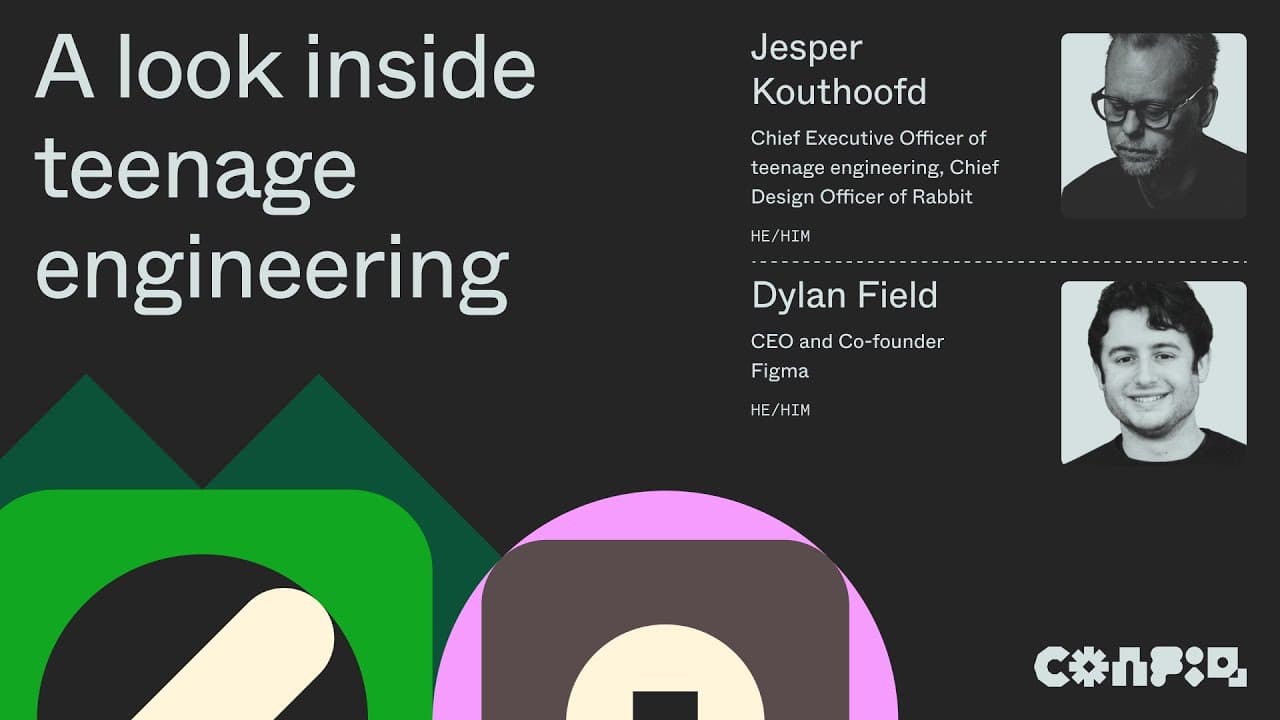
How did Teenage Engineering start and design the Op1
TL;DR
The Op1 grew from a garage project by four friends who built a modular workflow based on early music gear. They learned CAD and electronics from scratch, iterating through parts and ideas until the final product emerged. Intuition and cultural fit guided hiring and collaboration, shaping a distinctive company culture.
Transcript
all right everybody uh it is my honor to be in conversation with yesper today uh welcome yesper to config thanks uh thank you for having me great to be here we're so glad you are uh I'd like to start off you were a child of the personal computer era and these are not the computers that we have today these were computers that had real constraints ho... Read More
Key Insights
- The Op1 was created by four founders in a garage, driven by a hands on, craft oriented mindset.
- The design drew directly from borrowed gear and early music gear the founders loved as youths.
- The team learned CAD and mechanical engineering from scratch during the build process.
- The product architecture mirrors a logical, step by step music creation workflow from synthesis to tape mix.
- Hiring decisions prioritize personal chemistry and intuition over formal criteria.
- Leadership is structured with a design focused CEO and a separate operations layer.
- Team culture embraces non traditional roles and quirky morale boosters to maintain energy.
- Collaborators are chosen and kept based on how well they align with the creative vision and vibe.
Install to Summarize YouTube Videos and Get Transcripts
Explore YouTube Video Summarizer or Get YouTube Transcript Extractor
Questions & Answers
Q: What sparked the creation of the Op1 and how did it reflect the founders' early experiences?
The Op1 emerged from a period of hands on exploration after the founders gathered in a garage space, inspired by the gear they borrowed from a brother who ran a music store. The model selection mirrors their youth, combining a synth, a tape element, and simple mixing, all to reproduce the feel of early music making. This approach rooted the product in personal history and practical craft rather than theoretical design alone.
Q: How did the founders decide on the Op1 versus other ideas like a clock radio?
They considered both the clock radio and the synthesizer options but chose the synthesizer route because it presented a greater design challenge and fit their love for music. The decision was driven by a desire to build something that reflected their hands on, music oriented workflow, not just a commercial objective.
Q: What roles did the founders play in bringing Op1 to life, especially in design and engineering?
The team included software people and someone who learned electronics from scratch, enabling them to build the Op1 from the ground up. One founder led CAD learning and mechanical engineering, while others contributed in software and hardware, reflecting a blended skill set that supported the product’s integrated design.
Q: How did the company approach collaborator selection and culture building?
Collaboration was guided by intuition and personal connection rather than rigid criteria. They valued quick decisions and trusted that the right people would adapt and contribute, creating a culture that thrived on energy and shared passion for making things. This approach helped sustain collaboration over many years.
Q: What is the internal leadership style at Teenage Engineering as described by the CEO?
The company uses a top down yet design focused structure. The CEO maintains a design leadership role while a separate leadership team handles operations. This setup allows product decisions to stay close to the creative core while still addressing business needs, balancing creative direction with organizational management.
Q: How did hiring outside the typical path contribute to the company?
Hiring outside traditional roles brought fresh perspectives, such as adding a sales person from a different background to diversify the team. This kind of cross pollination helped inject new energy and ideas, contributing to a more dynamic and resilient company culture.
Q: What is highlighted about memory and constraints in early personal computers and how did that influence the founder?
The founder recalls the first computer era with real constraints, like 1K ROM memory, which forced creative problem solving. This limitation sparked creativity and informed a mindset that seeks efficient, constraint driven design, a philosophy that ultimately shaped how they approached hardware, software, and user workflow in the Op1.
Q: What can be inferred about the long term collaboration and morale within the team?
The interview touches on enduring relationships, humor, and the value of collaboration, including stories about long term friendships and a culture that appreciates unconventional roles. Such dynamics suggest a stable, loyal team environment that sustains product development across years and keeps the creative momentum going.
Summary & Key Takeaways
-
The Op1 story begins in a garage where four founders explored making a instrument inspired by their youth and the gear they borrowed, forming the core idea behind the product. The development blended hardware and software, with iterative prototyping and learning on the fly. The result reflects a hands on, craft driven approach.
-
The team built the product by combining simple, logical steps drawn from their own experiences and a desire to recreate the feel of early music making. They learned CAD from scratch, faced limited tools, and gradually designed the final form that preserved the original creative workflow.
-
The company culture prioritizes intuition and personal fit when hiring, sometimes over formal roles. They value close relationships and long term collaboration, even if it means unconventional team moves and occasional departures from traditional org charts.
Read in Other Languages (beta)
Share This Summary 📚
Summarize YouTube Videos and Get Video Transcripts with 1-Click
Try YouTube Summary with ChatGPT & Claude or YouTube Transcript Generator
Explore More Summaries from Figma 📚
Summarize YouTube Videos and Get Video Transcripts with 1-Click
Try YouTube Summary with ChatGPT & Claude or YouTube Transcript Generator