Why Can’t I Motivate Myself To Work?
TL;DR
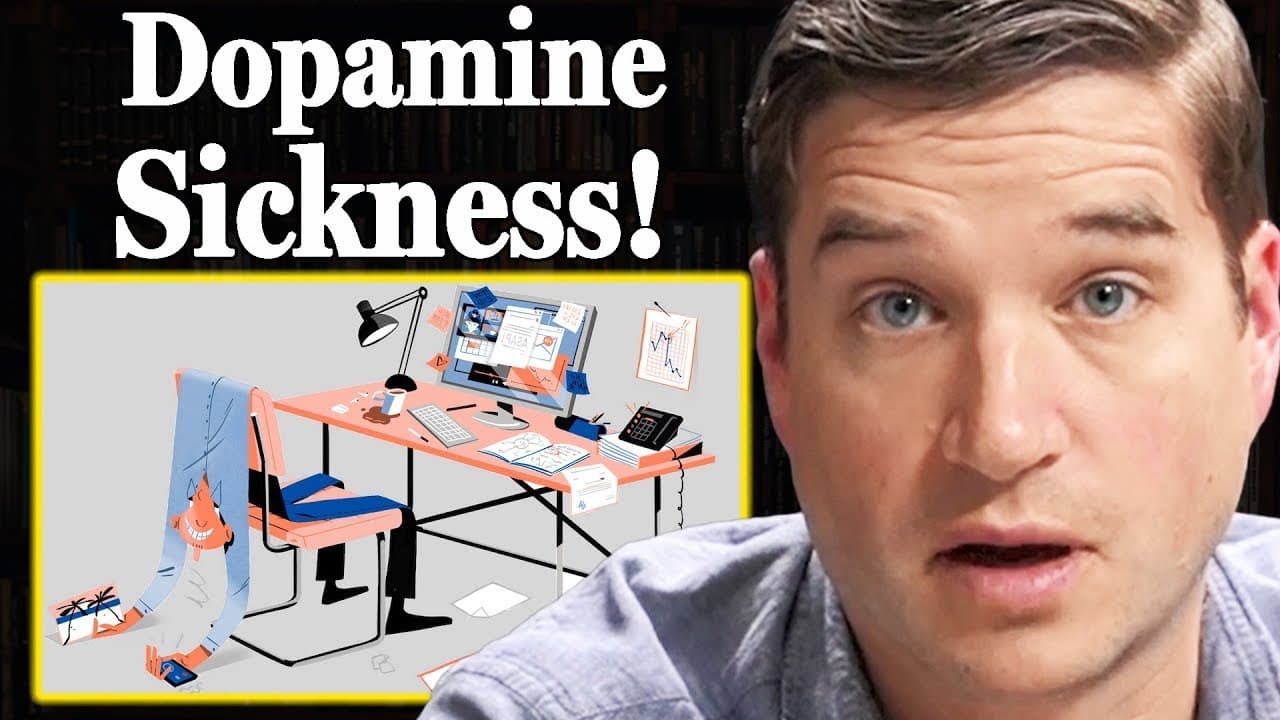
People often struggle with motivation due to deep procrastination and dopamine sickness post-pandemic.
Transcript
all right Jesse what do we got next all right next question is from m what advice would you give somebody who is currently in a role that meets every job satisfaction criteria but is struggling with motivation I consistently lack motivation to do deep work and have to force myself to focus this at times feels almost physically impossible especially... Read More
Key Insights
- 💦 The post-pandemic work culture has intensified issues of motivation and performance, with many professionals feeling more unmotivated than before.
- 🤳 Deep procrastination can stem from external influences affecting one's internal drive, particularly when tasks feel imposed rather than self-chosen.
- 💍 Dopamine sickness is increasingly prevalent, resulting from an over-reliance on digital distractions that provide instant gratification and impair one's ability to engage in sustained effort.
- 🍉 Solutions to enhance motivation include intrinsic rewards and a clear vision connecting current tasks with long-term career aspirations.
- 😀 Structured time management through organizational systems can provide clarity and reduce feelings of being overwhelmed when faced with complex work.
- 🧠 Boredom therapy encourages individuals to embrace moments without stimulation, retraining the brain to tolerate and focus during longer, demanding tasks.
- 💦 The physical workspace plays a crucial role in mental motivation; creating distinct environments for work can facilitate better focus and productivity.
Install to Summarize YouTube Videos and Get Transcripts
Explore YouTube Video Summarizer or Get YouTube Transcript Extractor
Questions & Answers
Q: What is deep procrastination, and how does it affect professionals?
Deep procrastination occurs when individuals find it incredibly hard to muster the motivation to complete necessary tasks. It's common among high-achieving professionals who feel overwhelmed by the perceived difficulty of their work or who lack intrinsic motivation for their tasks. This can lead to missing deadlines and creating feelings of guilt and anxiety, resulting in a cycle of unproductivity.
Q: How does dopamine sickness contribute to motivation issues?
Dopamine sickness arises from constant exposure to distraction, such as notifications from phones or social media. This bombardment of stimuli can overwhelm the brain, making it difficult to focus on less stimulating but necessary tasks. Individuals may find it challenging to engage in deep work due to their conditioned response to seek immediate gratification from distractions rather than tackling work that requires sustained concentration.
Q: What are some recommended solutions for overcoming deep procrastination?
To combat deep procrastination, individuals are encouraged to create an organized work system. This includes identifying and simplifying obligations, structuring time effectively, and focusing on intrinsic motivation by connecting tasks to broader career goals. Developing a clear plan can make daunting tasks seem more manageable and help motivate action.
Q: What is boredom therapy, and how can it help with motivation?
Boredom therapy involves intentionally exposing oneself to boredom by setting aside distractions, such as phones, during specific periods. For example, one might take a walk without their phone to experience boredom, which retrains the brain's response to inactivity. Over time, this can improve one's ability to concentrate on longer, more challenging tasks without the urge to seek immediate distractions.
Q: How does the work-from-home environment affect motivation and focus?
Working from home can blur the lines between personal and professional environments, making it difficult for individuals to concentrate. Without distinct physical separation, the mind can remain anchored in domestic tasks, hampering the ability to switch to a professional mindset. Creating rituals and dedicated spaces for work can mitigate this issue by promoting focus greater than just willpower.
Q: What are some practical changes one can make to enhance their work environment?
Individuals may need to adopt radical changes to their workspace to enhance focus. This could include renting office space away from home or redesigning existing spaces to differentiate between work and leisure. Establishing deliberate rituals around work, such as taking specific walks or having well-defined start and end routines, can also help create mental boundaries that encourage motivation.
Summary & Key Takeaways
-
Many individuals face motivation issues in their professional roles, particularly those who meet satisfaction criteria but still feel unmotivated and burned out. These challenges can lead to a cycle of stress and guilt, especially prominent post-pandemic.
-
Two common challenges identified are deep procrastination and dopamine sickness. Deep procrastination refers to the struggle to engage in necessary work, while dopamine sickness stems from excessive digital distractions that impair concentration and motivation for deeper tasks.
-
Solutions to these challenges involve changing perspectives on work through intrinsic motivation, creating structured work environments, and employing boredom therapy techniques to retrain one's focus, ultimately separating work from personal distractions.
Read in Other Languages (beta)
Share This Summary 📚
Summarize YouTube Videos and Get Video Transcripts with 1-Click
Try YouTube Summary with ChatGPT & Claude or YouTube Transcript Generator
Explore More Summaries from Cal Newport 📚





Summarize YouTube Videos and Get Video Transcripts with 1-Click
Try YouTube Summary with ChatGPT & Claude or YouTube Transcript Generator