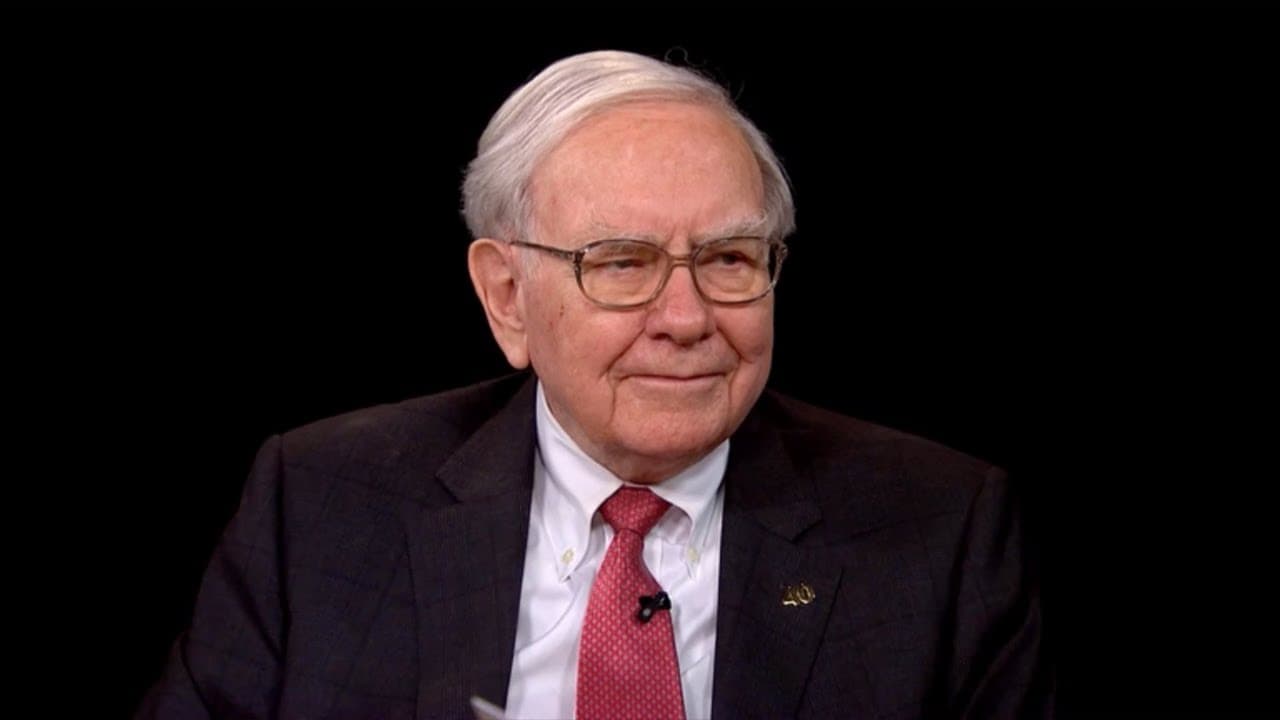
Warren Buffett | Charlie Rose | October 22, 2013
TL;DR
Personal success depends partly on luck, and those who benefit from favorable circumstances should recognize the people and systems that helped them prosper. Howard Buffett argues that reducing poverty requires learning from failure, influencing public policy, partnering with businesses that create jobs, and applying practical lessons gathered through farming and work in struggling communities.
Transcript
three generations of buffets are with me warren buffett is a chairman and ceo of berkshire hathaway and a long time friend of mine in this program his genius as an investor has made him one of the world's wealthiest men he pledged to give away most of his fortune and donated 31 billion dollars to the bill and melinda gates foundation in 2006 he's a... Read More
Key Insights
- • The title "40 Chances" is based on the idea that a farmer receives roughly 40 growing seasons to do the best possible work. Howard Buffett applies the same limit to the prime years available for pursuing goals, improving decisions, and creating change.
- • Failure is an important source of practical knowledge because Howard Buffett says his philanthropic work has failed more often than it has succeeded. Sharing those experiences allows others to examine unsuccessful approaches instead of treating philanthropy as a record composed only of achievements.
- • Effective philanthropy requires policy engagement because capable people working under poor policies may still be unable to succeed. Howard Buffett says his experiences in conflict areas convinced his foundation to embrace advocacy as part of its broader set of tools.
- • Poverty reduction requires updated thinking because technology and social conditions have changed while many approaches remain rooted in history. Howard Buffett sees younger people in philanthropy as more innovative and focused, with the potential to influence larger organizations.
- • Warren Buffett’s ovarian lottery concept holds that birthplace, parents, timing, and personal abilities strongly influence life outcomes. He believes his abilities happened to fit a large capitalist system and acknowledges that his life would have been dramatically different under other circumstances.
- • Individual success is supported by society because Warren Buffett credits earlier generations and people who sacrificed their lives for the conditions he enjoyed. He explicitly rejects the claim that he achieved his position alone, despite benefiting greatly from the market system.
- • Business can contribute to poverty reduction because businesses create jobs, and jobs can permanently bring people out of poverty. Howard Buffett argues that philanthropy should reconsider treating business only as an adversary and should explore partnerships while recognizing that employment is not a simple solution everywhere.
- • Direct experience can transform a person’s understanding because Howard Buffett’s 1969 visit to Prague exposed him to scarcity, soldiers, secret police, and subdued residents. Seeing these conditions firsthand made him feel helpless and created a lasting desire to do something useful later in life.
Install to Summarize YouTube Videos and Get Transcripts
Explore YouTube Video Summarizer or Get YouTube Transcript Extractor
Questions & Answers
Q: What does Howard Buffett mean by having 40 chances?
Howard Buffett uses "40 chances" to describe the limited number of meaningful opportunities available during a working life. The phrase came from a farming presentation explaining that a farmer may have only about 40 growing seasons to improve performance. Howard then applied that idea more broadly, suggesting that most people have roughly 40 prime years to pursue goals, learn, and create change.
Q: Why does Howard Buffett emphasize learning from failure?
Howard Buffett emphasizes failure because his philanthropic efforts have failed more often than they have succeeded, according to his account. He considers those unsuccessful attempts worth sharing because they contain practical lessons. His book records experiences from farming, international travel, and difficult regions so that readers can examine both the approaches that helped and those that did not produce the intended outcome.
Q: How can philanthropy address poverty more effectively?
Philanthropy can address poverty more effectively by combining practical projects with awareness, advocacy, and policy engagement. Howard Buffett argues that even excellent people cannot succeed when they must operate under poor policies. He also calls for updated thinking, greater attention to lived conditions, and openness to cooperation with businesses that can create jobs and provide a more permanent path out of poverty.
Q: Why is public policy important in fighting poverty?
Public policy is important because it shapes whether local workers and organizations can succeed. Howard Buffett says his work in conflict areas showed that good people operating under poor policy may be unable to achieve lasting results. He therefore added advocacy to his philanthropic approach and argues that decision makers must understand who actually suffers when programs such as SNAP are reduced.
Q: What is Warren Buffett’s ovarian lottery idea?
Warren Buffett’s ovarian lottery idea is that circumstances assigned at birth strongly influence a person’s opportunities. He points to being born in the United States, having supportive parents, arriving at a favorable historical moment, and possessing abilities that work well in a large capitalist system. He argues that many other people receive less fortunate circumstances through no fault of their own.
Q: Why does Warren Buffett say he did not succeed alone?
Warren Buffett says he did not succeed alone because his opportunities depended on sacrifices, institutions, family circumstances, and a society where his abilities were valuable. He refers to people who died at Normandy and Gettysburg as part of the history that enabled his life. He also acknowledges that the market rewarded him generously while leaving many other people behind.
Q: What role can businesses play in reducing poverty?
Businesses can reduce poverty by creating jobs, which Howard Buffett describes as a means of permanently bringing people out of poverty. He argues that philanthropy has historically treated business as the bad actor and sometimes avoided partnerships for that reason. His preferred approach is a different mindset that considers business cooperation as one tool, while acknowledging that job creation is not a simple answer in every situation.
Q: How did Howard Buffett’s 1969 visit to Prague affect him?
Howard Buffett’s 1969 visit to Prague changed his outlook by giving him direct exposure to repression and deprivation. He recalls seeing tanks, facing a soldier checking his visa, missing regular meals, boiling water for a weekly bath, and observing people harmed by secret police. The experience made him feel helpless and gave him a lasting sense that he should eventually do something to help others.
Summary
This interview features Warren Buffett, his son Howard Graham, and his grandson Howard, discussing their involvement in philanthropy, their views on the world of investing and finance, and the importance of giving back. They share their experiences in policy making and philanthropy and discuss the challenges and opportunities of making a difference in the world.
Questions & Answers
Q: What was the purpose of the book "40 Chances"?
Howard Graham Buffett wrote "40 Chances" as a way to share his experiences and lessons learned from his travels around the world. He wanted to highlight the importance of awareness, advocacy, and innovation in addressing global issues like poverty.
Q: Why was the title "40 Chances" chosen for the book?
The title "40 Chances" refers to the idea that individuals have about 40 prime years to make a significant impact and achieve their goals. It is a metaphorical reminder of the limited time we have to create change and make a difference.
Q: Is Warren Buffett still primarily a farmer?
Despite his success as an investor and businessman, Warren Buffett still considers himself a farmer at heart. He believes in the importance of agriculture and the role it plays in providing food and resources for people around the world.
Q: How does Howard Graham Buffett believe advocacy can impact policy and change?
Howard Graham Buffett believes that advocacy plays a crucial role in creating positive change. By engaging in policy-making and raising awareness about the consequences of certain actions, he believes that it is possible to influence decision-makers and bring about meaningful reform.
Q: How does Howard Graham Buffett think philanthropy can help in eliminating poverty?
Howard Graham Buffett believes that philanthropy, when combined with innovative thinking and a focus on long-term solutions, can significantly contribute to reducing poverty. He emphasizes the importance of partnerships between philanthropy and businesses to create jobs and economic opportunities that lift people out of poverty.
Q: What did Warren Buffett mean by the "ovarian lottery" and its significance?
The "ovarian lottery" refers to the idea that being born into a certain country or circumstances is a result of luck, or winning a "lottery." Warren Buffett believes that people who have been fortunate in their lives should use their wealth and resources to help those less fortunate, both locally and internationally.
Q: How does Warren Buffett view the current state of philanthropy and the role of younger generations in driving change?
Warren Buffett believes that younger generations are more innovative and focused in their approach to philanthropy. He sees them as key drivers of change and advocates for them to challenge and reshape the traditional views and practices of philanthropic organizations.
Q: How does Warren Buffett feel about giving away his wealth while he is still able to make decisions?
Warren Buffett believes it is important to give away his wealth while he is still able to make decisions. He wants to be actively involved in how his wealth is used for philanthropic purposes and believes in leaving a legacy by making a positive impact during his lifetime.
Q: How does philanthropy differ from business in terms of decision-making and impact?
Warren Buffett believes that philanthropy requires different decision-making abilities than running a business. While business decisions often have immediate feedback through the market, philanthropy deals with complex social issues where feedback is not always clear. Making effective philanthropic decisions requires a long-term perspective and the ability to navigate inherent challenges.
Q: What impact did Warren Buffett's late wife, Susie, have on his philanthropic activities?
Warren Buffett credits his late wife Susie with influencing his philanthropic endeavors. She introduced him to causes and issues that he may not have otherwise considered, and she emphasized the importance of using their wealth to help those less fortunate. Her impact continues to influence his philanthropic efforts to this day.
Q: How does Warren Buffett feel about the current state of politics and the need for bipartisan cooperation?
Warren Buffett expresses concern about the current state of politics and the lack of bipartisan cooperation. He believes that politicians should prioritize the well-being of the country over individual agendas and work together to address pressing issues, such as the national debt and budgetary concerns.
Q: How does Warren Buffett view the role of the United States on the global stage and the responsibility to uphold its financial reputation?
Warren Buffett believes that the United States has a responsibility to uphold its financial reputation on the global stage. He emphasizes the importance of maintaining the country's full faith and credit and argues against using the debt ceiling as a political tool that can jeopardize its financial standing.
Q: What recommendations does Warren Buffett have for the Commission on the Budget and the current state of the national debt?
Warren Buffett encourages the Commission on the Budget to focus on raising revenues and making necessary changes to entitlement programs. He suggests means testing Social Security and making judgments about taxes to address the country's financial challenges.
Q: Does Warren Buffett believe we have learned from the lessons of the 2008 financial crisis?
Warren Buffett believes that we have learned some lessons from the 2008 financial crisis, particularly regarding the dangers of housing bubbles and excessive debt. However, he also acknowledges that fear and greed are inherent human traits that can still drive irrational behavior in the markets.
Q: What are Warren Buffett's thoughts on recent fines and punishments imposed on financial institutions?
Warren Buffett believes that fines and punishments imposed on financial institutions should serve as a deterrent and a signal of accountability. He acknowledges that these punishments are often shouldered by shareholders, but he also recognizes that they play a role in maintaining the integrity of the financial system.
Q: Does Warren Buffett think we've made progress in preventing and addressing future financial crises?
Warren Buffett believes that progress has been made in preventing and addressing future financial crises, but he also recognizes that fear and greed can still lead to irrational behavior. He suggests that a combination of regulation, responsible leadership, and a focus on long-term stability is necessary to mitigate future risks.
Q: How does Warren Buffett view the role of the Federal Reserve and regulation in the financial system?
Warren Buffett acknowledges the importance of the Federal Reserve and the need for regulation in the financial system. He believes that regulations should be designed to prevent excessive risk-taking and ensure the stability of the financial system, while still allowing for healthy market competition.
Q: Does Warren Buffett think we need to focus on reducing the long-term national debt or increasing economic growth?
Warren Buffett believes in the importance of both reducing the long-term national debt and increasing economic growth. He argues that a balance must be struck, as excessive debt can hinder economic growth and future prosperity.
Q: How does Warren Buffett view the recent controversies surrounding J.P. Morgan and other banks?
Warren Buffett believes that J.P. Morgan and other banks have been unfairly targeted for the actions of institutions they acquired, such as Bear Stearns and WaMu. He argues that these acquisitions were made at the request of the government and that the fines imposed should reflect the true responsibility for any wrongdoing.
Q: Does Warren Buffett think the financial system has become more stable since the 2008 crisis?
Warren Buffett believes that the financial system has become more stable since the 2008 crisis due to increased regulation and a focus on risk management. However, he acknowledges the inherent risks in the system and the potential for future crises if greed and excessive risk-taking are not properly monitored and managed.
Takeaways
This interview provides valuable insights into the world of philanthropy and the importance of giving back. It emphasizes the need for awareness, advocacy, and innovation in addressing global challenges, such as poverty and inequality. The interview also touches on the role of government in financial regulation, the challenges of the global economy, and the need for bipartisan cooperation in addressing fiscal issues. Overall, the interview highlights the ongoing commitment of the Buffett family to philanthropy and making a positive impact in the world.
Summary & Key Takeaways
-
Howard Buffett’s book "40 Chances" presents lessons drawn from farming, philanthropy, international travel, and work in conflict areas. Its title comes from the idea that a farmer has roughly 40 growing seasons to perform well, which Howard extends to the limited number of prime years people have to pursue goals and create meaningful change.
-
Warren Buffett describes success as deeply influenced by the circumstances of birth. He credits his country, parents, historical sacrifices, personal abilities, and a market system suited to those abilities. Because that same system leaves many people behind, he rejects the idea that successful individuals achieved everything without assistance from others.
-
Howard argues that poverty reduction requires more than charitable projects. Poor policies can prevent capable people from succeeding, so philanthropy must include awareness and advocacy. He also supports cooperation with businesses because jobs can permanently lift people from poverty, while emphasizing that practical conditions must take priority when philosophy conflicts with lived reality.
Read in Other Languages (beta)
Share This Summary 📚
Summarize YouTube Videos and Get Video Transcripts with 1-Click
Try YouTube Summary with ChatGPT & Claude or YouTube Transcript Generator
Explore More Summaries from Investor Archive 📚
Summarize YouTube Videos and Get Video Transcripts with 1-Click
Try YouTube Summary with ChatGPT & Claude or YouTube Transcript Generator