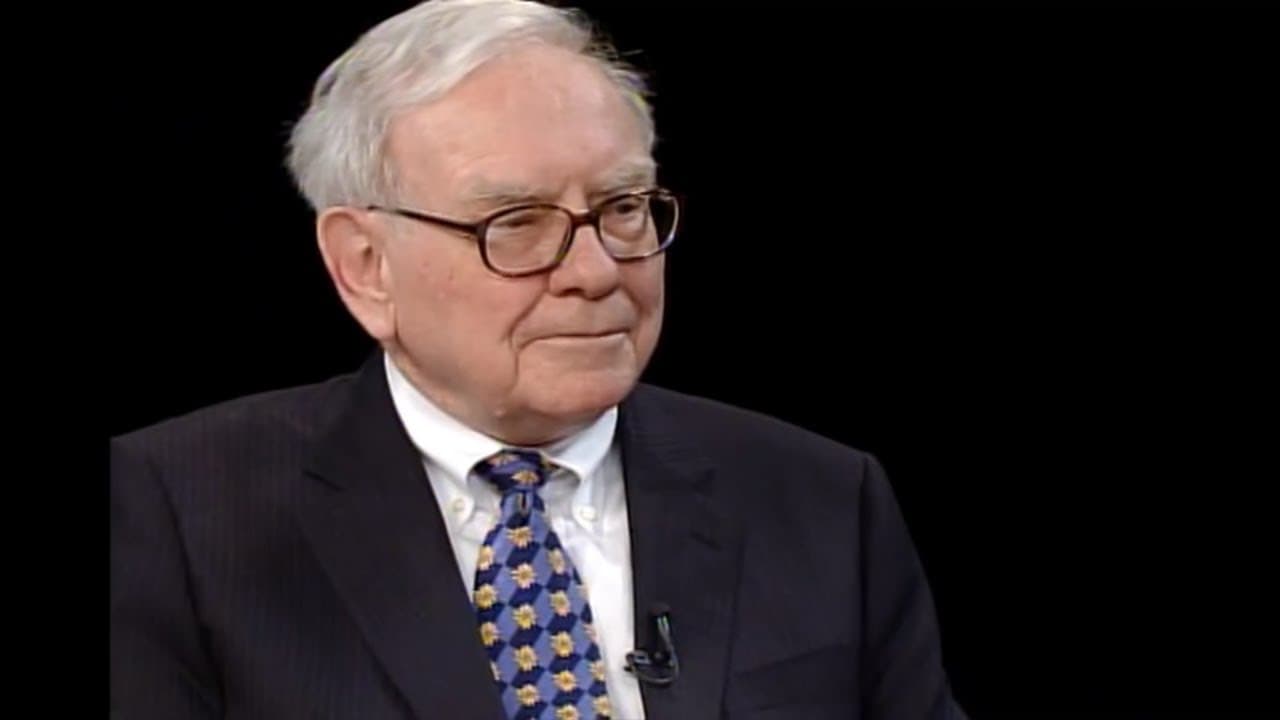
Warren Buffett | Charlie Rose | October 1, 2008
TL;DR
The 2008 credit freeze is an "economic Pearl Harbor," and the U.S. Treasury is the only institution able to leverage up while everyone else deleverages. Buffett, who invested $3 billion in General Electric on terms nearly identical to his Goldman Sachs deal, urged Congress to pass the rescue plan rather than argue over blame. His rule: be greedy when others are fearful, fearful when others are greedy.
Transcript
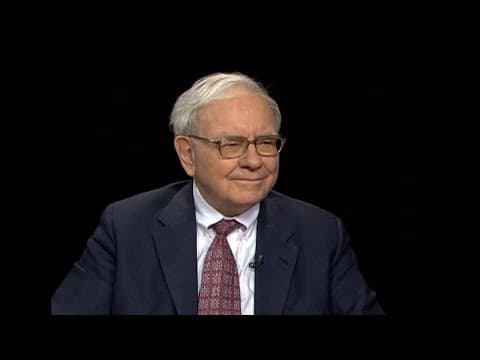
we are in san diego california this afternoon for a conversation with warren buffett he is the man congressional leaders the administration and the federal reserve want to talk and talk to he is the legendary chairman and ceo of berkshire hathaway its success has made him the world's richest man he's admired for his investment results over a long p... Read More
Key Insights
- Cash is only valuable when it is deployed at the right moment, and Buffett argues this is one of those times because cash "buys a fair amount more" than usual, which is why Berkshire is putting its accumulated money to work now.
- Buffett invested $3 billion in General Electric on terms almost identical to his Goldman Sachs investment, after a morning call, citing decades of familiarity with GE's management and businesses and GE's century-long presence in the Dow.
- The core investing principle is to be greedy when others are fearful and fearful when others are greedy, and right now people are extremely fearful, giving disciplined buyers an advantage over the panicked majority.
- The economy is compared to a great athlete suffering cardiac arrest: paramedics should resuscitate immediately rather than argue over technique or blame, meaning Congress should pass the rescue plan even if imperfect.
- Only the United States Treasury can leverage up as a countervailing force while every major financial institution simultaneously tries to deleverage, selling assets they once borrowed against but now view as "rat poison."
- The crisis reached Main Street through wealth destruction: roughly $20 trillion in residential homes and $20 trillion in stocks have both fallen dramatically, and at least 95 percent of people are worse off than a year or two ago.
- A sign of extreme fear is that $40 billion of seven-day Treasury bills sold at a yield of one-twentieth of one percent, meaning the country is nearly at the point of stuffing money under the mattress instead of lending it.
- Ad hoc government responses to Bear Stearns, Lehman, AIG, Freddie, and Fannie were preferable to no response, and Treasury could not have credibly requested these emergency powers from Congress months earlier without a visible crisis.
Install to Summarize YouTube Videos and Get Transcripts
Explore YouTube Video Summarizer or Get YouTube Transcript Extractor
Questions & Answers
Q: Why did Warren Buffett invest $3 billion in General Electric?
Buffett received a morning call from a friend at Goldman Sachs saying GE might be interested in such an investment. He was familiar with the company, having known its current and prior management, including Jeff Immelt and Jack Welch, for decades, and Berkshire does a lot of business with GE. He noted GE is the longest-running stock in the Dow Jones Industrial Average and expects it will still be around in 100 years. The terms were almost identical to his Goldman Sachs investment, and he had accumulated cash he now found attractive to deploy.
Q: What did Buffett mean by calling the crisis an economic Pearl Harbor?
Buffett said he had never used the phrase before but that the situation truly was one. He explained the economy faced a freeze on credit, banks not lending, and Treasury bills at extremely low yields. He compared the economy to a great athlete suffering cardiac arrest, flat on the floor with paramedics arrived. Like Pearl Harbor, he argued, it is a mistake to spend weeks assigning blame or letting a committee decide a complete plan; instead the country must spring into action immediately with the best people available to restore function.
Q: What is Buffett's rule about being greedy and fearful?
Buffett stated the simple principle that you want to be greedy when others are fearful and fearful when others are greedy. Asked where people are now, he said they are pretty fearful, adding that in his adult lifetime he does not think he has ever seen people as economically fearful as they were at that moment. This fear stemmed from watching credit markets seize up, worrying about money market funds, and seeing about 8 percent of U.S. bank deposits move between institutions within a couple of weeks.
Q: Why is the U.S. Treasury the only countervailing force in the crisis?
Buffett explained that all the major financial institutions of the world wanted to deleverage, taking down their assets and liabilities because things that seemed easy to borrow against a year earlier now looked like rat poison. When every institution tries to sell instruments and reduce leverage at the same time, only one entity in the world can leverage up in a countervailing way, and that is the United States Treasury. This makes the Treasury's intervention essential to preventing a downward spiral in credit and asset values.
Q: Did Buffett support the government rescue plan?
Buffett said the plan was not perfect and he could not draw a perfect one, but he would rather be approximately right than precisely wrong, and it would be precisely wrong to turn it down. He expressed confidence that Congress would ultimately do the right thing despite arguments over blame and some demagoguery. He preferred an ad hoc response to no response at all and believed Treasury could not have credibly obtained these emergency powers from Congress months earlier without the crisis being visible.
Q: How was the financial crisis affecting ordinary Americans and Main Street?
Buffett said the effects were being felt by auto dealers, furniture retailers, and jewelry retailers, businesses Berkshire is in, so he knew them directly. He pointed to roughly $20 trillion in residential homes and $20 trillion in stocks, the two big assets of American families, both down dramatically. At least 95 percent of people were worse off in residential and stock wealth than a year or two earlier, and that wealth loss was just starting to bleed into auto, jewelry, and furniture sales.
Q: How bad did Buffett think the economy could get?
Buffett acknowledged that a depression was a possibility if the plan did not work. He noted unemployment was about 6.1 percent and said the country had been in a recession by any common-sense definition, because American families' two big assets, homes and stocks, were both down dramatically. He warned that if the paralysis in credit markets continued and every company kept trying to shrink its balance sheet, the damage would be felt big time, with the wave of pain just starting to hit the real economy.
Q: Why did Buffett say the rescue was not a bailout of Wall Street?
Buffett argued the patient on the floor with cardiac arrest is not Wall Street but the American economy. He said coupling the term Wall Street with bailout misleads people, and while he disliked what went on in executive compensation, he did not want to lecture a body that had just had a heart attack. He noted Bear Stearns, Lehman, and AIG shareholders lost 90 to 95 percent of their money, and those shareholders included pension funds and ordinary investors across the country, not just Wall Street big shots.
Summary
This video features a conversation with Warren Buffett, the legendary chairman and CEO of Berkshire Hathaway. Buffett discusses his recent investment in General Electric, the state of the economy, and the proposed rescue plan. He emphasizes the importance of confidence and liquidity in the markets, and expresses his belief that America will eventually recover from the crisis. Buffett also discusses the role of derivatives and the housing bubble in causing the current situation, and suggests that oversight should focus on ensuring that government investments are made at market prices.
Questions & Answers
Q: Can you explain your recent investment of $3 billion in General Electric?
Buffett explains that he received a call from a friend at Goldman Sachs, who mentioned an investment opportunity in GE. Buffett is familiar with the company and trusts the management team, and believes that GE will continue to be a successful business.
Q: Are you considering other investment opportunities?
Buffett acknowledges that he looks at every opportunity that comes his way. He explains that Berkshire Hathaway has had a lot of cash available in recent years, and now sees attractive investment options.
Q: Why is cash not considered as valuable during times of crisis?
Buffett explains that cash is not valuable if it remains idle and doesn't generate any returns. He believes that there are times when cash can buy more than at other times, and this is one of those times.
Q: Why are people currently so fearful economically?
Buffett believes that people's fears stem from seeing the credit markets seize up and witnessing the movement of deposits from one institution to another. He thinks that these concerns are valid and justified given the current situation.
Q: Is the economic crisis being felt on Main Street?
Buffett confirms that the crisis is being felt by various industries such as the auto, furniture, and jewelry retailers. He believes that the impact will be even more significant if nothing is done to address the crisis.
Q: Are you satisfied with the current rescue plan being voted on by the Senate?
While Buffett acknowledges that the plan is not perfect, he believes it is approximately right. He emphasizes the importance of taking action promptly to start addressing the crisis.
Q: Why do you consider the current situation to be an economic Pearl Harbor?
Buffett explains that the freeze on credit, lack of lending, and low treasury bill yields are indicators of the financial turmoil. He emphasizes the importance of credit and trust in the functioning of the economy, which is currently being disrupted.
Q: Are we headed for a recession or even a depression if the plan doesn't work?
Buffett believes that a recession is already underway, and it could worsen if the credit paralysis continues. He highlights the importance of Congress' wisdom in carrying out the plan effectively.
Q: Do you think the current rescue plan is essential for restoring confidence in the nation and the financial system?
Buffett asserts that the plan is vital to rebuilding confidence and jump-starting the economy. He emphasizes the importance of the determination and actions of Congress in this critical situation.
Q: Why are people resistant to the rescue plan, considering it a bailout for Wall Street?
Buffett explains that while he understands people's concerns and frustrations with Wall Street, the plan's primary purpose is to address the economic crisis faced by the entire nation. He believes that saving the American economy should be the priority.
Q: Is there a possibility of a recession if the plan doesn't work?
Buffett acknowledges that a recession is possible, given the current economic conditions and the ongoing deleveraging by major institutions. However, he believes that the plan has the potential to help mitigate the depth and duration of the recession.
Takeaways
Warren Buffett emphasizes the importance of confidence, liquidity, and taking swift action to address the current economic crisis. He believes that the housing bubble and excessive use of derivatives played significant roles in causing the crisis. While acknowledging that capitalism is not a perfect system, he remains optimistic about the future of America. Buffett supports the rescue plan but stresses the importance of buying distressed assets at market prices and ensuring oversight focuses on this issue. He believes that the new government administration will need to prioritize restoring confidence and implementing long-term solutions to prevent future economic crises.
Summary & Key Takeaways
-
Interviewed in San Diego on October 1, 2008, Buffett announced a $3 billion investment in General Electric on terms nearly identical to his Goldman Sachs deal, prompted by a morning call and his decades-long familiarity with GE's management and businesses.
-
Buffett called the situation an "economic Pearl Harbor," describing credit markets seizing up, roughly 8 percent of U.S. bank deposits moving between institutions, and $40 billion of seven-day Treasury bills selling at one-twentieth of one percent, signaling extreme fear.
-
He urged Congress to pass the rescue plan without wasting time assigning blame, arguing the patient on the floor is the American economy, not Wall Street, and that only the U.S. Treasury can counter the world's rush to deleverage.
Read in Other Languages (beta)
Share This Summary 📚
Summarize YouTube Videos and Get Video Transcripts with 1-Click
Try YouTube Summary with ChatGPT & Claude or YouTube Transcript Generator
Explore More Summaries from Investor Archive 📚

Summarize YouTube Videos and Get Video Transcripts with 1-Click
Try YouTube Summary with ChatGPT & Claude or YouTube Transcript Generator