Warren Buffett | Charlie Rose | October 5, 2007
TL;DR
Berkshire Hathaway seeks large operating businesses with strong managers and intends to hold them for life, except when a company creates an unending cash drain or impossible labor problems. Buffett says scale limits investment performance because small opportunities no longer affect Berkshire’s net worth, while dependable businesses can increase earning power over many years.
Transcript
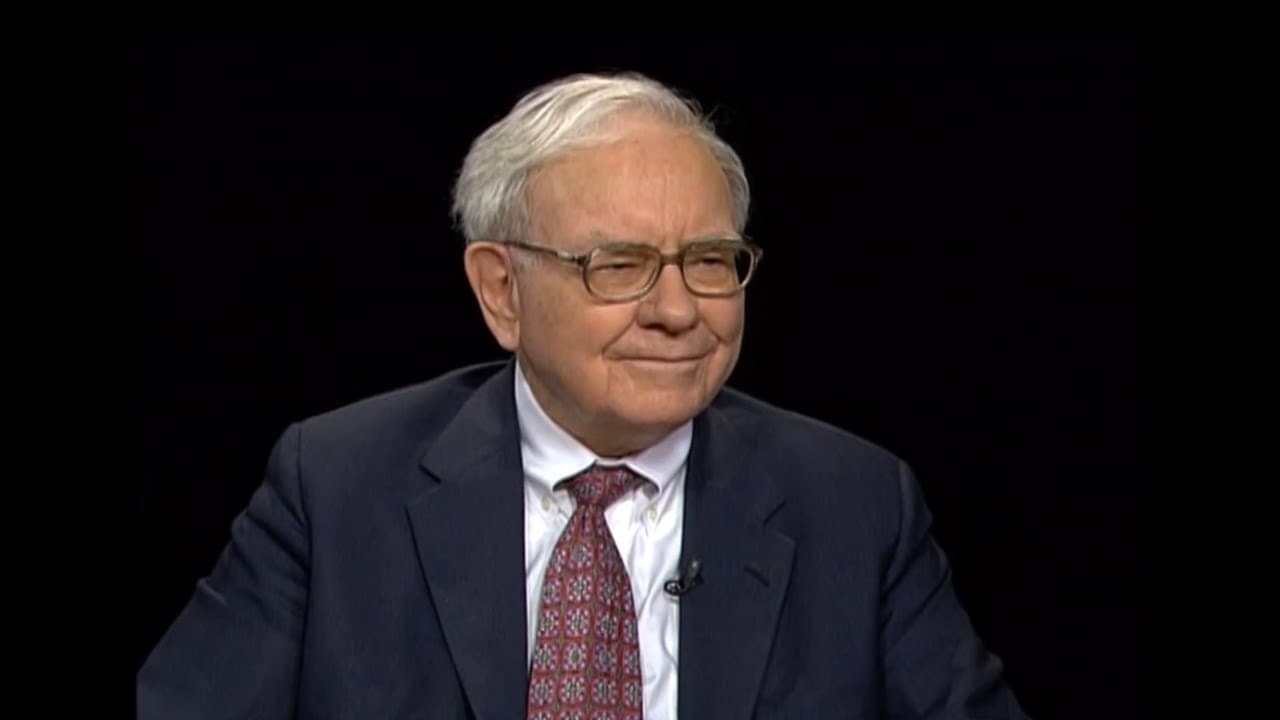
warren buffett is here he is the chairman and ceo of berkshire hathaway it is a very successful company it just had one of his most successful years ever warren buffett has been ceo for 42 years he has become perhaps the most admired investor in the world we first began a series of conversations in 2004 and they have continued since then as we have... Read More
Key Insights
- Berkshire Hathaway’s strong 2006 performance resulted from good acquisitions, capable managers, and the absence of major problems. Buffett characterizes this combination simply, emphasizing consistent business execution rather than attributing the year to one dramatic event.
- Large investment size is an anchor on performance because small opportunities cannot materially change Berkshire’s results. Buffett says a brilliant $100 million investment producing another $100 million would yield $65 million after taxes, an amount that barely affects approximately $160 billion in net worth.
- Berkshire’s primary goal is to build earning power through operating businesses with strong managers. Buffett values businesses that can improve over time without constant intervention, and he expects the company’s existing operations to earn appreciably more money ten years later.
- Buffett’s Walmart decision illustrates the cost of hesitation after identifying an attractive opportunity. He began buying shares in the mid-1990s, paused when the price rose slightly, and estimates that this delay transformed a possible eight or nine billion dollar gain into a small profit.
- Berkshire’s ability to complete acquisitions is supported by readily available financial resources. Buffett says its contracts are never subject to financing, and a business seller can regard his handshake as confirmation that the proposed transaction has dependable funding.
- Berkshire’s published acquisition criteria filter out unsuitable proposals before they reach Buffett. One stated requirement is annual pretax earnings of at least $75 million, reflecting his need to examine businesses large enough to matter to the company.
- Berkshire treats an acquired business as a lifetime ownership commitment rather than part of a temporary portfolio. Buffett says sellers often trust Berkshire with companies they spent their lives building, so the company does not reverse that commitment merely because another buyer offers more money.
- Berkshire will generally sell a business only when it faces an unending cash drain or impossible labor problems. Outside those conditions, the company may retain an operation with a diminished future and reject an offer worth twice the business’s estimated value.
Install to Summarize YouTube Videos and Get Transcripts
Explore YouTube Video Summarizer or Get YouTube Transcript Extractor
Questions & Answers
Q: Why does Berkshire Hathaway’s size limit investment performance?
Berkshire Hathaway’s size limits performance because an investment must be extremely large to make a meaningful difference to its overall net worth. Buffett says that when he managed only a few hundred thousand dollars, thousands of companies could produce significant results. With approximately $160 billion in net worth, even making $100 million on a $100 million investment would add only $65 million after taxes and barely move the needle.
Q: How does Warren Buffett evaluate potential Berkshire acquisitions?
Buffett looks for large businesses that can contribute meaningfully to Berkshire’s earning power and operate under excellent managers. Berkshire’s annual report publishes criteria intended to filter proposals, including annual pretax earnings of at least $75 million. Buffett says the company is searching for large opportunities, which he compares to Saint Bernards rather than chihuahuas, because smaller businesses cannot justify enough attention at Berkshire’s scale.
Q: Why does Berkshire prefer acquiring businesses to buying stocks?
Berkshire prefers acquisitions because a good operating business can continue increasing its earnings over many years while being managed by capable people. Buffett contrasts this with moving from one stock opportunity to another. He expects Berkshire’s 73 existing businesses to earn appreciably more money ten years later, even before additional acquisitions expand the company’s total earning power.
Q: What was Warren Buffett’s mistake when buying Walmart stock?
Buffett says he began buying Walmart shares in the mid-1990s and intended to establish a significant position. When the share price rose slightly, he hesitated and stopped buying. He estimates that Berkshire might have made eight or nine billion dollars if he had continued, but the delay reduced the outcome to a small profit. He describes it as roughly a ten billion dollar mistake.
Q: When will Berkshire Hathaway sell an operating business?
Berkshire generally considers selling an operating business under only two conditions: the company is expected to create an unending cash drain, or it develops impossible labor problems. Otherwise, Berkshire is willing to retain a business with declining prospects. Buffett also says it may refuse an offer equal to twice the estimated value of a decent business because ownership is treated as a lifetime commitment.
Q: What does Warren Buffett mean by having an entrance strategy?
An entrance strategy means Berkshire buys a business with the intention of becoming its lasting owner, without planning a later sale. Buffett contrasts this approach with private equity firms, which buy, change, and sell assets through an exit strategy. Berkshire instead provides a permanent home for businesses whose owners often spent a lifetime building them and trusted Buffett to preserve their work.
Q: How does Berkshire’s financial capacity help it complete acquisitions?
Berkshire’s financial capacity gives sellers confidence that an agreed transaction can be completed without seeking additional financing. Buffett says the company has never signed a contract that made completion subject to financing. Because Berkshire is already financed and can undertake large transactions, he presents his handshake as a dependable commitment that the seller has a genuine deal.
Q: Why does Warren Buffett enjoy running Berkshire Hathaway?
Buffett enjoys running Berkshire because it allows him to spend each day doing work he loves with people he respects. He describes being paid for something he would willingly pay to do as a rare luxury. He particularly enjoys working with Berkshire’s managers and acquiring businesses that can grow without requiring constant intervention from him, making the company both productive and personally satisfying.
Summary
In this video, Warren Buffett discusses a range of topics including his successful year with Berkshire Hathaway, his philanthropic contributions, and his love for his work. He also talks about the high price people are willing to pay for lunch with him, the risks and benefits of being a large company, his investment strategy, his mistakes in the stock market, and his thoughts on the media industry. Buffett also explores his concerns about the growing trade deficit, the importance of understanding risk in investing, and his view on political candidates and world issues.
Questions & Answers
Q: What were some highlights of Warren Buffett's year with Berkshire Hathaway?
2006 was a great year for Berkshire Hathaway, with good acquisitions and no major issues. They had the largest growth in net worth of any company in American history (except Exxon), which was a record-breaking achievement.
Q: How much did someone pay to have lunch with Warren Buffett?
The most expensive lunch was sold for $610,000, and another $10,000 was paid by someone else to give them the lunch. The total amount of $620,000 goes to charity. The person who paid for the lunch was a Chinese American who became an American citizen, and he brought seven other people with him, including his talented wife.
Q: How many of these expensive lunches has Warren Buffett had?
Buffett has had around 10 of these high-priced lunches since the prices escalated after they were put on eBay. He enjoys meeting interesting people and has learned a lot from these lunches.
Q: What kind of conversations does Warren Buffett have during these lunches?
The conversations during these lunches can be about anything the attendees are interested in. Buffett has talked about investing, business, raising children, and various other topics. The lunches can last as long as three hours, and Buffett is open to discussing whatever the guests want to talk about.
Q: What are the risks and downsides of being a big company like Berkshire Hathaway?
Size is an anchor to performance because it becomes harder to manage larger amounts of money. With a small amount of capital, Buffett had a wide universe of investment opportunities. But as Berkshire Hathaway grew, the number of viable investment options decreased, and the focus shifted more towards acquisitions instead of equity positions.
Q: What is Buffett's strategy for Berkshire Hathaway?
Buffett's strategy is to build more earning power by acquiring operating businesses with strong managers. He wants to continue expanding the number of businesses owned by Berkshire Hathaway and increase overall earning power. He also enjoys buying stocks but considers it more of a game compared to the long-term focus on operating businesses.
Q: What investments has Warren Buffett made recently?
Buffett has invested in Walmart, but it was a smaller position compared to some other investments. He also mentioned the possibility of a large acquisition but acknowledged that it is challenging to find the right opportunity that aligns with Berkshire shareholders' interests.
Q: Why does Warren Buffett love newspapers?
Buffett has always been a fan of newspapers and enjoys the significance and importance that comes with owning a newspaper. He believes newspapers provide a unique value and make the owners significant figures in their communities. Buffett also mentions his fondness for the people and the business side of newspapers.
Q: What does Buffett think about Rupert Murdoch's attempt to buy the Wall Street Journal?
Buffett thinks it's not surprising that Murdoch wants to buy the Wall Street Journal because he loves newspapers and understands the industry. Murdoch's acquisition could bring a different future for the Wall Street Journal compared to other metropolitan newspapers. Buffett believes the Wall Street Journal and the New York Times have a different role and significance in the internet age.
Q: Has Buffett made a decision about his successor at Berkshire Hathaway?
Buffett has chosen three candidates for the CEO position at Berkshire Hathaway, and the entire board has approved this decision. However, the candidates may change in the future, depending on interviews and other factors. Buffett's main criteria for the successor are understanding risk and preventing the zero in investment performance that can lead to irreversible damage.
Q: What does Buffett think about the trade deficit and its impact on the US economy?
Buffett believes that the trade deficit is a significant issue because it involves giving up US assets to feed the country's spending habits. He compares it to consuming more calories than one burns over a long period, which eventually leads to negative consequences. Buffett acknowledges the challenge of addressing the trade deficit in a democracy but emphasizes the importance of considering the long-term consequences.
Q: What is Buffett's view on political candidates and world issues?
Buffett names Hillary Clinton and Barack Obama as two candidates he would love to see as President of the United States. He believes they both have the potential to lead the country towards a better future. Buffett is particularly interested in candidates who can address the needs of the entire population rather than just benefit individuals or specific groups. He also expresses concerns about weapons of mass destruction and the threat of terrorism, calling for global cooperation and vigilance.
Summary & Key Takeaways
-
Buffett describes 2006 as a strong year in which Berkshire made good acquisitions, its managers performed well, and nothing significant went wrong. He says the company achieved an exceptional dollar increase in net worth while he continued enjoying the work, people, and daily responsibilities associated with running Berkshire Hathaway.
-
Berkshire’s size narrows its practical investment universe because even a highly profitable small transaction cannot materially affect a company with about $160 billion in net worth. Buffett therefore concentrates on very large companies and acquisitions, seeking to expand the earning power generated by operating businesses led by managers he trusts.
-
Buffett presents Berkshire as a permanent home for businesses rather than a vehicle for buying and reselling assets. The company generally retains businesses even when their prospects diminish or buyers offer far more than estimated value. Its acquisition criteria, financial readiness, and reputation for honoring agreements support this ownership model.
Read in Other Languages (beta)
Share This Summary 📚
Summarize YouTube Videos and Get Video Transcripts with 1-Click
Try YouTube Summary with ChatGPT & Claude or YouTube Transcript Generator
Explore More Summaries from Investor Archive 📚
Summarize YouTube Videos and Get Video Transcripts with 1-Click
Try YouTube Summary with ChatGPT & Claude or YouTube Transcript Generator