How to Learn Spanish Without Traditional Study
TL;DR
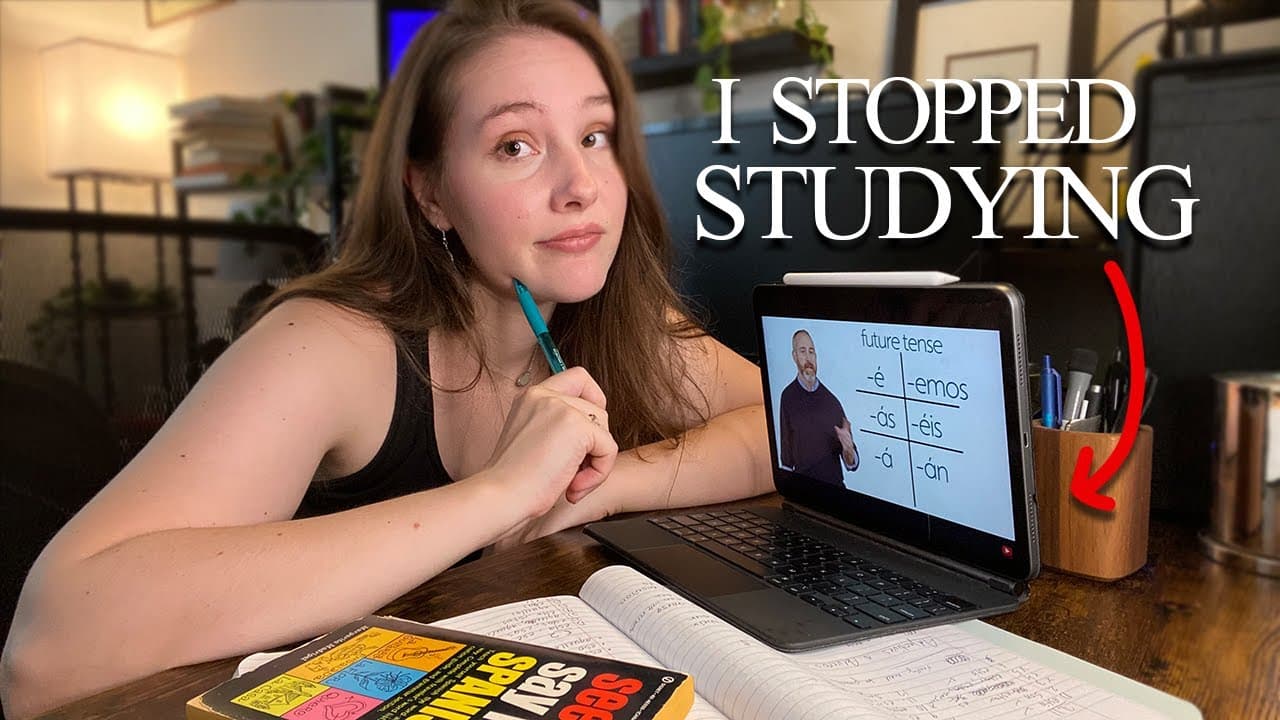
Use enjoyable Spanish content that you can mostly understand, then accumulate consistent listening and reading input instead of relying on grammar drills or vocabulary memorization. Beginner videos with visual context and familiar games can make unfamiliar language understandable, while connecting practice to an existing daily habit can make the process easier to sustain.
Transcript
Okay, so in this video I'm sharing how I'm finally starting to learn a second language after trying and failing to learn one for basically my entire life. If you actually take a look at my channel, you'll notice how 2 years ago I posted a video on how to learn any language easily with Chatt. Well, it's been two full years since I uploaded that vide... Read More
Key Insights
- The anti-study method is based on consuming understandable Spanish through videos and games rather than drilling grammar, memorizing vocabulary, or completing exercises. After about 30 days, the learner reported more progress than she had achieved during six months of her previous routine.
- Comprehensible input is language that a learner can follow through the overall story, visuals, gestures, context, or existing knowledge, even when some words and grammar remain unfamiliar. The method treats partial understanding as enough for the brain to begin making connections.
- Dreaming Spanish organizes videos for beginner, intermediate, and advanced learners and presents a seven-level roadmap based on accumulated input hours. The learner was at level one with 18 hours completed, while reaching level two required 50 hours of input.
- Beginner videos became accessible because the presenters spoke slowly and used images, gestures, and contextual cues. These supports allowed the learner to understand approximately 70–85% of the material without English subtitles and notice her comprehension improving through continued viewing.
- Repeated exposure is intended to build subconscious connections between language and meaning. Instead of translating every sentence or studying verb charts, the learner follows understandable content and gradually infers recurring words, grammatical patterns, and meanings from context.
- Familiar content makes new language easier to decode because the learner can connect Spanish dialogue with information already known from the English version. Prior knowledge of Stardew Valley's story and conversations therefore supplied context when vocabulary or grammar was unfamiliar.
- Consistency is easier when language exposure replaces part of an activity someone already enjoys. Playing a favorite game in Spanish gave the learner a pleasurable daily practice, unlike the grammar lessons, flashcards, and conversation exercises she previously found boring and unsatisfying.
- Early progress included understanding about 85% of a Spanish story told by the learner's Mexican husband after she had accumulated 18 hours of tracked input. She described this as a level of listening comprehension she had never reached through her earlier study methods.
Install to Summarize YouTube Videos and Get Transcripts
Explore YouTube Video Summarizer or Get YouTube Transcript Extractor
Questions & Answers
Q: What is the anti-study method for learning Spanish?
The anti-study method replaces deliberate grammar drills, vocabulary memorization, and exercises with large amounts of understandable Spanish content. In the learner's case, that meant watching Spanish YouTube videos and playing Stardew Valley in Spanish. The aim is to follow meaning through context and repeated exposure so that vocabulary and grammar become understandable through subconscious connections rather than forced study.
Q: How does comprehensible input help language learning?
Comprehensible input gives learners language they can understand well enough to follow, even when they do not recognize every word or grammatical structure. Meaning can come from the story, images, gestures, context, or prior knowledge. According to the approach described, repeated listening and reading allow the brain to connect recurring language with meaning and gradually recognize vocabulary and grammar without direct memorization.
Q: How much of a beginner Spanish video should you understand?
The learner reported understanding approximately 70–85% of Dreaming Spanish beginner videos. Slow speech, images, gestures, and contextual cues made the overall content understandable even without English subtitles. The method does not require knowing every word. Its practical standard is being able to follow the main story or meaning well enough for unfamiliar language to become clearer through context and repetition.
Q: Why can familiar video games help with language learning?
A familiar game supplies context before the language-learning session even begins. Because the learner already knew Stardew Valley's storyline and much of its English dialogue, she could connect unfamiliar Spanish with remembered events, character reactions, and gameplay situations. This let her decode general meaning without translating word for word, turning the game into comprehensible input while preserving an activity she already enjoyed.
Q: How can you stay consistent when learning a second language?
Attach the target language to an activity you already do regularly and genuinely enjoy. The learner changed her existing gaming habit by playing in Spanish, which made practice more appealing than her previous routine of flashcards and grammar lessons. The same approach can use books, shows, movies, or other media, especially material you already know and can understand through prior knowledge.
Q: Do you need to study grammar and vocabulary to learn Spanish?
The method presented says learners do not need to force grammar study, memorize verb charts, or drill vocabulary to acquire the language through input. Instead, they can infer patterns and meanings from understandable reading and listening repeated over time. This reflects the learner's chosen approach and experience, including her report of stronger comprehension after switching away from the traditional methods she had used previously.
Q: How much progress did the learner make with comprehensible input?
After about 30 days with the new approach, the learner said she had made more progress than during six months of daily conversation practice, grammar videos, and flashcards. At 18 hours of tracked input, she noticed increasing comprehension across new videos. She also understood about 85% of a Spanish story told by her Mexican husband, something she had not previously managed.
Q: What content should a beginner choose for comprehensible input?
A beginner should choose content that is interesting and mostly understandable through slow speech, visuals, gestures, context, or familiarity. The learner used beginner videos from Dreaming Spanish and a Stardew Valley series, then played the familiar game herself in Spanish. Familiar books, shows, movies, and games can also work because existing knowledge helps clarify meaning when the new vocabulary and grammar are not yet known.
Summary & Key Takeaways
-
After six months of daily conversation practice, grammar lessons, and vocabulary flashcards produced little practical Spanish comprehension, the learner quit. A trip to Mexico later renewed her motivation. She returned with an anti-study approach and reported making more progress in about 30 days than during her earlier six-month attempt.
-
The new approach centers on comprehensible input, meaning Spanish that remains understandable through its story, images, gestures, context, or prior knowledge. Dreaming Spanish beginner videos provided roughly 70–85% comprehension without English subtitles. Repeated exposure then helped the learner infer vocabulary and grammar rather than deliberately memorizing rules and translations.
-
Consistency improved by changing an existing enjoyable habit, playing video games, into a Spanish activity. Stardew Valley was especially useful because its story and dialogue were already familiar, making Spanish easier to decode from context. The broader strategy is to revisit familiar games, books, shows, or movies in the target language.
Read in Other Languages (beta)
Share This Summary 📚
Summarize YouTube Videos and Get Video Transcripts with 1-Click
Try YouTube Summary with ChatGPT & Claude or YouTube Transcript Generator
Explore More Summaries from bri does things 📚

Summarize YouTube Videos and Get Video Transcripts with 1-Click
Try YouTube Summary with ChatGPT & Claude or YouTube Transcript Generator