How to Build a Reading Map for Self-Education
TL;DR
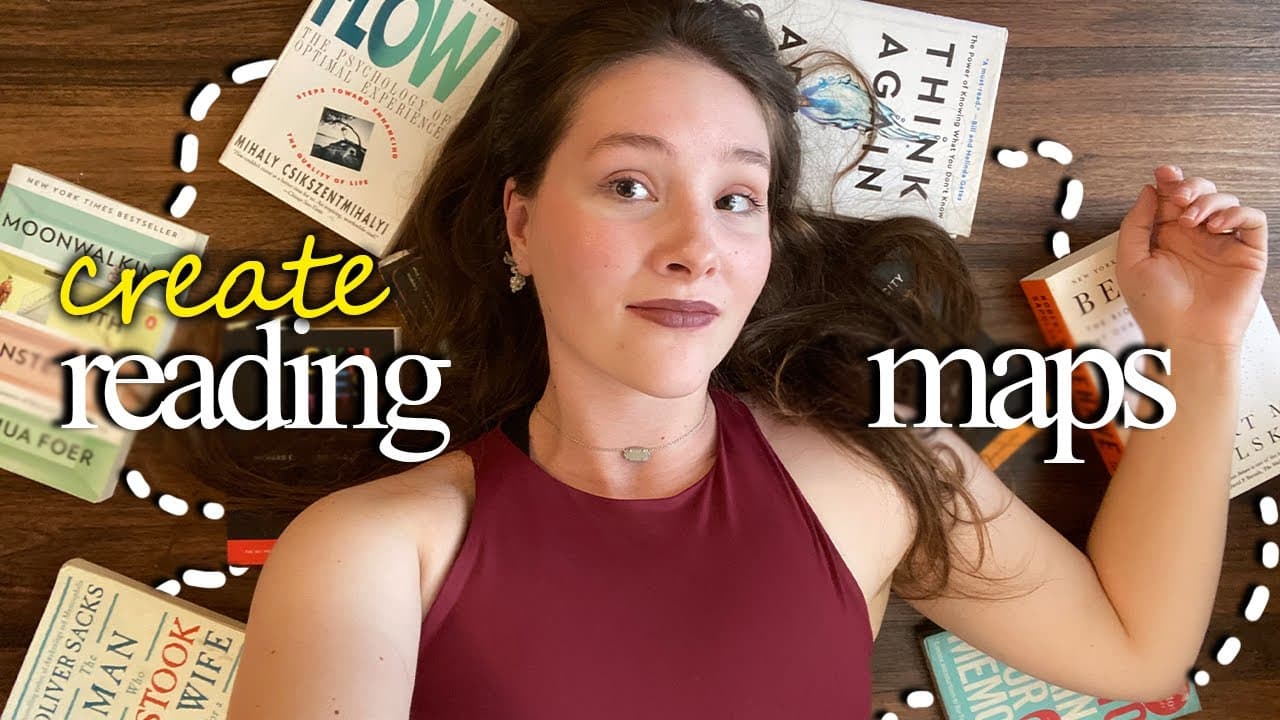
A reading map turns a learning goal into an ordered, personalized curriculum of books that build on one another. Choose a topic and desired depth, divide it into subtopics, gather varied candidates, screen each book for suitability, and arrange the final list by difficulty or chronology. This structure reduces wasted time and makes self-education more focused and enjoyable.
Transcript
In this video, I'm going to show you how to learn anything you want with books using a method I discovered recently that completely changed how I approach self-education. So, after dropping out of university when I was 19, I became super obsessed with learning all the things I never got to learn in school. And books quickly became my favorite way t... Read More
Key Insights
- A reading map is a self-made curriculum consisting of books selected and ordered to achieve a specific educational goal. It replaces random bookstore choices with an intentional path in which each book suits the reader's level and builds on material encountered earlier.
- A clear learning goal is the north star for every book choice. Defining both the subject and the desired depth helps keep the curriculum focused, determines its approximate length, and prevents interesting but currently irrelevant topics from distracting the reader.
- Exploration is useful when a reader does not yet know what to study. Educational channels covering many subjects can expose the reader to unfamiliar areas, making it easier to notice which topics consistently inspire enough curiosity to justify a dedicated reading map.
- A curiosity brain dump helps readers manage too many interests. Writing every interest down and selecting the two or three that best support current goals or the person they want to become creates focus, while leaving the remaining subjects available for later study.
- The desired level of knowledge influences the number of books in a reading map. The suggested estimates are 5–10 books for foundations, 10–30 for mini expertise, and 30–50 for mastery, although these figures are presented as flexible planning guides.
- A balanced reading map can combine introductory books, secondary sources, primary sources, classics, and lighter works. Each category serves a different purpose, from providing accessible overviews and scholarly interpretation to presenting original ideas, historical context, emotional depth, and engaging pacing.
- Book discovery works best across several sources, including Google searches, Wikipedia bibliographies, suggested-reading sections, MIT and Yale open-course syllabuses, Chat, Reddit, Quora, and YouTube. The initial objective is a strong working list, not a supposedly perfect curriculum.
- A final reading map requires both screening and sequencing. Books should be evaluated for accessibility, jargon, age, bias, author reputation, coverage, and engagement, then organized either by increasing difficulty or chronologically when that order suits fields such as history, philosophy, or literature.
Install to Summarize YouTube Videos and Get Transcripts
Explore YouTube Video Summarizer or Get YouTube Transcript Extractor
Questions & Answers
Q: How do you create a reading map for self-education?
Start by defining what you want to learn and how deeply you want to understand it. Break the subject into subtopics, then gather possible books from bibliographies, syllabuses, introductory texts, searches, Chat, and community recommendations. Screen every candidate for suitability and organize the final selections into a logical sequence based on increasing difficulty or chronological order.
Q: What is a reading map, and why is it useful?
A reading map is a self-made curriculum, specifically an ordered list of books designed to achieve a particular educational goal. It is useful because random book selection can lead beginners toward texts that are too advanced, overly specialized, or irrelevant. A structured map makes each choice intentional and allows later books to build on earlier knowledge.
Q: How should I choose a topic for a reading map?
Choose a topic by asking what you want to learn and how deeply you want to learn it. If you have no clear interest, explore many subjects through educational content until one consistently attracts you. If you have too many interests, write them all down and select the two or three most aligned with your current goals or desired identity.
Q: How many books should a reading map include?
The suggested size depends on the depth you want to reach. A foundational reading map can contain about 5–10 books, a map intended to develop mini expertise can contain 10–30, and a mastery-oriented map can contain roughly 30–50. These figures are ballpark estimates, not fixed rules, so the appropriate length can vary by goal and subject.
Q: What types of books belong in a self-study curriculum?
A reading map can include introductory books, secondary sources, primary sources, classics, and lighter reads. Introductory works provide accessible overviews, while secondary sources explain or connect original ideas. Primary sources present thinkers' work directly, classics supply historical context, and memoirs, narrative nonfiction, fiction, pop science, or self-help can add real-world context and improve pacing.
Q: Where can I find reliable books for a reading map?
Potential books can be found through Google searches for the best books on a subject, bibliographies on relevant Wikipedia pages, and suggested-reading sections in introductory books. MIT and Yale open-course syllabuses can provide academic reading assignments. Chat, Reddit, Quora, and YouTube can also offer recommendations, although popular suggestions are not necessarily the best choices.
Q: How should I evaluate books before adding them?
Evaluate each candidate by asking whether it is beginner-friendly or filled with jargon, whether it is outdated or biased, whether its author is reputable, and whether its actual coverage matches your expectations. You should also consider whether the writing is engaging or excessively dry. Summaries and reader reviews on Goodreads can help answer these questions and remove unsuitable choices.
Q: How should books be ordered in a reading map?
Books can be ordered by difficulty, beginning with broad and accessible introductions before moving toward narrower or more complex works. They can also be organized chronologically, which can work especially well for subjects identified in the transcript, including history, philosophy, and literature. The right arrangement is the one that creates a logical learning path for your chosen goal.
Summary & Key Takeaways
-
A reading map is a self-made curriculum designed around a specific educational goal. Instead of selecting books randomly, the reader chooses resources that make sense at their current level and build on previous material. This structure can prevent confusion, reduce unread purchases, and make both learning and reading more enjoyable.
-
The process begins by selecting a topic, deciding the desired depth, and dividing the subject into meaningful subtopics. Suggested map sizes are 5–10 books for foundational knowledge, 10–30 for becoming a mini expert, and 30–50 for mastery. These ranges are flexible estimates rather than rigid requirements.
-
Potential books can come from search results, bibliographies, suggested-reading sections, open-course syllabuses, Chat, and community recommendations. Candidates should then be checked for difficulty, jargon, age, bias, author reputation, relevance, and readability. The final selections can be arranged from broad and accessible to narrow and difficult, or placed chronologically.
Read in Other Languages (beta)
Share This Summary 📚
Summarize YouTube Videos and Get Video Transcripts with 1-Click
Try YouTube Summary with ChatGPT & Claude or YouTube Transcript Generator
Explore More Summaries from bri does things 📚

Summarize YouTube Videos and Get Video Transcripts with 1-Click
Try YouTube Summary with ChatGPT & Claude or YouTube Transcript Generator