How to Effectively Use ChatGPT in 2025
TL;DR
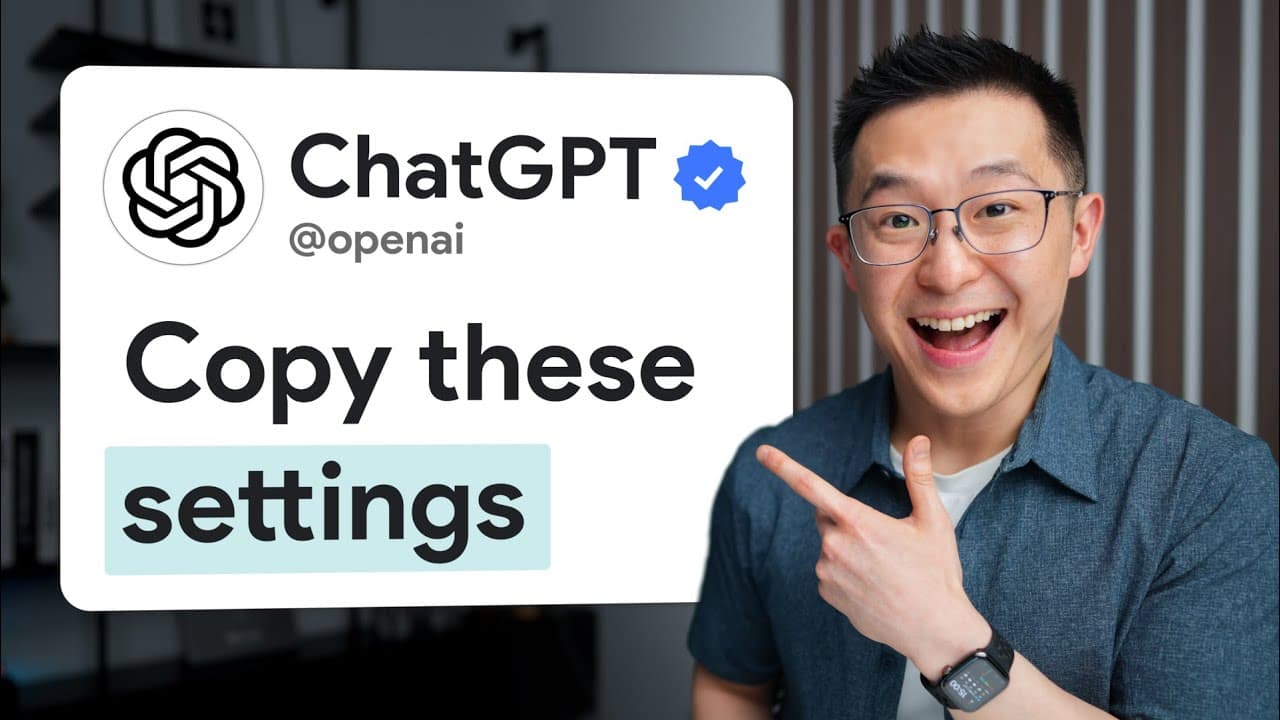
Mastering ChatGPT in 2025 requires selecting the appropriate model based on task complexity: use reasoning models for challenging queries and chat models for quick answers. Leverage web search for context-rich responses and the deep research feature for comprehensive analyses across sources. Utilize the canvas feature for thorough edits and refinements.
Transcript
chapt has rolled out over 1.1 updates per week this year It's hard enough keeping track of all these changes let alone to figure out which new features are worth our time So in this video I'll cut through all the meaningless jargon like reasoning models are best for complex reasoning Thank you And instead I'll just show you using real world example... Read More
Key Insights
- ChatGPT releases frequent updates, making it essential to understand which features are valuable for specific tasks.
- Choosing the right model depends on the complexity of the task; reasoning models are ideal for complex queries.
- Basic chat models are suitable for straightforward tasks that require quick responses with less accuracy.
- ChatGPT's web search feature is beneficial for obtaining detailed explanations, whereas Google excels at single fact retrieval.
- The deep research feature allows for comprehensive analysis by exploring multiple sources and summarizing findings.
- Canvas is useful for tasks requiring iterative editing and improvements, such as preparing detailed documents or coding.
- Pro tips for reasoning models include using delimiters, avoiding step-by-step instructions, and leveraging zero-shot prompting.
- ChatGPT's canvas feature supports version control, inline editing, and exporting documents in various formats.
Install to Summarize YouTube Videos and Get Transcripts
Explore YouTube Video Summarizer or Get YouTube Transcript Extractor
Questions & Answers
Q: What is the main advantage of using reasoning models in ChatGPT?
Reasoning models in ChatGPT are designed to handle complex queries that require detailed analysis and nuanced responses. They are ideal for tasks where accuracy and depth are prioritized over speed, such as creating detailed reports or answering intricate questions. These models think step-by-step and can process more complex instructions without needing additional prompts.
Q: When should you use ChatGPT's web search feature over Google?
ChatGPT's web search feature should be used when you need a fact accompanied by a detailed explanation or context. While Google is faster for retrieving single facts, ChatGPT provides a more comprehensive answer by integrating additional information and context, making it suitable for inquiries that require a deeper understanding.
Q: How does the deep research feature in ChatGPT work?
The deep research feature in ChatGPT allows the AI to explore numerous sources over a period of 10 to 20 minutes, gathering information and summarizing it into a detailed report. This is particularly useful for tasks that require comprehensive analysis, such as comparing financial reports or analyzing trends across multiple datasets.
Q: What is the purpose of the canvas feature in ChatGPT?
The canvas feature in ChatGPT is designed for tasks that involve iterative editing and enhancement. It provides a standalone window where users can make inline edits, track different versions, and apply changes to entire documents or specific sections. This is particularly beneficial for preparing detailed documents or coding projects that require multiple revisions.
Q: What are some pro tips for using reasoning models in ChatGPT?
Pro tips for using reasoning models in ChatGPT include using delimiters to separate instructions from content, avoiding the phrase 'think step by step' as reasoning models already process information in this manner, and utilizing zero-shot prompting, where examples are not necessary unless results are incorrect. These tips help optimize the model's performance for complex tasks.
Q: How can the canvas feature assist in preparing for a performance review?
The canvas feature can assist in preparing for a performance review by allowing users to upload performance rubrics, draft initial outlines, and make iterative edits. Users can delete unnecessary sections, input relevant achievements, and refine the document with ChatGPT's help, ensuring a polished and comprehensive performance review submission.
Q: What are the benefits of using ChatGPT for deep research compared to Google?
ChatGPT's deep research feature offers the advantage of synthesizing information from multiple sources into a cohesive and detailed report. Unlike Google, which requires manual navigation through search results, ChatGPT automates the process, saving time and providing a more integrated understanding of complex topics, making it ideal for in-depth research tasks.
Q: Why is it important to choose the right ChatGPT model for a task?
Choosing the right ChatGPT model is crucial because it ensures that the task is handled with the appropriate level of complexity and efficiency. Reasoning models are suited for tasks requiring detailed analysis and accuracy, while chat models are better for quick, low-stakes tasks. Selecting the correct model optimizes the response quality and speed, enhancing overall productivity.
Summary & Key Takeaways
-
The video explains how to effectively use ChatGPT's different models and features, focusing on reasoning models for complex tasks and chat models for simpler ones. It highlights the importance of choosing the right tool based on task complexity rather than task type.
-
It provides insights on when to use ChatGPT's web search versus Google, emphasizing that Google is faster for single facts, while ChatGPT offers more context. Deep research is highlighted as a powerful tool for comprehensive analysis across multiple sources.
-
The canvas feature is recommended for tasks that require multiple edits and improvements. The video also offers pro tips for maximizing the effectiveness of reasoning models and provides guidance on using ChatGPT's features for various real-world applications.
Read in Other Languages (beta)
Share This Summary 📚
Summarize YouTube Videos and Get Video Transcripts with 1-Click
Try YouTube Summary with ChatGPT & Claude or YouTube Transcript Generator
Explore More Summaries from Jeff Su 📚


Summarize YouTube Videos and Get Video Transcripts with 1-Click
Try YouTube Summary with ChatGPT & Claude or YouTube Transcript Generator