How to Create Facebook Ads That Convert at Scale
TL;DR
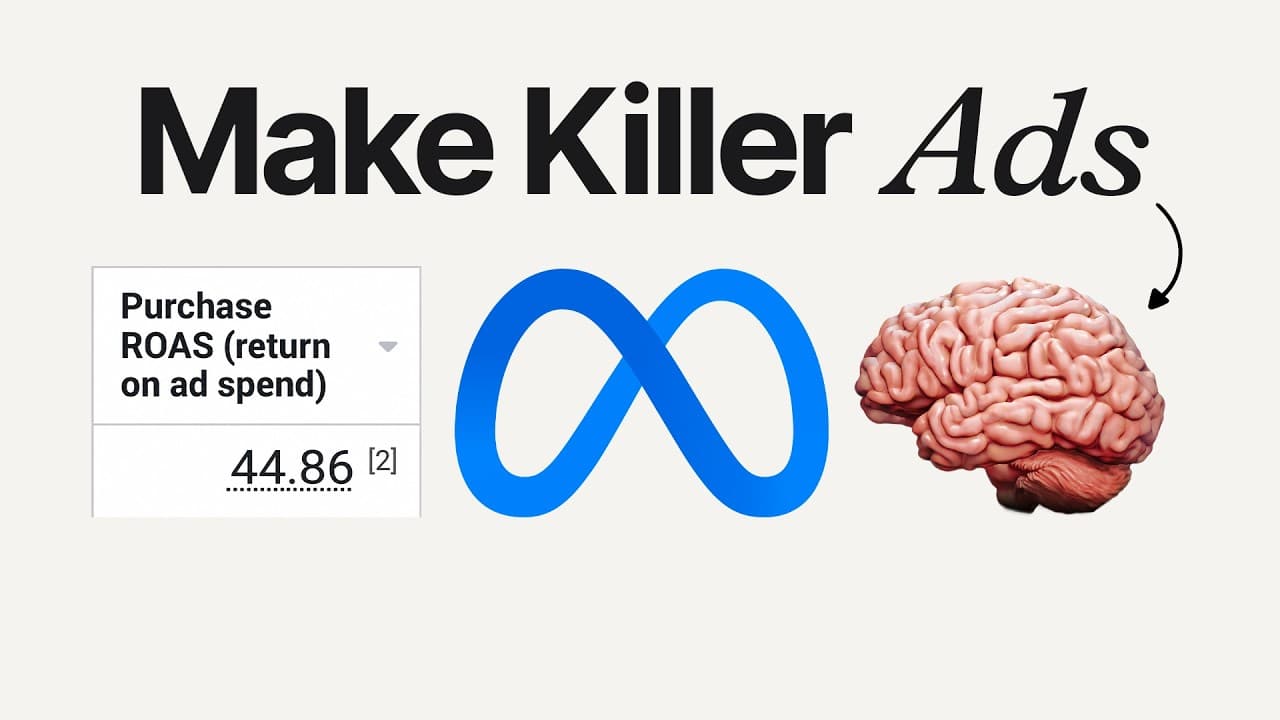
Start Facebook ad development with one clearly defined customer avatar, then connect that audience to a specific problem and a product mechanism that addresses it. Strong ads must both spend at scale and meet the business's efficiency metric, so prioritize relevant, sustainable creative over producing a large volume of weak variations.
Transcript
Most Facebook ads feel like ads, and 99% of the time people scroll right past that ad in a split second because who willingly wants to watch an advertisement? But the ads that convert like crazy, the ads that drive ridiculous return on ad spend, super low CPA, those ads do something different. They feel personal, they feel like they are specificall... Read More
Key Insights
- A successful Facebook ad is one that can scale its spending while continuing to meet the advertiser's efficiency metric. The intended output may be sales, leads, inquiries, or booked calls, but the underlying requirement is sustainable performance as spending increases.
- Creative quality and hit rate are more important than producing thousands of advertisements. One well-developed ad with a strong chance of scaling can be more valuable than a dozen weak ads, so creative volume alone should not be treated as the primary objective.
- The customer avatar is the starting point for ad development. The product, offer, positioning, language, and creative concept should be organized around one specific audience rather than developed first and matched to an audience only after the creative is complete.
- Ad creative can perform a targeting function by explicitly speaking to a singular avatar. Under the concept-matching approach described in the transcript, Facebook connects creative concepts with relevant audiences, replacing the older emphasis on building many audience-specific ad sets.
- A clearly stated problem helps connect an ad with people who resemble the intended avatar and experience that concern. Defining the avatar often reveals the central problem naturally, while related subproblems provide separate angles that can resonate with different members of the same audience.
- Different objections within one avatar can represent distinct advertising opportunities. People experiencing hair loss, for example, may care about failed supplements, avoiding serious drugs, maintaining privacy, limiting lifestyle changes, avoiding a transplant, or controlling expense, rather than responding identically to one message.
- A unique mechanism explains how a product produces its proposed solution. Simply saying that a product addresses hair loss or back pain is insufficient because the customer still needs a reason to believe that this particular option is different from competing or readily available alternatives.
- Specific product features can turn a general solution into a differentiated claim. In the hypothetical back-brace example, dynamic tightening straps or special strap materials provide concrete mechanisms that could distinguish the brace and address why a construction worker should choose it over another option.
Install to Summarize YouTube Videos and Get Transcripts
Explore YouTube Video Summarizer or Get YouTube Transcript Extractor
Questions & Answers
Q: How do you create Facebook ads that convert at scale?
Create the ad around one clearly defined customer avatar, identify the specific problem that person experiences, and explain the unique mechanism through which the product addresses it. The ad should be capable of reaching many people while remaining stable and meeting the advertiser's efficiency metric. This approach prioritizes sustainable leads, sales, inquiries, or booked calls over a single unusually profitable conversion.
Q: What makes a Facebook ad good according to the transcript?
A good Facebook ad has the ability to spend substantial money, reach many people, remain stable, and continue hitting the advertiser's efficiency metric. It should produce a useful business output, such as revenue, leads, inquiries, sales, or booked calls. The goal is sustainable growth that allows spending to continue, rather than one isolated purchase with a high return on ad spend.
Q: Why should Facebook ad creation start with the customer avatar?
The customer avatar determines who the ad addresses, which problems it highlights, how the product is positioned, and what language the creative uses. The transcript argues that advertisers should not begin with the offer or product. Starting with one specific avatar makes the entire message coherent and helps the platform connect the creative concept with people who resemble the intended audience.
Q: How does ad creative help target an audience on Facebook?
The transcript describes a concept-matching approach in which the creative itself contributes to targeting. When an ad explicitly calls out a singular avatar and discusses that person's problems, Facebook can show it to people who resemble the audience being described. This differs from the older structure of selecting numerous audiences at the ad-set level and placing separate groups of ads inside each one.
Q: How should advertisers identify problems for an ad?
Begin with the defined customer avatar and list the central problem plus the meaningful subproblems attached to it. For an audience of people over 30 dealing with hair loss, the core concern is hair loss, while possible subproblems include failed supplements, reluctance to use serious drugs, privacy concerns, lifestyle disruption, transplant avoidance, and sensitivity to expense. Each can support a distinct angle.
Q: What is a unique mechanism in Facebook ad creative?
A unique mechanism is the specific feature, component, or method through which a product delivers its proposed solution. It goes beyond stating that the product solves a problem and explains why this option is meaningfully different. The transcript presents the mechanism as a way to address objections, increase desire, and give the buyer a concrete reason to prefer the advertised product over alternatives.
Q: How can a unique mechanism differentiate a common product?
Identify the parts of the product that were designed to work differently or better, then connect those features directly to the customer's problem. In the transcript's hypothetical example, a back brace for construction workers might feature dynamic tightening straps or straps made from a special material. Those details distinguish it from a generic brace that a customer could purchase more cheaply elsewhere.
Q: Why is creative quality more important than creative volume?
The transcript argues that the quality and hit rate of ads matter more than simply sending thousands of variations into an account. A single strong ad designed around a precise avatar, problem, and mechanism may have a better chance of scaling than a dozen weak ads. Creative production should therefore focus on increasing the likelihood of sustainable performance, not maximizing the number of advertisements produced.
Summary & Key Takeaways
-
A good Facebook ad can spend substantial money while remaining stable and meeting the advertiser's efficiency metric. Its purpose is not to produce one unusually profitable purchase, but to generate sustainable leads, sales, inquiries, or booked calls while supporting continued spending and business growth.
-
The creative process should begin with a singular customer avatar rather than the offer or product. Under the described concept-matching approach, the ad itself helps determine who receives it, so directly identifying an audience and articulating that audience's problems makes the creative more relevant to suitable viewers.
-
A product becomes more compelling when the ad explains its unique mechanism instead of merely naming the solution. Specific components, features, or methods can answer meaningful objections, distinguish the product from readily available alternatives, and give the customer a concrete reason to believe it addresses the identified problem differently.
Read in Other Languages (beta)
Share This Summary 📚
Summarize YouTube Videos and Get Video Transcripts with 1-Click
Try YouTube Summary with ChatGPT & Claude or YouTube Transcript Generator
Explore More Summaries from Sam Piliero 📚




Summarize YouTube Videos and Get Video Transcripts with 1-Click
Try YouTube Summary with ChatGPT & Claude or YouTube Transcript Generator