What Happens When Alcohol Reacts With Sulfuric Acid?
TL;DR
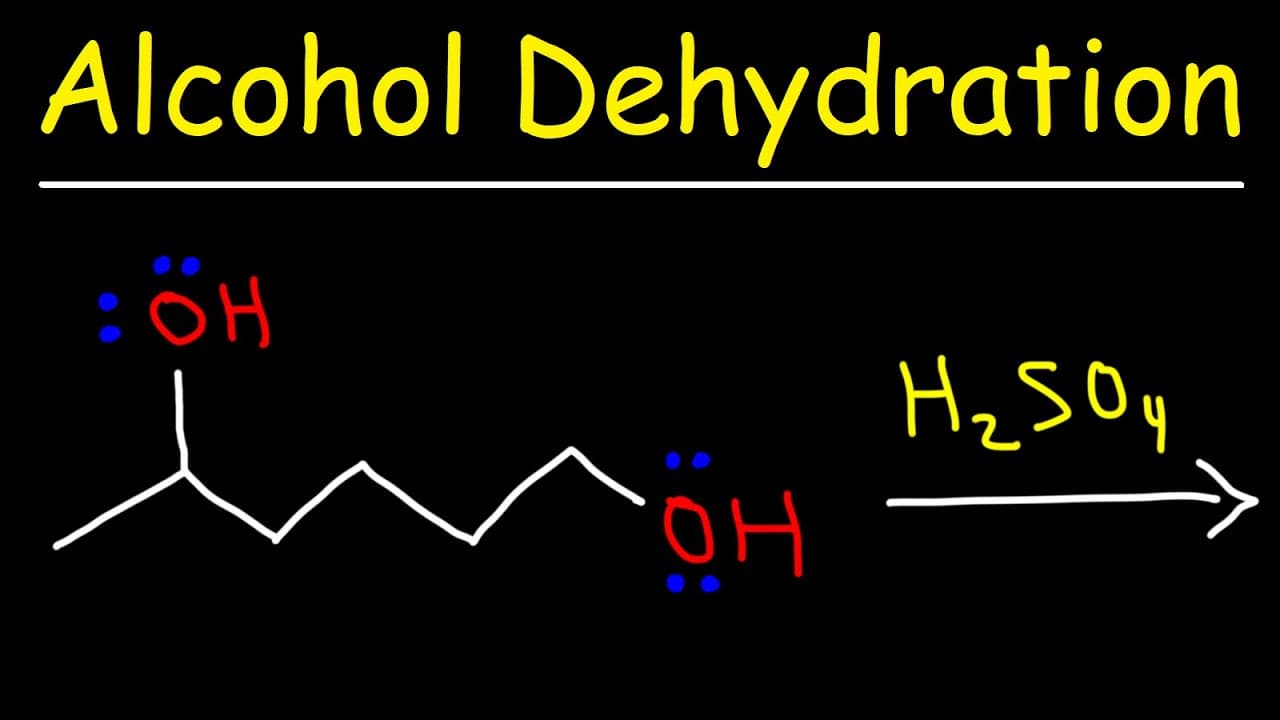
When alcohol reacts with sulfuric acid and is heated, it undergoes an acid-catalyzed dehydration reaction to form alkenes. The mechanism involves protonation, carbocation formation, and proton abstraction, with the major product being the most stable alkene, often a tetra-substituted variant. Water or bisulfate ion can act as bases in this process, affecting the final products.
Transcript
in this video we're going to focus on the acid-catalyzed dehydration reactions of alcohols we're going to focus on the mechanisms which can help us to predict the product of the reaction so when you mix an alcohol with sulfuric acid and heat an e1 reaction can occur converting the alcohol into an alkene so let's go over the mechanism first i'm goin... Read More
Key Insights
- 💁 Acid-catalyzed dehydration reactions convert alcohols into alkenes through protonation, carbocation formation, and proton abstraction.
- 💁 The major product is typically the most stable alkene that can be formed, often a tetra-substituted alkene.
- 😑 Water and bisulfate ion can act as bases, abstracting protons and leading to different products.
Install to Summarize YouTube Videos and Get Transcripts
Explore YouTube Video Summarizer or Get YouTube Transcript Extractor
Questions & Answers
Q: What is the first step in the acid-catalyzed dehydration reaction of alcohols?
The first step is protonation of the alcohol functional group, which converts it into a better leaving group.
Q: What determines the major product in the reaction?
The major product is typically the most stable alkene that can be formed. In the case of a tetra-substituted alkene, it is the alkene with the highest number of substituents.
Q: How does the presence of water versus bisulfate ion as a base affect the reaction?
Water is a stronger base than bisulfate ion, so if the concentration of water is significant, it can abstract a proton and lead to the formation of a different product. However, in a very concentrated solution of sulfuric acid, bisulfate ion can be the base.
Q: What happens when an alcohol with a ring structure reacts with sulfuric acid?
In this case, the reaction can involve ring expansions, leading to the formation of a more stable carbocation intermediate and subsequent rearrangement of the carbon structure. The final product could be a cyclic ether.
Summary & Key Takeaways
-
Acid-catalyzed dehydration reactions of alcohols involve the conversion of alcohols into alkenes.
-
The mechanism of these reactions involves protonation of the alcohol, the formation of a carbocation intermediate, and the abstraction of a proton by a base.
-
The major product of the reaction is typically the most stable alkene that can be formed.
Read in Other Languages (beta)
Share This Summary 📚
Summarize YouTube Videos and Get Video Transcripts with 1-Click
Try YouTube Summary with ChatGPT & Claude or YouTube Transcript Generator
Explore More Summaries from The Organic Chemistry Tutor 📚





Summarize YouTube Videos and Get Video Transcripts with 1-Click
Try YouTube Summary with ChatGPT & Claude or YouTube Transcript Generator