Products
Features
YouTube Video Summarizer
Summarize YouTube videos
Web & PDF Highlighter
Highlight web pages & PDFs
Chat with PDF
Ask any PDF questions with AI
Ask AI Clone
Chat with your highlights & memories
Audio Transcriber
Transcribe audio files to text
Glasp Reader
Read and highlight articles
Kindle Highlight Export
Export your Kindle highlights
Idea Hatch
Hatch ideas from your highlights
Integrations
Obsidian Plugin
Notion Integration
Pocket Integration
Raindrop Integration
Instapaper Integration
Medium Integration
Readwise Integration
Snipd Integration
Hypothesis Integration
Apps & Extensions
Chrome Extension
Safari Extension
Edge Add-ons
Firefox Add-ons
iOS App
Android App
Discover
Discover
Ideas
Discover new ideas and insights
Articles
Curated articles and insights
Books
Book recommendations by great minds
Posts
Essays and notes from readers
Quotes
Inspiring quotes collection
Videos
Curated videos and summaries
Explore Glasp
Glasp Story
How we grew from 0 to 3 million users
Glasp Newsletter
Weekly insights and updates
Glasp Talk
Interview series with great minds
Glasp Blog
Latest news and articles
Glasp Use Cases
Learn how others use Glasp
Build & Support
Glasp API
Access Glasp's API for developers
MCP Connector
Connect Glasp to Claude & ChatGPT
Community
Glasp Reddit Community
Students
Student discount and benefits
FAQs
Frequently Asked Questions
AboutPricing
DashboardLog inSign up

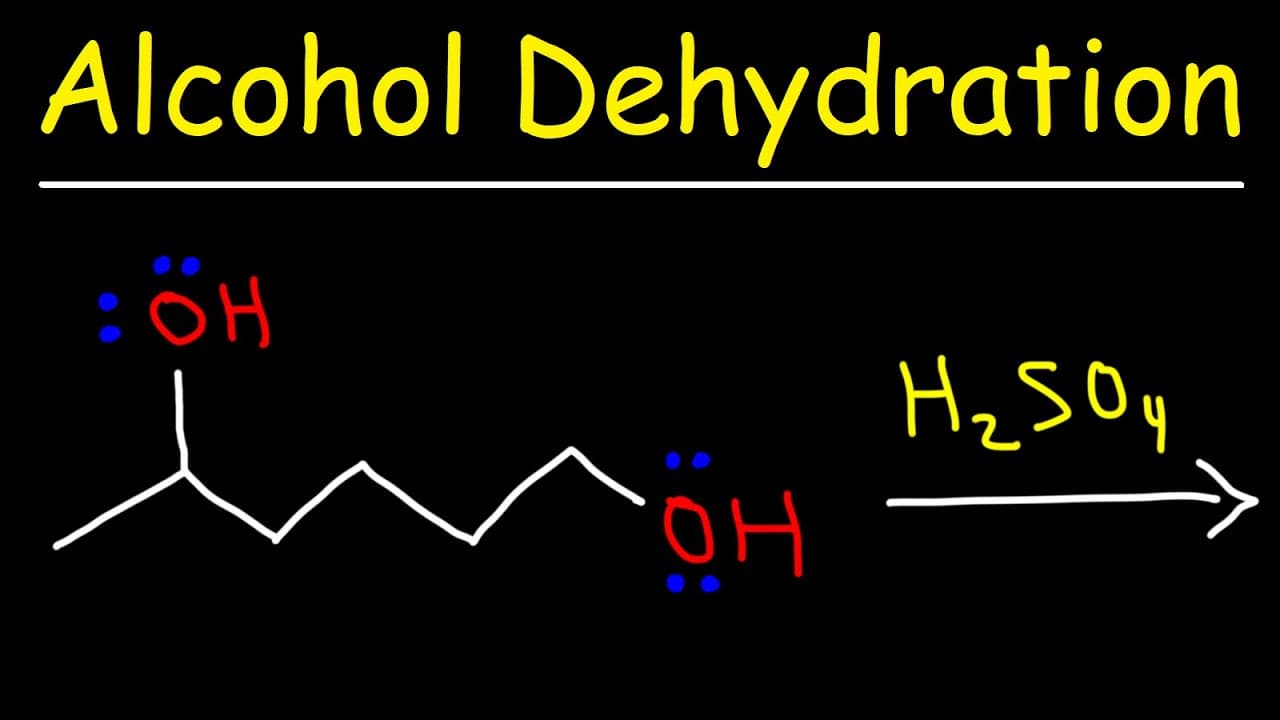
What Happens When Alcohol Reacts With Sulfuric Acid?
July 16, 2020
by
The Organic Chemistry Tutor
YouTube video player
What Happens When Alcohol Reacts With Sulfuric Acid?

TL;DR

When alcohol reacts with sulfuric acid and is heated, it undergoes an acid-catalyzed dehydration reaction to form alkenes. The mechanism involves protonation, carbocation formation, and proton abstraction, with the major product being the most stable alkene, often a tetra-substituted variant. Water or bisulfate ion can act as bases in this process, affecting the final products.

Transcript

in this video we're going to focus on the acid-catalyzed dehydration reactions of alcohols we're going to focus on the mechanisms which can help us to predict the product of the reaction so when you mix an alcohol with sulfuric acid and heat an e1 reaction can occur converting the alcohol into an alkene so let's go over the mechanism first i'm goin... Read More

Key Insights

  • 💁 Acid-catalyzed dehydration reactions convert alcohols into alkenes through protonation, carbocation formation, and proton abstraction.
  • 💁 The major product is typically the most stable alkene that can be formed, often a tetra-substituted alkene.
  • 😑 Water and bisulfate ion can act as bases, abstracting protons and leading to different products.

Install to Summarize YouTube Videos and Get Transcripts

Explore YouTube Video Summarizer or Get YouTube Transcript Extractor

Questions & Answers

Q: What is the first step in the acid-catalyzed dehydration reaction of alcohols?

The first step is protonation of the alcohol functional group, which converts it into a better leaving group.

Q: What determines the major product in the reaction?

The major product is typically the most stable alkene that can be formed. In the case of a tetra-substituted alkene, it is the alkene with the highest number of substituents.

Q: How does the presence of water versus bisulfate ion as a base affect the reaction?

Water is a stronger base than bisulfate ion, so if the concentration of water is significant, it can abstract a proton and lead to the formation of a different product. However, in a very concentrated solution of sulfuric acid, bisulfate ion can be the base.

Q: What happens when an alcohol with a ring structure reacts with sulfuric acid?

In this case, the reaction can involve ring expansions, leading to the formation of a more stable carbocation intermediate and subsequent rearrangement of the carbon structure. The final product could be a cyclic ether.

Summary & Key Takeaways

  • Acid-catalyzed dehydration reactions of alcohols involve the conversion of alcohols into alkenes.

  • The mechanism of these reactions involves protonation of the alcohol, the formation of a carbocation intermediate, and the abstraction of a proton by a base.

  • The major product of the reaction is typically the most stable alkene that can be formed.


Read in Other Languages (beta)

English

Share This Summary 📚

Summarize YouTube Videos and Get Video Transcripts with 1-Click

Download browser extensions on:

Try YouTube Summary with ChatGPT & Claude or YouTube Transcript Generator

Explore More Summaries from The Organic Chemistry Tutor 📚

Integral of tan^5(x) thumbnail
Integral of tan^5(x)
The Organic Chemistry Tutor
How to Factor Trinomials Easily When Leading Coefficient Is 1 thumbnail
How to Factor Trinomials Easily When Leading Coefficient Is 1
The Organic Chemistry Tutor
What Is the Difference Between Distance and Displacement? thumbnail
What Is the Difference Between Distance and Displacement?
The Organic Chemistry Tutor
Simple interest and Compound Interest - SAT Math Part 35 thumbnail
Simple interest and Compound Interest - SAT Math Part 35
The Organic Chemistry Tutor
How To Find The Amount of Excess Reactant That Is Left Over - Chemistry thumbnail
How To Find The Amount of Excess Reactant That Is Left Over - Chemistry
The Organic Chemistry Tutor
How to Calculate Voltage Gain of a Transistor Amplifier thumbnail
How to Calculate Voltage Gain of a Transistor Amplifier
The Organic Chemistry Tutor

Summarize YouTube Videos and Get Video Transcripts with 1-Click

Download browser extensions on:

Try YouTube Summary with ChatGPT & Claude or YouTube Transcript Generator

Apps & Extensions

  • Chrome Extension
  • Safari Extension
  • Edge Add-ons
  • Firefox Add-ons
  • iOS App
  • Android App

Key Features

  • YouTube Video Summarizer
  • Web & PDF Summarizer
  • Web & PDF Highlighter
  • Chat with PDF
  • Ask AI Clone
  • Audio Transcriber
  • Glasp Reader
  • Kindle Highlight Export
  • Idea Hatch

Integrations

  • Obsidian Plugin
  • Notion Integration
  • Pocket Integration
  • Raindrop Integration
  • Instapaper Integration
  • Medium Integration
  • Readwise Integration
  • Snipd Integration
  • Hypothesis Integration

More Features

  • APIs
  • MCP Connector
  • Blog & Post
  • Embed Links
  • Image Highlight
  • Personality Test
  • Quote Shots
  • Open Graph Checker

Company

  • About us
  • Our Story
  • Brand Assets
  • Blog
  • Community
  • FAQs
  • Job Board
  • Newsletter
  • Pricing
Terms

•

Privacy

•

Guidelines

© 2026 Glasp Inc. All rights reserved.