What Is Hydrogenation and How Does It Affect Fats?
TL;DR
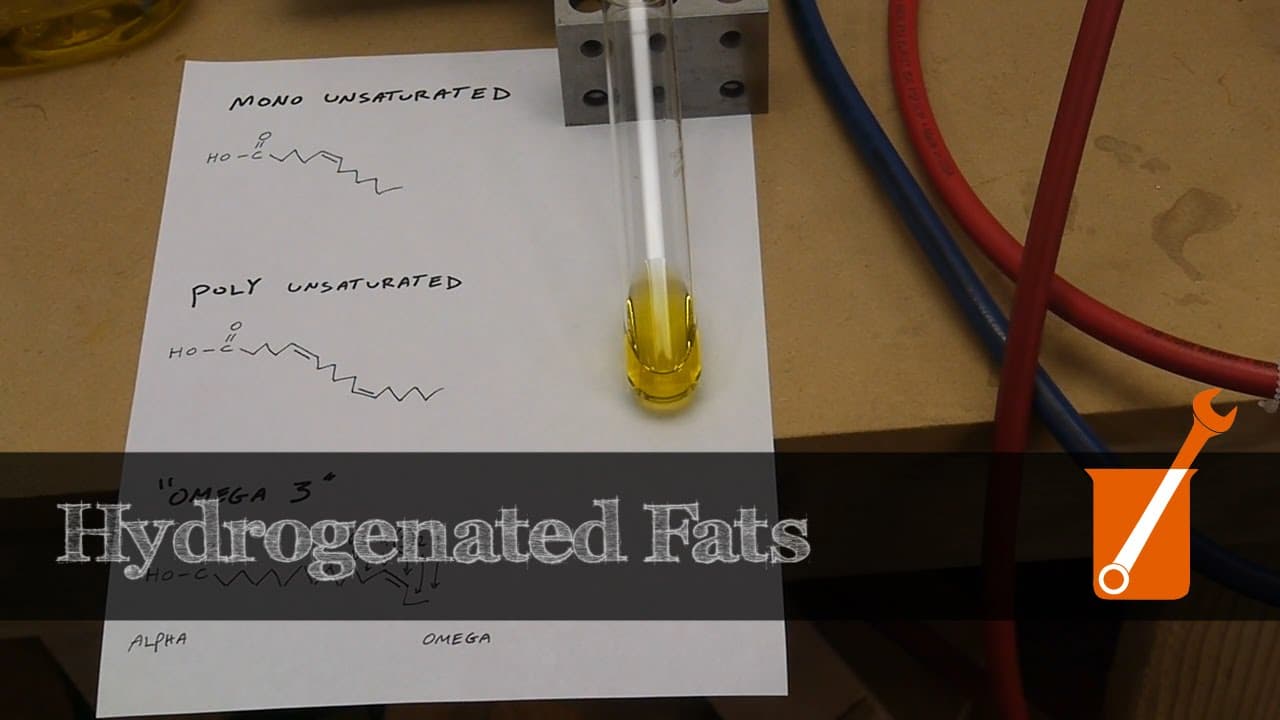
Hydrogenation is the process of converting unsaturated fats into saturated fats by adding hydrogen, making them solid at room temperature. While solid fats can enhance flavor in foods, this process can also produce trans fats, which pose significant health risks. The structure of the fats determines their physical properties and effects on health.
Transcript
there's a lot of buzz in the media regarding saturated and unsaturated fats and so today on applied science I'd like to give you some of the details behind those terms and then also show you a demonstration of how to saturate a fat with hydrogen gas fatty acids are the basic building blocks that make up all of the fats and oils you will encounter i... Read More
Key Insights
- 💁 Fatty acids exist as saturated (solid) or unsaturated (liquid) forms.
- 🥺 The structure of saturated fats is straight, leading to solidity at room temperature.
- 👨 Unsaturated fats have double bonds, making them liquid at room temperature.
- 👨 Hydrogenation can convert unsaturated fats to saturated fats.
- 👨 Trans fats, a result of hydrogenation, pose health risks due to straight structure.
- 😋 Food manufacturers face challenges in controlling trans and cis fat ratios during hydrogenation.
- 👨 Trans fats have been in the spotlight for health concerns.
Install to Summarize YouTube Videos and Get Transcripts
Explore YouTube Video Summarizer or Get YouTube Transcript Extractor
Questions & Answers
Q: What is the main difference between saturated and unsaturated fats?
Saturated fats are fully hydrogenated, solid at room temperature. Unsaturated fats have double bonds, making them liquid.
Q: How does hydrogenation change the properties of fats?
Hydrogenation converts unsaturated fats to saturated fats, altering their melting points and making them solid.
Q: Why are trans fats concerning for health?
Trans fats result from hydrogenation, having straight structure like saturated fats, leading to health risks when consumed.
Q: How can food manufacturers control the ratio of trans and cis fats during hydrogenation?
It is possible to control the ratio of trans and cis fats, but it is costly, leading to the prevalence of trans fats in processed foods.
Summary & Key Takeaways
-
Fatty acids come in saturated (fully hydrogenated) and unsaturated (with double bonds) forms.
-
Saturated fats are solid at room temperature due to their straight structure, while unsaturated fats are liquid.
-
Hydrogenation can convert unsaturated fats to saturated fats, but may create trans fats with health risks.
Read in Other Languages (beta)
Share This Summary 📚
Summarize YouTube Videos and Get Video Transcripts with 1-Click
Try YouTube Summary with ChatGPT & Claude or YouTube Transcript Generator
Explore More Summaries from Applied Science 📚



Summarize YouTube Videos and Get Video Transcripts with 1-Click
Try YouTube Summary with ChatGPT & Claude or YouTube Transcript Generator