What are emotional flashbacks in CPTSD and how to cope
TL;DR
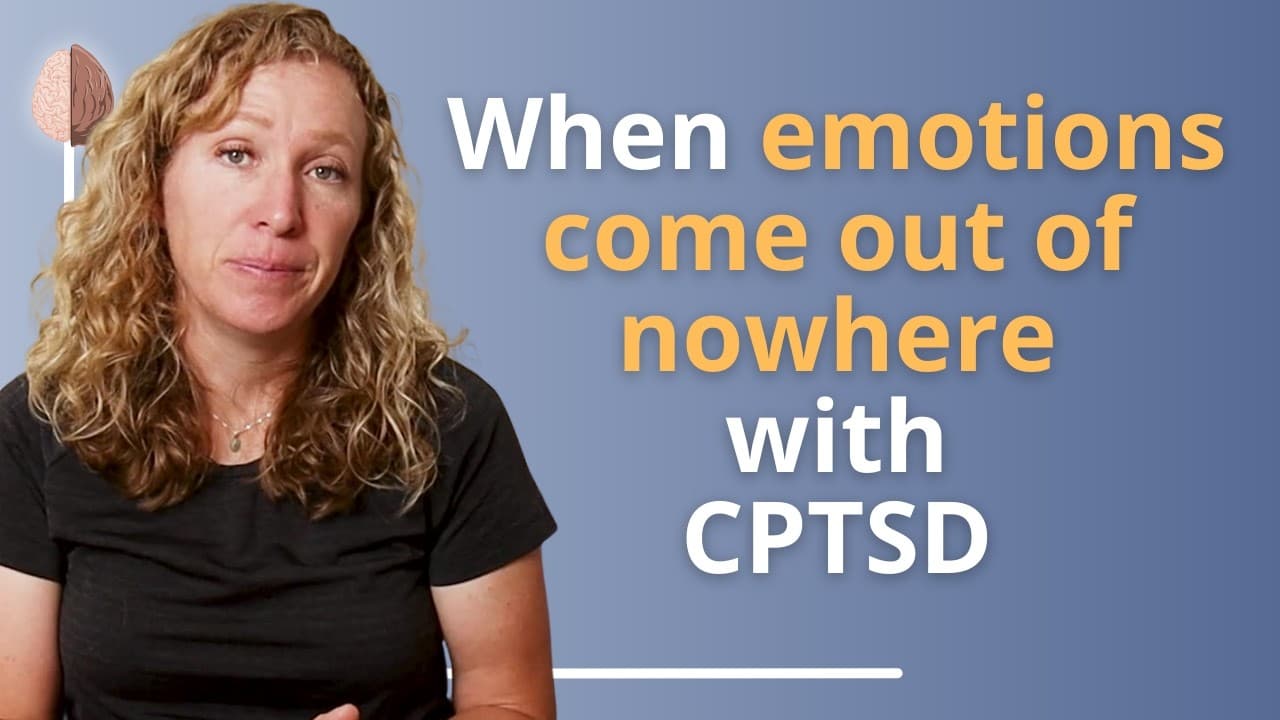
An emotional flashback is a felt memory that makes you react as if you are in danger, not a visual memory. The video covers 13 strategies from Pete Walker to ground, reparent, set boundaries, and rebuild resilience. These steps help reduce frequency and intensity over time and improve present moment safety.
Transcript
Have you ever felt a wave of panic, shame, or despair overwhelm you like, out of nowhere? It's like your whole body is reacting to danger, but there's no actual threat in front of you, or it's disproportionate, at least. That may be an emotional flashback. An emotional flashback is not a memory you see like in a typical PTSD flashback. It's a m... Read More
Key Insights
- Emotional flashbacks are felt states, not visual memories, and occur when the nervous system reacts to past trauma as if present danger exists.
- Naming the flashback creates a boundary between the feeling and the self, helping observers witness the experience rather than be overwhelmed by it.
- Reminding yourself that you feel afraid but are not in danger helps ground you in the present moment and reduces the sense of threat.
- Setting boundaries and saying no is a key step to protect yourself, especially if you were punished for speaking up in childhood.
- A compassionate inner child dialogue reparents the self, offering comfort and reducing self-criticism during flashbacks.
- Flashbacks are time limited and will pass, which provides a mental framework to ride out the storm rather than catastrophizing.
- Adopting adult choices and recognizing you can access resources and allies helps regain a sense of control during a flashback.
- Grounding techniques, such as body awareness and slow breathing, cue the brain to feel safe and reduce flight responses.
Install to Summarize YouTube Videos and Get Transcripts
Explore YouTube Video Summarizer or Get YouTube Transcript Extractor
Questions & Answers
Q: What is an emotional flashback in CPTSD and how does it differ from a traditional PTSD flashback?
An emotional flashback is a sudden intense emotional state that feels like a return to the past, rather than a visual memory of a traumatic event. It is a nervous system reaction to past experiences and can occur without any present danger. Pete Walker describes it as amygdala hijacking where the body responds as though danger is present, even when it is not.
Q: How can naming the flashback help during an episode?
Naming the flashback helps by creating space between the feeling and the identity, turning the experience into something you observe rather than something that defines you. Saying to yourself that you are having a flashback and that this is a feeling memory can reduce the intensity and ground you in the present moment.
Q: What is the purpose of saying I feel afraid but I am not in danger?
This reminder distinguishes the current safety from past threats. It reassures the nervous system that there is no real danger, helps you use your senses to ground, and reinforces that you are in your present surroundings, which reduces the sense of threat and supports a return to baseline.
Q: Why is setting boundaries important during CPTSD flashbacks?
Boundaries protect you from being overwhelmed by past patterns of punishment or shaming. By owning the right to say no and to pause or step away, you reclaim agency, which is often lost in childhood experiences, and reduce the risk of reactivity during a flashback.
Q: How does inner child work help during a flashback?
Speaking to the inner child with kindness and reassurance reorients the self toward safety and connection. This reparenting strategy helps reduce self-criticism that often accompanies flashbacks, fosters self-compassion, and strengthens the sense that you are not alone in your distress.
Q: What does it mean that flashbacks are time-limited, and how should you use this knowledge?
Understanding that flashbacks will pass provides a mental framework to endure the moment without catastrophe thinking. You can visualize the emotion as a passing storm, ride it out, and remind yourself that the intensity will fade, which can lower anxiety and shorten the episode’s duration.
Q: How can adult choices and resources influence recovery from flashbacks?
Realizing you are in an adult body with access to resources, money, housing, and the ability to leave or stay in relationships gives you leverage to protect yourself. This awareness supports choosing actions that promote safety, autonomy, and gradual healing from CPTSD over time.
Q: What role do grounding and body awareness play in managing flashbacks?
Grounding techniques reconnect you with the body and present environment, which reduces the brain's threat signals. Techniques like progressive muscle relaxation, slow breathing, and noticing surroundings help reestablish safety, calm the nervous system, and make it easier to transition out of the flashback.
Q: How should one handle the inner critic during a flashback, according to the video?
Resist hopeless narratives by reframing thoughts as temporary and overwhelming rather than permanent truths. Tell yourself that your brain is overwhelmed and that you will think more clearly when calm. If needed, channel the critic’s energy into a boundary against harsh self-talk to protect self-worth.
Summary & Key Takeaways
-
Summary point 1: The video defines emotional flashbacks as felt states that mimic past danger rather than visual memories, caused by a nervous system response to childhood trauma. It explains amygdala hijacking and how the state can recur without any present threat. Grounding and self-soothing are recommended first responses.
-
Summary point 2: The content outlines 13 strategies from Pete Walker, starting with acknowledging the flashback, grounding, and boundary setting, then moving to inner child care, recognizing time limitations, and adopting adult choices. These steps aim to reduce future flashbacks by building safety and resilience.
-
Summary point 3: The video emphasizes safe relationships and self-compassion as core elements of recovery, encouraging ongoing practice and offering related courses and resources for grounding and regulation to support progress over time.
Read in Other Languages (beta)
Share This Summary 📚
Summarize YouTube Videos and Get Video Transcripts with 1-Click
Try YouTube Summary with ChatGPT & Claude or YouTube Transcript Generator
Explore More Summaries from Therapy in a Nutshell 📚


Summarize YouTube Videos and Get Video Transcripts with 1-Click
Try YouTube Summary with ChatGPT & Claude or YouTube Transcript Generator