How Can AI Make Physics Executable Like Software
TL;DR
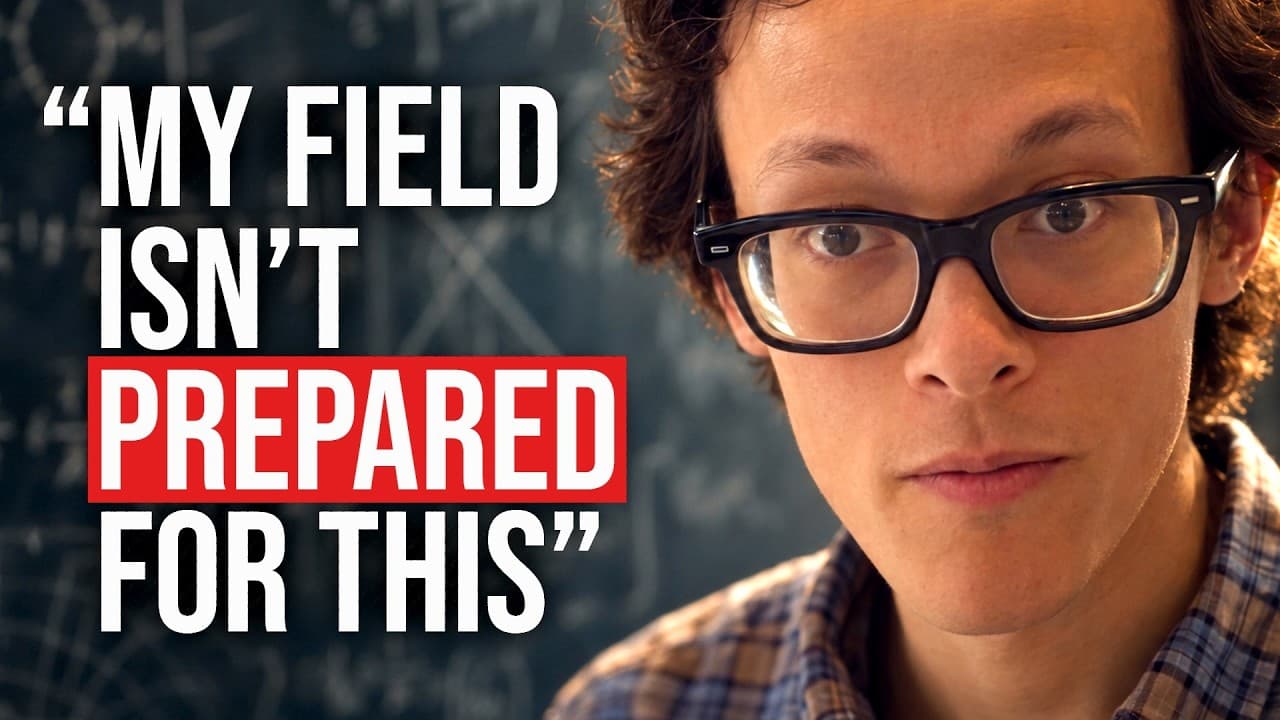
AI can accelerate physics formalization and automated proof, but the change must address sociology and funding. The breakthrough moment showed an autonomous proof of a Fields Medal result, proving that AI can push beyond traditional limits. The challenge is to align science as process with the realities of science as product, and to adapt institutions accordingly.
Transcript
Jonathan: The timelines were completely wrong. I was scared on a very personal level. We’re not putting the genie back in the bottle. Curt: This is Jonathan Gorard, an applied mathematician, co-founder of the Wolfram Physics Project, and CEO of the newly founded Lanyon AI. He’s one of the physicists revolutionizing how AI can make scient... Read More
Key Insights
- AI can accelerate formal proofs and automate theorem checking, enabling rapid verification of complex results. The breakthrough event demonstrated an end-to-end AI proof of a high level mathematical claim, challenging prior assumptions about timelines and capabilities.
- The distinction between science as process and science as product is central to funding and policy decisions, with a fear that social structures may not adapt quickly enough to AI driven advances.
- Timelines matter because faster AI progress can outpace the sociology of research, requiring new funding models and institutional frameworks to support rapid adaptation.
- The metaphor of physics becoming executable mirrors software, suggesting future workflows where physics experiments and theories are directly codified into executable representations.
- Autonomous proof systems can shift the belief about what AI can contribute to science, prompting a re-evaluation of the role of human intuition in research.
- The Maryna Viazovska sphere packing breakthrough showcased how AI enabled large scale automated formalization, influencing how proofs are verified and shared with the community.
- There is skepticism about grant narratives that justify basic research through immediate practical use, advocating for continued support of science as a process for its own sake.
- The conversation implies a broader shift toward integrating AI tools with traditional mathematical and physical reasoning to expand the frontier of what is knowable.
Install to Summarize YouTube Videos and Get Transcripts
Explore YouTube Video Summarizer or Get YouTube Transcript Extractor
Questions & Answers
Q: How is AI changing the way physics might be proven or formalized in the future?
AI is shown as a vehicle to automate and verify proofs, potentially making complex theoretical results more accessible and checkable end to end. The discussion highlights an autonomous Lean proof for a Fields Medal level problem as a turning point, suggesting that AI could handle substantial portions of formalization, reducing the gap between human reasoning and machine verification, and enabling deeper collaboration between mathematicians, physicists, and AI developers.
Q: What was the moment that changed the speaker’s view on AI timelines in science?
The March 2026 event where an AI system autonomously produced a multi hundred thousand line Lean proof of a Fields Medal winning result was the moment of realization. It demonstrated that AI could reach a level of capability previously thought unlikely within a couple of years, prompting a reassessment of both timelines and the sociology of science, including funding and collaboration models.
Q: Why does the speaker distinguish science as process from science as product?
Science as process refers to curiosity driven exploration like understanding turbulence or quantum gravity, while science as product focuses on outcomes with clear practical applications such as curing cancer or enabling clean energy. The speaker argues current funding and public narratives overemphasize product outcomes, which can undermine and misalign the intrinsic value of process oriented research.
Q: How does the story of the Maryna Viazovska proof relate to AI in science?
The story illustrates AI enabled autonomous formalization efforts that culminated in a complete end to end proof, sparking a reevaluation of what AI can contribute to mathematics and physics. It also revealed the ecosystem of collaboration between AI companies, formalization groups, and researchers, highlighting how external actors can influence scientific progress and tenure of ideas.
Q: What concerns does the speaker raise about social adaptation to AI progress?
The speaker worries that academia and funding agencies lack time to adapt to rapid AI driven changes. If AI can quickly accelerate results, current structures may fail to support the needed shifts in policy, evaluation, and career paths, potentially stifling potential breakthroughs and widening gaps between fast moving technology and slower institutional processes.
Q: What does the speaker say about grant proposals and the usefulness of pure math?
Grant proposals often claim that pure mathematical work benefits applied domains like cryptography, despite the core ideas sometimes lacking immediate practical relevance. The speaker notes this as a systemic tendency to frame curiosity driven research in terms of utilitarian outcomes, which can distort incentives and obscure the intrinsic value of mathematical exploration.
Q: What is the projected effect on the role of the physicist with AI advancement?
As AI enables more of the formalization and verification process, physicists may become more focused on defining questions, guiding AI systems, and interpreting results, while machines handle heavy formal reasoning. The role may shift toward framing problems in executable representations and validating that the AI produced conclusions align with physical intuition and experimental constraints.
Q: How might AI affect the funding landscape for foundational research?
AI driven advances could push funders to support more process oriented, curiosity driven research by demonstrating tangible capabilities in proof automation and complex modeling. However, the balance between funding for immediate product oriented results and long term foundational understanding will be crucial, requiring new metrics and evaluation frameworks that recognize AI assisted contributions to science.
Summary & Key Takeaways
-
The discussion centers on making physics executable in the same way as software, with AI assisting formalization and proof. It highlights a pivotal moment where AI produced an autonomous Lean proof, raising questions about timelines, sociology, and funding in academia. The conversation explores the distinction between science as process and science as product.
-
The guest explains the potential shift in research culture and funding, where curiosity-driven work must be supported even when results are not immediately marketable. There is concern that current systems reward applications over fundamental understanding, risking a misalignment with long term scientific progress.
-
The dialogue also covers the role of background communities and collaborations in advancing AI-assisted science, including the interaction between AI companies and formalization groups, and the need to rethink how discoveries are described and validated to keep pace with rapid technological change.
Read in Other Languages (beta)
Share This Summary 📚
Summarize YouTube Videos and Get Video Transcripts with 1-Click
Try YouTube Summary with ChatGPT & Claude or YouTube Transcript Generator
Explore More Summaries from Curt Jaimungal 📚
Summarize YouTube Videos and Get Video Transcripts with 1-Click
Try YouTube Summary with ChatGPT & Claude or YouTube Transcript Generator