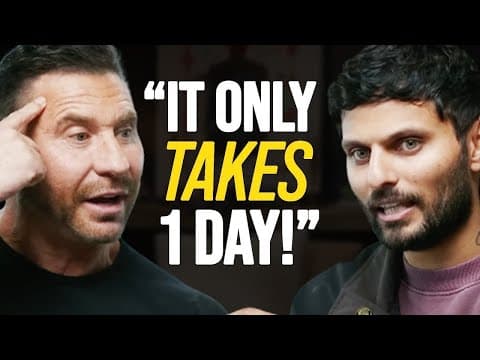
If You Want To COMPLETELY CHANGE Your Life In 7 Days, WATCH THIS! | Lisa Bilyeu

TL;DR
Confidence grows from competence, so Lisa Bilyeu recommends acting before you feel ready and building skills through microscopic, repeatable steps. When she co-founded Quest Nutrition, she felt insecure and inadequate, but doing the work, failing, recovering, and learning gradually produced confidence. Her blueprint begins by defining what you want confidence for and choosing an action as small as placing your shoes beside the bed. Read on for the full step-by-step approach.
Transcript
i had every intention to help women that felt like i did i had that north star i knew what i was trying to do i gave it my all and so if now no one likes it i'm not going to feel badly about myself because i showed up and that's the thing jay no one can affect whether you show up or not hear about the failure and successes no one can affect whether... Read More
Key Insights
- Radical confidence is not about feeling great about yourself before you start; it is about creating a blueprint to reach the end goal so you can build the life and dream you want, moving forward even when scared or fearful.
- Confidence works like a muscle you can train. Just as you would not expect results after only a couple of squats, you build confidence over time through repeated practice rather than expecting to already possess it.
- Competence builds confidence. Lisa Bilyeu felt insecure and inadequate when starting Quest Nutrition, and confidence came afterward as a byproduct of doing things, freaking out, falling down, getting back up, and learning.
- Shifting perspective is the key. Instead of focusing on feeling confident, ask what you want confidence to do, identify that end goal, then put a plan in place because confidence follows the action.
- Telling someone to 'just do it anyway' does not help those with crippling anxiety. Real change requires a blueprint of small stepping stones matched to where the person actually is emotionally.
- Microscopic movements create momentum. For someone avoiding the gym, the first step might just be placing shoes by the bed, then putting them on the next day, giving yourself a pat on the back for each tiny win.
- Adults deny themselves the grace to learn that children get. Kids take time to learn to walk or tie shoes, but adults get stuck in their heads and refuse themselves a training period for new skills.
- Showing up is the only thing fully within your control. As Lisa notes, no one can affect whether you show up except you, so give your effort your all and you need not feel badly about the outcome.
Install to Summarize YouTube Videos and Get Transcripts
Explore YouTube Video Summarizer or Get YouTube Transcript Extractor
Questions & Answers
Q: How do you build confidence when you feel insecure?
Start taking manageable actions before you feel confident, because Lisa Bilyeu describes confidence as a byproduct of competence. She built it by doing unfamiliar work, making mistakes, recovering, learning, and gradually becoming more capable.
Q: What is radical confidence?
Radical confidence means creating a blueprint toward the life or dream you want instead of waiting to feel good about yourself first. It allows you to move forward while still feeling scared or fearful.
Q: Why shouldn’t you wait for confidence before taking action?
Lisa says action and skill development come before the feeling of confidence. When she helped start Quest Nutrition, she did not know what she was doing and felt inadequate, but confidence emerged over time as she became competent.
Q: How is confidence like a muscle?
Confidence must be trained repeatedly, much like a muscle. Lisa notes that a couple of squats will not produce the desired result, so people should not expect confidence to appear after only a few attempts.
Q: What should you focus on instead of trying to feel confident?
Ask what you want confidence to help you do, then identify the end goal and build a plan toward it. This shifts attention from chasing a feeling to practicing the actions and skills that can produce confidence.
Q: Why can telling someone to “just do it” be unhelpful?
That advice does not address crippling anxiety or a person’s actual emotional starting point. Lisa recommends meeting people where they are and creating manageable stepping stones instead of demanding an immediate leap.
Q: What is an example of a microscopic first step toward a goal?
For someone who wants to become healthier but avoids the gym, the first step could be placing their shoes beside the bed. The next step could simply be putting them on, with each completed action recognized as progress.
Q: What part of success is fully within your control?
Lisa says showing up is the part no one else can control for you. If you know your north star, give the effort everything you have, and show up, you do not need to base your self-worth on whether other people like the outcome.
Summary
In this episode, Jay Shetty interviews Lisa Bilyeu, an author, co-founder of Quest Nutrition, and president of Impact Theory Studios. They discuss Lisa's new book, "Radical Confidence: 10 No BS Lessons on Becoming the Hero of Your Own Life," and talk about topics such as overcoming fear, building competence, and seeking external validation.
Questions & Answers
Q: Who did Lisa Bilyeu look up to as the embodiment of confidence?
Lisa looked up to Jodie Foster, admiring her ability to excel both in front of and behind the camera. She later realized that confidence is not necessarily about always feeling great about oneself, but rather about consistently showing up and taking action.
Q: How did Lisa build her confidence in the early days of Quest Nutrition?
Lisa admits that she didn't have any prior experience or skill sets in building a company. She was thrown into the deep end and had to figure everything out as she went along. She learned to embrace the process of learning and growing, accepting that competence would lead to confidence over time.
Q: How does Lisa define confidence and radical confidence?
Lisa defines confidence as a desire to feel great about oneself before starting something. Radical confidence, on the other hand, is about taking action and pursuing one's goals regardless of how confident one may feel. It's about focusing on the end goal and creating a blueprint to get there, which will ultimately build competence and confidence.
Q: Why do people often make excuses instead of taking action?
Lisa explains that sometimes the excuses we make are real and valid, but they can still become obstacles in achieving our dreams. It's important to differentiate between excuses and reasons, and to recognize when we are using excuses to hold ourselves back. By identifying these excuses and developing a plan to overcome them, we can start taking small steps towards our goals.
Q: How can individuals overcome the fear of starting something new?
Lisa emphasizes the importance of being deliberate in our actions rather than striving for perfection. She shares a technique called "phony roulette" where one sets random reminders on their phone with a specific message to remind themselves to be deliberate. By adopting a mindset of being a learner and continuously seeking knowledge, we can overcome the fear of the unknown and take action.
Q: What are the dangers of seeking external validation?
Lisa acknowledges that seeking external validation is a natural instinct, but it can also be unhealthy. She gives an example of her own experience with writing a book and desiring validation from the New York Times bestseller list. However, she also recognizes the importance of focusing on the impact and intention behind her work. By setting personal metrics for success, such as giving her best effort and constantly learning, she can validate herself and remain resilient even in the face of external judgment.
Q: How can individuals validate themselves and maintain self-worth?
Lisa advises focusing on the effort and intention we put into our work. By asking ourselves if we've given our all, if we're learning from our experiences, and if we have good intentions, we can validate ourselves based on our own actions and efforts. It's important to remember that no one else can determine whether we show up or not; only we have that power.
Q: How can individuals overcome the fear of failure?
Lisa suggests reframing failure as a learning opportunity. She encourages individuals to identify what they can learn from their failures and make a commitment to take a hard look at their mistakes. By focusing on the lessons learned and the effort put forth, individuals can move forward without feeling bad about themselves, knowing that they showed up and gave it their all.
Q: How can individuals be deliberate and maintain their focus?
Lisa advises using tools like "phony roulette" to remind oneself to be deliberate and not strive for perfection. By setting random reminders with affirming messages on their phone, individuals can ground themselves in their intentions and keep their focus on the present moment. Over time, this mindset becomes a habit and helps individuals stay deliberate in their actions.
Q: How can individuals build competence and confidence?
Lisa emphasizes the importance of taking small, incremental steps towards one's goals. By focusing on building competence through deliberate practice and continuous learning, individuals can develop the skills and knowledge necessary to feel competent and confident. It's about embracing the process and recognizing that competence leads to confidence with time and effort.
Takeaways
In this episode, Lisa Bilyeu shares valuable insights on building confidence, overcoming fear, and seeking validation from within. She highlights the importance of taking action and not waiting for confidence to come before starting something new. Lisa encourages individuals to be deliberate in their actions, focus on their efforts and intentions, and learn from their failures. By embracing the journey and becoming lifelong learners, individuals can build competence and confidence along the way.
Summary & Key Takeaways
-
Lisa Bilyeu redefines confidence, arguing you do not need to feel confident before acting. Growing up she admired Jodie Foster as the epitome of confidence, later realizing that showing up consistently matters more than always feeling confident. The book's core message is that you can show up without first feeling confident.
-
Confidence functions like a muscle that must be trained through repetition. When Lisa co-founded Quest Nutrition she felt insecure and inadequate, and confidence emerged only as a byproduct of taking action, failing, recovering, and gradually becoming competent at what she was attempting to do.
-
The practical method is a blueprint of tiny, incremental steps tailored to a person's real emotional state. Rather than telling an overwhelmed person to just try harder, you break the goal into microscopic actions, celebrate each one, and let competence steadily build the deeper confidence needed.
Read in Other Languages (beta)
Share This Summary 📚
Summarize YouTube Videos and Get Video Transcripts with 1-Click
Try YouTube Summary with ChatGPT & Claude or YouTube Transcript Generator
Explore More Summaries from On Purpose Podcast - Full Episodes 📚





Summarize YouTube Videos and Get Video Transcripts with 1-Click
Try YouTube Summary with ChatGPT & Claude or YouTube Transcript Generator