What Do the New 2026 Dietary Guidelines Actually Change?
TL;DR
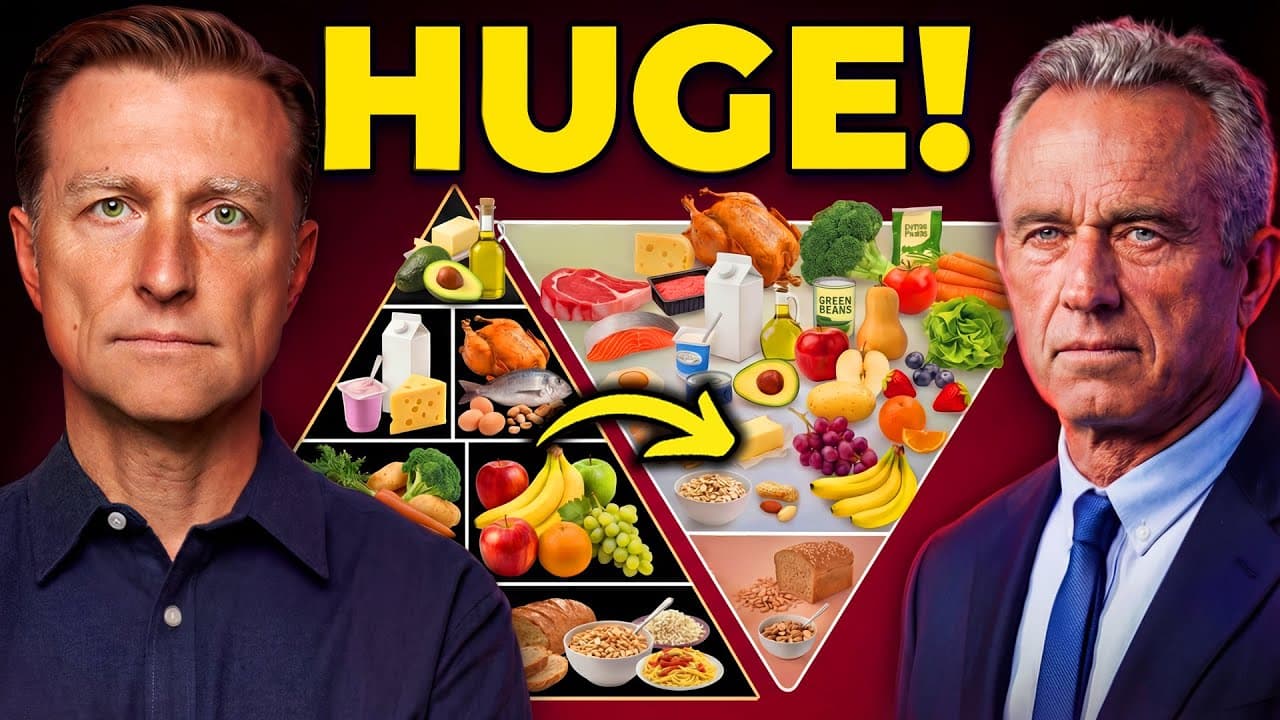
The updated US dietary guidelines invert the food pyramid, removing grains as the base and naming ultra-processed foods as the primary driver of 90% of chronic disease. Protein recommendations jump from 0.8 g/kg to 1.2 to 1.6 g/kg, favoring high-quality sources like red meat over the old carb-heavy, low-fat model.
Transcript
I've been watching the dietary food guidelines very closely for decades. And I never thought I would see what I just saw yesterday. And for the first time in history, they didn't just tweak the pyramid. They flipped it upside down. This is a massive win by RFK Jr. And yes, there are a few problems which are going to cover, but mostly I am super exc... Read More
Key Insights
- The new guidelines flipped the food pyramid upside down rather than tweaking numbers, walking away from a 40-year model that placed grains at the base with 6 to 11 recommended servings of carbohydrates daily.
- Ultra-processed foods are now directly targeted as the primary driver of 90% of chronic disease, including obesity, type 2 diabetes, and fatty liver, ending decades where processed food companies were protected by silence.
- Protein recommendations increased dramatically from 0.8 g per kilogram to 1.2 to 1.6 g per kilogram, meaning a 180 lb person goes from about 65 grams to 98 to 131 grams of protein per day.
- The guidelines favor high-quality protein like red meat over plant-based protein, a shift the speaker says helps biochemistry, hormones, and blood sugar because many people are deficient in high-quality protein.
- Implementation faces a structural obstacle because over 50% of American calories come from ultra-processed foods and supply chains are built to deliver them, making a rapid overhaul difficult.
- Insulin resistance, described as the actual root cause of most chronic disease, was not mentioned in the new guidelines, and reversing it requires eating low carb and not eating frequently, not just eating real foods.
- The legal definition of food only requires that something be edible and shelf-stable, while the biological definition requires that it sustain life and support growth and repair of body tissue.
- The guidelines still cap saturated fat at 10% and did not mention insulin resistance, intermittent fasting, or industrial starches, though they did address refined carbohydrates, refined oils, and seed oils in ultra-processed foods.
Install to Summarize YouTube Videos and Get Transcripts
Explore YouTube Video Summarizer or Get YouTube Transcript Extractor
Questions & Answers
Q: What changed in the new 2026 dietary guidelines?
The guidelines flipped the food pyramid upside down for the first time in history, rather than just tweaking numbers. They abandoned the 40-year foundation of grains at the base, which recommended 6 to 11 servings of carbohydrates daily, and instead addressed the food itself. They target ultra-processed foods as the primary driver of 90% of chronic disease, emphasize real foods, and raise protein recommendations substantially. This is described as a radical shift that will force institutional foods in schools, hospitals, nursing homes, and the military to rewire their supply chains.
Q: How much protein do the new guidelines recommend?
The new guidelines recommend 1.2 to 1.6 grams of protein per kilogram of body weight, up from the old recommendation of 0.8 grams per kilogram. For an average 180 lb person, that means 98 to 131 grams of protein per day, compared to about 65 grams under the old model. The guidelines emphasize high-quality protein like red meat rather than plant-based protein. The speaker notes this alone is a major change because many people are deficient in high-quality protein, and it helps biochemistry, hormones, and blood sugar.
Q: Why are ultra-processed foods targeted in the new guidelines?
Ultra-processed foods are now directly targeted as the primary driver of 90% of chronic disease, including obesity, type 2 diabetes, and fatty liver. The speaker says the data had been accumulating for years until it could no longer be ignored. For decades, ultra-processed food companies were protected by silence, but the new document contains hardcore statements rather than cosmetic wording that made things sound healthy. A major implementation challenge is that over 50% of American calories come from ultra-processed foods and supply chains are geared to deliver them.
Q: What is missing from the new dietary guidelines?
The biggest missing piece is insulin resistance, described as the actual root cause of most chronic disease, which was never mentioned. Intermittent fasting was also left out. The speaker argues the guidelines could not mention insulin resistance because they previously promoted a diet that causes it, which would be embarrassing to admit. Addressing it would also invalidate the calories-in-calories-out model, since that ignores the type of calories that increase insulin. The guidelines also did not name industrial starches, though they did address refined carbohydrates.
Q: What is the difference between the legal and biological definition of food?
The legal definition of food is simply something edible with a shelf-stable life, and that is essentially it. The biological definition requires that food support life, help with growth, and aid the repair of body tissue, with its derivation meaning nourishment. The speaker argues these are completely different and that authorities altered the definition of food into a legal one. He believes guidelines should start from the biological definition, so anything that cannot sustain healthy life or repair the body could not be called food.
Q: How do you reverse insulin resistance according to the video?
Reversing insulin resistance requires two things: doing low carb and not eating so frequently. The speaker says that even if you switch to healthy foods but still eat three meals plus two snacks and graze between meals, you continue to spike insulin and contribute to insulin resistance, making it almost impossible to reverse. Eating real foods may prevent insulin resistance but may not reverse it if you already have it. Because the new guidelines never mention insulin resistance or intermittent fasting, they do not address people who already have the condition.
Q: What did the old dietary guidelines recommend compared to the new ones?
The old model recommended 6 to 11 servings of carbohydrates daily, along with low fat, low cholesterol, and low saturated fats, and it focused on calories under a calories-in-equals-calories-out approach. The old protein recommendation was 0.8 grams per kilogram. The new model puts ultra-processed foods in the crosshairs, emphasizes real foods, and increases protein to 1.2 to 1.6 grams per kilogram from high-quality sources like red meat rather than plant-based protein. The speaker calls this a massive shift from a carbohydrate-based foundation.
Q: Does the new guideline change the saturated fat recommendation?
No, the guidelines still cap saturated fat at 10%, which the speaker disagrees with. He argues that restricting saturated fat leaves unsaturated fatty acids like seed oils, though the guidelines did address ultra-processed foods that contain seed oils and mentioned refined oils, which he viewed positively. However, they did not discuss how oil is oxidized, not just by heat but by storage. He also notes they mentioned refined carbohydrates but not the term industrial starch, which includes flour products, modified corn starch, modified food starch, and maltodextrin, a hidden sugar.
Summary & Key Takeaways
-
The updated 2026 dietary guidelines invert the food pyramid for the first time in history, abandoning the 40-year model that made grains the base with 6 to 11 daily servings of carbohydrates. Instead of adjusting numbers, the document addresses the food itself and targets ultra-processed foods as the primary driver of 90% of chronic disease.
-
Protein recommendations rose from 0.8 g per kilogram to 1.2 to 1.6 g per kilogram, raising a 180 lb person's target from about 65 grams to 98 to 131 grams daily, emphasizing high-quality protein like red meat. The old model pushed low fat, low cholesterol, low saturated fat, and a calories-in-calories-out focus, which the new model moves away from toward real foods.
-
The speaker praises the shift but flags missing pieces: insulin resistance, the claimed root cause of chronic disease, is never mentioned, nor is intermittent fasting. Saturated fat remains capped at 10%, and while refined carbohydrates and oils are addressed, industrial starches and hidden sugars like maltodextrin are not named directly.
Read in Other Languages (beta)
Share This Summary 📚
Summarize YouTube Videos and Get Video Transcripts with 1-Click
Try YouTube Summary with ChatGPT & Claude or YouTube Transcript Generator
Explore More Summaries from Dr. Eric Berg DC 📚





Summarize YouTube Videos and Get Video Transcripts with 1-Click
Try YouTube Summary with ChatGPT & Claude or YouTube Transcript Generator