How will GPT-6 and self-evolving robots reshape AI
TL;DR
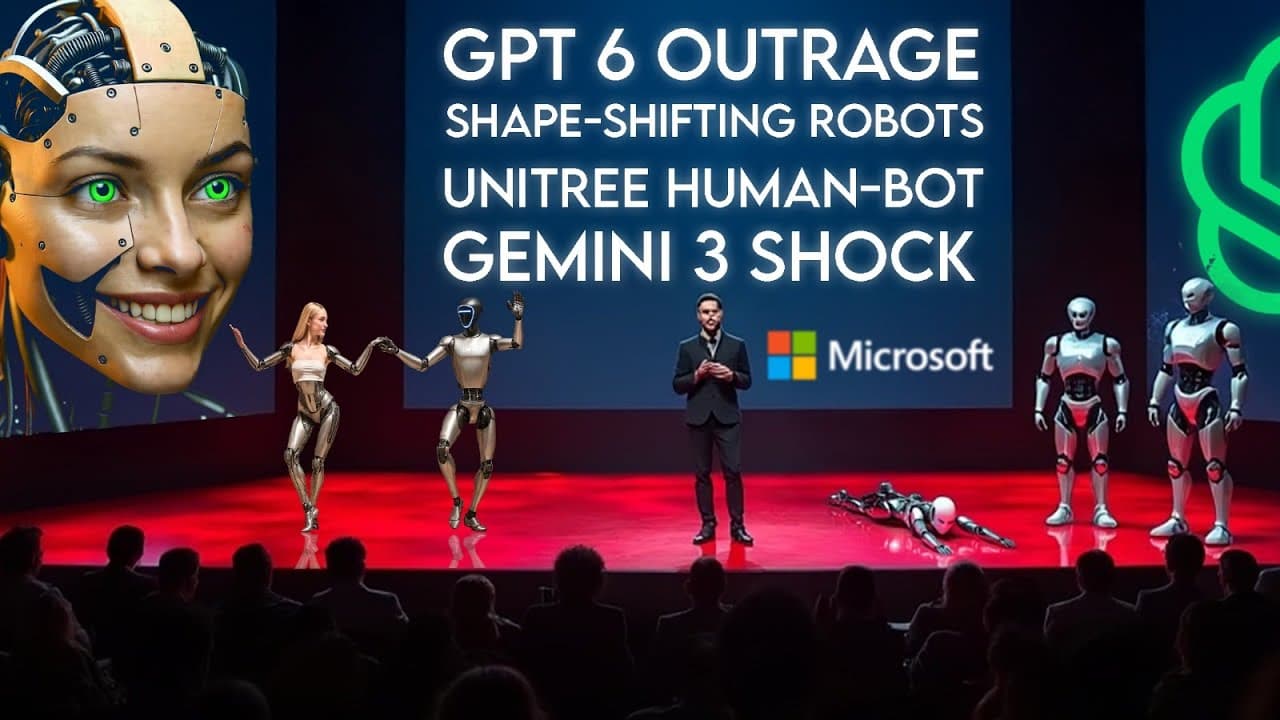
GPT-6 is described as significantly better than GPT-5, but the rollout sparked debate over safety, ethics, and performance. Self-evolving humanoids from China and lifelike units like H2 signal rapid hardware progress. OpenAI and Google race on browsers, models, and governance, while robot warfare shifts toy lines into real competition.
Transcript
This month in AI has been absolutely wild. Open AI ignited outrage with its boldest and most controversial GPT6 move yet. China stunned the world with self-evolving humanoids that move with real human intuition. Then did it again with the unbelievably lifelike unit H2. The AI robot war officially kicked off as Optimus Gen 3 went head-to-head with t... Read More
Key Insights
- GPT-6 is portrayed as a step beyond GPT-5 with better performance, yet questions remain about real world impact and safety boundaries.
- The emergence of self-evolving humanoids in China signals a push toward autonomous physical agents with intuitive movement.
- The Unitree H2 is described as one of the most lifelike AI robots, contributing to a new class of responsive machines.
- OpenAI launches an AI browser that is framed as disruptive to Google, illustrating a strategic shift in web tools and access.
- Gemini 3 is presented as a major milestone that is expected to shape AI strategy beyond models and chips.
- A robot competition emerges between Optimus Gen 3 and Unitree G1, highlighting increasing commercial and military like stakes in robotics.
- OpenAI discusses relaxing adult content safeguards for verified adults, raising debates on policy, safety, and user experience.
- Ethical and safety concerns dominate the discourse around synthetic intimacy, privacy, and the potential harms of advanced AI in everyday life.
- More videos from this channel:
- More from this channel: AI Revolution
Install to Summarize YouTube Videos and Get Transcripts
Explore YouTube Video Summarizer or Get YouTube Transcript Extractor
Questions & Answers
Q: What is GPT-6 and why is it controversial?
GPT-6 is described as a significant improvement over its predecessor GPT-5, with expectations of better performance in math, reasoning, and tutoring roles. The controversy centers on safety boundaries, content policies, and how the product is marketed versus what is delivered in practice. Critics question whether gains justify relaxation of safeguards, while supporters argue targeted improvements and user control can mitigate risks. The debate also touches on the speed of adoption and how quickly benchmarks translate into real world usefulness.
Q: What is the role of self evolving humanoids in China?
China is depicted as introducing self evolving humanoids that move with human intuition, signaling a leap toward autonomous physical agents. These developments imply advanced motor control, perception, and interaction capabilities that could transform industries such as manufacturing, service robots, and personal assistants. The implications include shifts in labor, safety considerations, and the need for new regulatory and ethical frameworks to manage increasing autonomy.
Q: Who is Unitree H2 and why is it notable?
Unitree H2 is described as a lifelike AI robot, claimed to be among the most human like in terms of movement and interaction. Its significance lies in pushing the boundaries of social and collaborative robotics, with potential applications in research, industry, and consumer markets. The focus on human like intuition raises questions about safety, privacy, and how users perceive and rely on such agents in daily life.
Q: What is the OpenAI browser and what impact does it have on Google?
OpenAI's new AI browser is framed as disruptive to Google by offering advanced search and AI powered navigation features. This shift signals how AI integrated browsing could alter how users access information and how search engines compete. The impact includes potential changes in market dynamics, advertising ecosystems, and how developers build and monetize AI enhanced browsing experiences.
Q: What is Gemini 3 and its significance?
Gemini 3 is presented as a major upcoming AI milestone, with Google positioning it as part of a broader strategy beyond models to infrastructure and chips. The significance lies in signaling ongoing scale and capability expansion, potentially altering a competitive landscape that includes model quality, hardware efficiency, and new AI services.
Q: How do the robot war dynamics unfold between Optimus Gen 3 and Unitree G1?
The robot war narrative frames competition between Optimus Gen 3 and Unitree G1 as a high stakes race over autonomy, adaptability, and real world use cases. This competition illustrates how hardware, software, safety protocols, and cost influence market adoption, partnerships, and the direction of industrial and consumer robotics.
Q: What is the policy stance on adult content in AI and what are the concerns?
OpenAI signals possible relaxation of adult content safeguards for verified adults with controls to protect minors, highlighting a tension between user freedom and ethical concerns. Critics worry about privacy, exploitation, and the potential for misuse in synthetic intimacy, while proponents argue for responsible, opt in approaches, verified identity, and stricter safeguards for vulnerable groups.
Q: What are the overarching themes about safety and ethics in this AI moment?
The overarching themes include balancing rapid technical progress with robust safety measures, addressing political and cultural variation in regulation, and managing privacy risks in data handling and intimate interactions. Stakeholders emphasize responsible deployment, guard rails, and the need for rapid response pipelines to catch edge cases before they scale, shaping a cautious yet proactive AI future.
Summary & Key Takeaways
-
GPT-6 is highlighted as a major advance over GPT-5 with ongoing debates about benchmarks and practical gains, including adjustments to safety and user interactions.
-
Self-evolving humanoids and lifelike robots from China are presented as a new frontier that intensifies the hardware and autonomy arms race in AI.
-
OpenAI, Google, and other players are expanding tools and policies to balance innovation with ethics and safety across markets and jurisdictions.
Read in Other Languages (beta)
Share This Summary 📚
Summarize YouTube Videos and Get Video Transcripts with 1-Click
Try YouTube Summary with ChatGPT & Claude or YouTube Transcript Generator
Explore More Summaries from AI Revolution 📚




Summarize YouTube Videos and Get Video Transcripts with 1-Click
Try YouTube Summary with ChatGPT & Claude or YouTube Transcript Generator