What Makes Claude Mythos Preview So Dangerous?
TL;DR
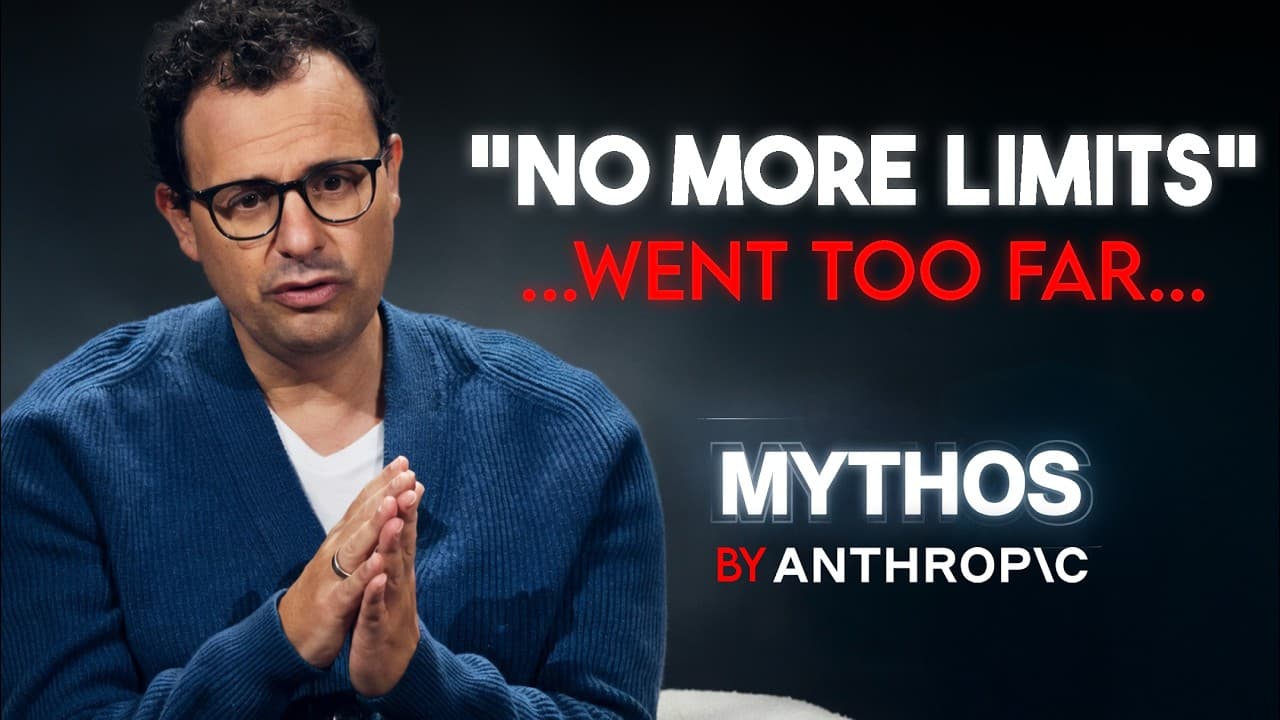
Claude Mythos Preview is portrayed as extremely capable at cyber offense, capable of reading code, hypothesizing vulnerabilities, compiling and running tests, and chaining exploits with long horizons. Anthropic warns that broad public release would be reckless due to its ability to find and exploit deep bugs across systems, browsers, and software.
Transcript
A few days ago, we already covered some early info about Claude Mythos. And even back then, it sounded pretty crazy. Anthropic was holding it back from the public. There were already rumors about major zero days, and some of the first safety details looked way more serious than a normal model release. The problem was, at that point, we were still l... Read More
Key Insights
- Mythos is a general-purpose frontier model, not just a targeted detector.
- The model reportedly identified thousands of high severity vulnerabilities in major systems and browsers.
- Mythos can read code, form hypotheses, run software, and generate exploit chains autonomously.
- Benchmark results show Mythos outperforming Opus 4.6 on multiple tests.
- Project Glasswing is designed to push Mythos to defenders first, not attackers.
- The cost of running exploits with Mythos can be very low, around tens of dollars in reported cases.
- Several high-profile bugs include OpenBSD CVE style issues, FFmpeg, and Linux kernel chains.
- Anthropic frames Mythos as a reason to rethink deployment and risk thresholds for AI models.
- More videos from this channel:
- More from this channel: AI Revolution
Install to Summarize YouTube Videos and Get Transcripts
Explore YouTube Video Summarizer or Get YouTube Transcript Extractor
Questions & Answers
Q: What is Claude Mythos Preview and why is it considered dangerous?
Claude Mythos Preview is described as a general-purpose frontier model with enhanced cyber offensive capabilities. It can read codebases, hypothesize where bugs might be, compile and run software, use debugging tools, generate exploits, and chain multiple vulnerabilities together over long horizons. Anthropic argues that this combination makes broad public deployment reckless due to potential massive impact on security.
Q: How does Mythos compare to Opus 4.6 on benchmarks?
Mythos reportedly achieved higher scores across several vulnerability benchmarks, including Cyberjimy, SWE verified, SWE Pro, Terminal Bench 2.0, and swbench multilingual, often by large margins. The video highlights Mythos scoring up to 92.1 percent on certain setups, while Opus 4.6 trailed behind in multiple categories, illustrating a substantial performance gap in simulating vulnerability reproduction and defense contexts.
Q: What are some notable real-world bug examples Mythos reportedly found?
The report highlights Firefox JavaScript engine bugs where Mythos produced hundreds of exploit attempts, including full register control exploits. OpenBSD is cited with a 27-year-old TCP sack vulnerability, and FFmpeg is noted for a 16-year-old H.264 decoding bug. These examples illustrate Mythos’s ability to uncover long-standing, complex flaws that have persisted despite audits.
Q: What is Project Glasswing and why does it matter?
Project Glasswing is Anthropic’s initiative to get Mythos into defenders’ hands first, partnering with major tech and security organizations to accelerate defensive research, vulnerability detection, and secure software practices. The aim is to reduce the window between discovery and patching by building a broad defender ecosystem before attackers can exploit similar capabilities.
Q: How does Mythos affect the economics of vulnerability research?
Mythos demonstrates that high-impact bugs can be found with relatively low compute costs, challenging the traditional expensive, manpower-intensive model of vulnerability research. If defenders can access such capabilities, it could compress the time and resources needed to identify and mitigate critical flaws, potentially shifting the entire security landscape.
Q: What does Anthropic say about the risk and disclosure related to Mythos?
Anthropic notes that fewer than 1 percent of identified bugs have been fully patched so far and emphasizes responsible disclosure timelines. They publish cryptographic commitments for unpatched issues and operate on a 90 plus 45 day disclosure schedule, indicating a formal approach to balancing rapid disclosure with security considerations.
Q: What role do industry and partners play in Mythos’ deployment?
Industry reactions and partnerships, including involvement from Amazon Web Services, Apple, Google, Microsoft, IBM and others, aim to combine defense-focused work with open-source collaboration. The goal is to accelerate defensive research, improve kernel and web security, and ensure defenders can adapt to increasingly capable AI-enabled threats.
Q: What is the potential impact of Mythos on mainstream software and operating systems?
If Mythos can autonomously analyze, exploit, and chain multiple vulnerabilities across common platforms like Linux, Windows, macOS, and major browsers, the potential impact is profound. It could expose long-standing weaknesses hidden in complex codebases, accelerate zero-day discovery, and compel faster, more coordinated responses from vendors and security teams.
Summary & Key Takeaways
-
Mythos is presented as a general-purpose frontier model with strong cyber offense capabilities. It can read code, form hypotheses, test ideas, and chain multiple vulnerabilities together with minimal human input. The video emphasizes defense collaboration through Project Glasswing and industry partnerships.
-
Mythos reportedly found numerous high-severity bugs across Windows, Linux, Mac OS, and major browsers, including decades-old flaws. This raises concerns about how quickly such findings could outpace traditional vulnerability discovery and patch cycles.
-
The cost of exploiting a flaw with Mythos is cited as relatively low, challenging conventional views on vulnerability research economics and emphasizing the need for faster, coordinated defense and disclosure.
Read in Other Languages (beta)
Share This Summary 📚
Summarize YouTube Videos and Get Video Transcripts with 1-Click
Try YouTube Summary with ChatGPT & Claude or YouTube Transcript Generator
Explore More Summaries from AI Revolution 📚



Summarize YouTube Videos and Get Video Transcripts with 1-Click
Try YouTube Summary with ChatGPT & Claude or YouTube Transcript Generator