How to Reframe Negative Thoughts and Feel Better
TL;DR
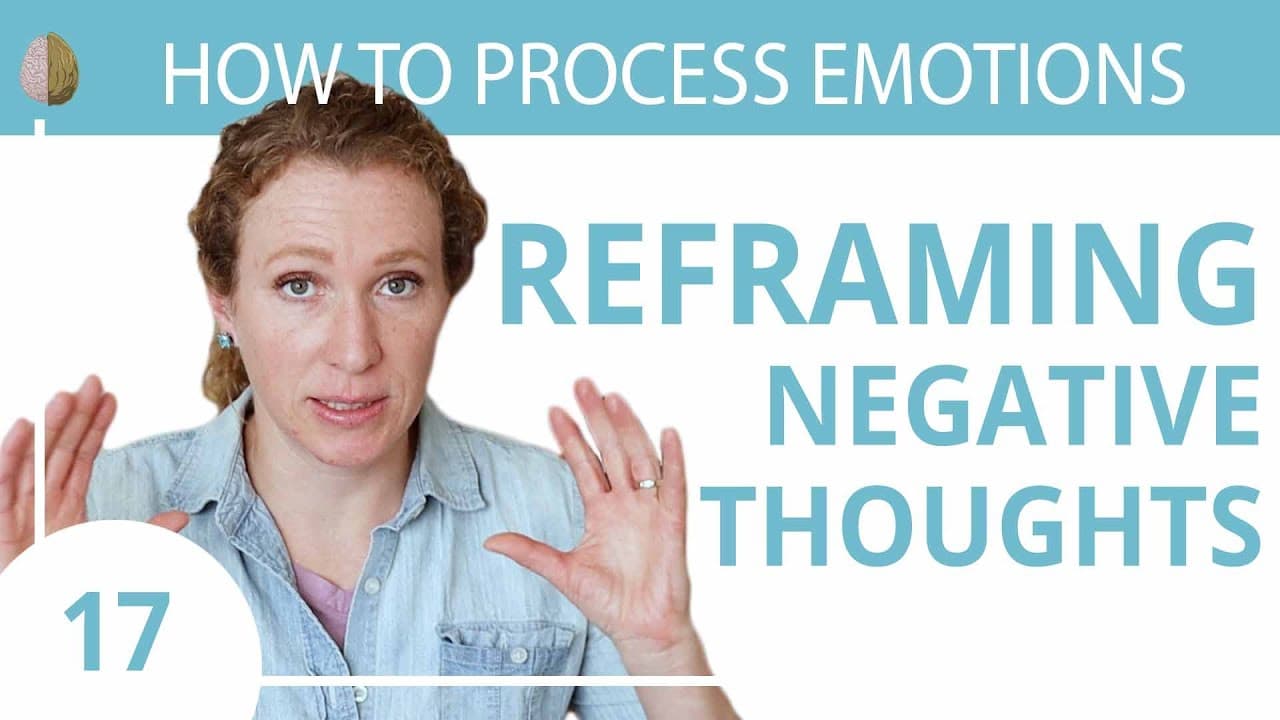
Reframe a distressing thought by generating at least six alternative interpretations, then choose the perspective that best supports helpful, values-aligned action. The first explanation your mind produces may feel true without being accurate, so creating space between an event and its meaning can reduce rigidity, change emotional responses, and reveal practical options such as communicating, learning a skill, or showing compassion.
Transcript
In this video I'm going to teach you a technique that therapists use in almost every session but you probably didn't know about, and when you learn how to do it yourself you can change how you think and feel. But to begin with I'm going to do something kind of weird, so just give me 30 seconds. And in case you didn't know, I use a lot of accept... Read More
Key Insights
- The mind is a story creator that automatically connects events and invents explanations when information is incomplete. These explanations often feel like truth rather than guesses, which allows unconscious assumptions to shape a person's recurring emotions, choices, and perception of reality.
- Reframing is the practice of viewing a situation from another perspective. Therapists use it to question interpretations that create distress or powerlessness, opening room for different emotional responses and more constructive actions without claiming that every possible interpretation is equally accurate.
- The six-pack exercise works by generating at least six different explanations for a troubling situation. The alternatives do not initially need to be accurate, realistic, or helpful because the immediate purpose is exploration, not deciding which explanation is objectively correct.
- Rigid thinking is limiting because seeing a problem in only one way can make a person feel powerless. Considering several interpretations creates psychological space, allowing the person to select a story that supports healing, useful action, and the values they want to express.
- Interpretations influence emotions because different meanings assigned to the same event can produce anger, depression, compassion, or hope. A roommate's unwashed dishes can be interpreted as selfishness, overwhelm, unfamiliar expectations, a different routine, or difficulty following through on tasks.
- Negative self-talk can turn an unresolved problem into a judgment about personal worth. The client described in the transcript interpreted being unmarried as evidence that she was defective, even though marriage was clearly possible for people with many different traits and shortcomings.
- Skill-focused interpretations create actionable possibilities by replacing a fixed judgment with a question about what can be learned. The client shifted from believing she was defective to exploring dating, clothing, communication, vulnerability, and self-compassion as areas where different choices or skills were possible.
- The goal of considering alternatives is not to declare all stories equal. The process interrupts automatic certainty, reduces unnecessary rigidity, and makes it possible to evaluate which interpretation is useful after several perspectives have been explored rather than simply believing the first thought.
Install to Summarize YouTube Videos and Get Transcripts
Explore YouTube Video Summarizer or Get YouTube Transcript Extractor
Questions & Answers
Q: How do you reframe a negative thought?
Start by identifying a recent upsetting situation, the emotions you experienced, and the thoughts you had about the other person or event. Then create at least six different interpretations of what happened. Do not immediately judge them as right, wrong, realistic, or helpful. After opening space around the original thought, choose the interpretation that best supports healing, useful action, and your values.
Q: What is the six-pack exercise for negative thoughts?
The six-pack exercise is a reframing activity in which you generate at least six different ways to understand a distressing event. Its purpose is to create space around your thinking so you are not trapped by the first explanation your mind produces. The alternatives can initially be inaccurate, unhelpful, or unusual because exploration comes before evaluating which story deserves your continued belief.
Q: Why do automatic thoughts feel true?
Automatic thoughts feel true because the mind continually creates stories and connections to explain how the world works. When it does not know why something happened, it makes its best guess, but that guess often does not feel uncertain. It feels like reality. Repeatedly accepting these interpretations without questioning them can shape how a person consistently feels and behaves.
Q: How can reframing change emotional reactions?
Reframing changes emotional reactions by changing the meaning assigned to a situation. In the roommate example, believing that someone left dishes out because she was selfish produced anger. Imagining that she was overwhelmed encouraged compassion, while considering that she did not know the dishes were bothersome created hope that communication could improve the situation. The event stayed the same, but its interpretation changed.
Q: Does reframing mean every interpretation is equally true?
Reframing does not mean that every interpretation is equally true or useful. The exercise temporarily postpones judgment so a person can escape rigid thinking and recognize that the first explanation is not the only possible one. After generating alternatives, the person can evaluate them and choose a perspective that supports healing, constructive behavior, and the values they want to act on.
Q: How does rigid thinking make problems harder to solve?
Rigid thinking makes problems harder to solve because a single negative interpretation can create intense emotion while offering no practical way forward. Believing that another person is simply awful or that you are entirely powerless may increase anger or depression. Seeing several possible explanations creates room to communicate, practice compassion, learn a skill, adjust expectations, or take another useful action.
Q: How can reframing reduce negative self-talk?
Reframing reduces negative self-talk by questioning whether a difficult outcome truly proves something negative about personal worth. The unmarried client initially interpreted her situation as evidence that she was defective. By considering other explanations, including learnable skills, community demographics, timing, and other people's behavior, she replaced a fixed self-condemning story with self-compassion and possibilities for different action.
Q: When should you use the six-pack reframing exercise?
Use the six-pack exercise after a situation leaves you strongly upset, especially when you feel stuck on one explanation of another person's behavior. Recall what happened, notice what you felt, and identify the story you told yourself. Then generate six or more interpretations before deciding what to believe. This process is particularly relevant when arguments about right, wrong, true, or false are creating unnecessary rigidity.
Summary & Key Takeaways
-
The mind automatically creates connections and explanations when it does not know why something happened. These guesses can feel like facts, even when they are only interpretations. Because repeated interpretations influence emotions and behavior, an unexamined negative story can create anger, depression, helplessness, and obstacles to constructive action.
-
Reframing creates distance from an automatic interpretation by asking what other explanations might fit the same situation. The six-pack exercise develops this flexibility by generating at least six alternatives without initially judging whether they are correct, realistic, or helpful. The purpose is to loosen rigid thinking before selecting a perspective.
-
Alternative stories can produce different emotional and behavioral possibilities. Interpreting a roommate as selfish may intensify anger, while considering that she is overwhelmed may encourage compassion. Wondering whether she understands the problem may create hope and support communication. The chosen interpretation should ultimately help a person act according to their values.
Read in Other Languages (beta)
Share This Summary 📚
Summarize YouTube Videos and Get Video Transcripts with 1-Click
Try YouTube Summary with ChatGPT & Claude or YouTube Transcript Generator
Explore More Summaries from Therapy in a Nutshell 📚




Summarize YouTube Videos and Get Video Transcripts with 1-Click
Try YouTube Summary with ChatGPT & Claude or YouTube Transcript Generator