How Does DeepMind Use AI for Scientific Discovery?
TL;DR
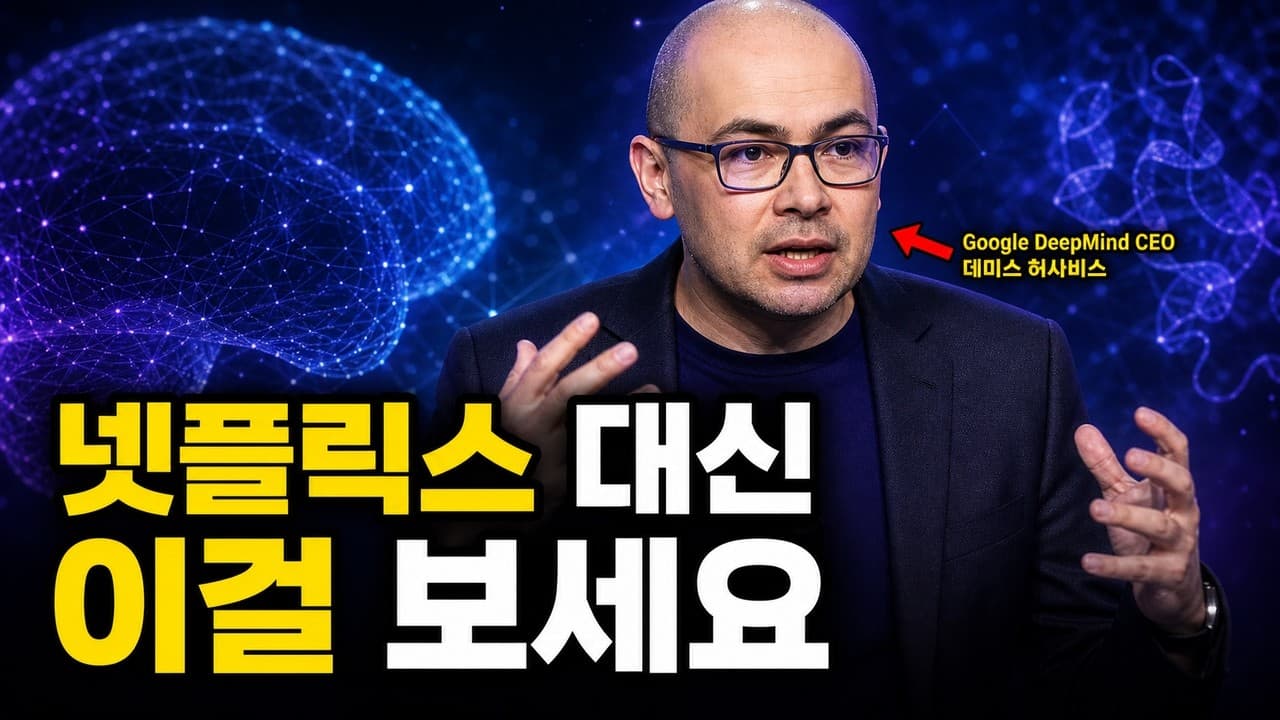
General AI systems learn from experience and data, allowing them to handle unfamiliar problems and potentially discover solutions beyond their programmers’ existing knowledge. DeepMind developed this approach through increasingly difficult games, from Atari to Go, and now applies the same ambition to protein structure prediction, drug development, world models, robotics, and broader scientific discovery, while emphasizing safety and social responsibility.
Transcript
career actually, and hopefully, is going to do the same for many of you uh the students in in the room. So, for me it started uh uh again, my journey on AI started with games, and specifically chess, as Alister mentioned. So, I was playing chess from the age of 4 years old, and uh very seriously for the England junior teams and things like that. An... Read More
Key Insights
- Hassabis’s interest in artificial intelligence began with chess, because competitive play made him examine how the mind creates plans, solves problems, and improves. Early chess computers then showed him that an inanimate programmed machine could perform a sophisticated intellectual task.
- Games are effective proving grounds for artificial intelligence because researchers can begin with simple environments and progress toward much harder challenges. Hassabis used games first to train his own thinking, later to build computer-game AI, and eventually to train DeepMind’s learning systems.
- DeepMind was founded in London in 2010 to pursue artificial general intelligence, meaning a system intended to perform the broad range of cognitive capabilities associated with humans. Hassabis describes the effort as resembling an Apollo program for intelligence research.
- DeepMind’s original mission was a two-step program: first solve intelligence, then use intelligence to solve other problems. Hassabis argues that general AI could transform many fields, particularly by accelerating scientific discovery, improving medicine, and advancing understanding of the universe.
- Expert systems are limited because programmers directly encode known solutions, leaving the systems unable to respond reliably to unexpected situations that were not anticipated. Their logic-based construction makes them comparatively rigid, fragile, and difficult to scale toward general intelligence.
- Modern AI systems learn from experience or data instead of depending entirely on pre-programmed solutions. This learning-based approach can potentially move beyond what programmers already know, making it especially valuable for scientific discovery, where useful answers may not yet be known.
- DQN was an end-to-end learning system that learned Atari games directly from raw screen pixels. It received no description of the games or the controls and was instructed only to maximize the score generated from the incoming stream of visual information.
- AlphaGo demonstrated that learning systems can discover original strategies in extremely complex domains. Go has 10 to the power 170 possible positions, making brute-force strategy impractical, yet AlphaGo defeated 10-time world champion Lee Sedol in a 2016 challenge match watched by 200 million people.
Install to Summarize YouTube Videos and Get Transcripts
Explore YouTube Video Summarizer or Get YouTube Transcript Extractor
Questions & Answers
Q: How did chess inspire Demis Hassabis to study artificial intelligence?
Chess prompted Demis Hassabis to think about thinking itself, including how people create plans, generate ideas, solve problems, and improve their decisions. Beginning at age four and later playing seriously for England junior teams gave him a practical setting for examining those questions. Early chess computers deepened his curiosity by showing that programmed hardware could play the game effectively.
Q: Why are games useful for developing artificial intelligence?
Games provide structured proving grounds where learning systems can be tested across increasing levels of difficulty. Researchers can start with relatively simple Atari games and progress to Go, a game with an enormous search space. Hassabis used games in three ways: to train his own mind, to build game software, and to train DeepMind’s AI systems.
Q: What was DeepMind created to accomplish?
DeepMind was started in London in 2010 as an ambitious effort to build artificial general intelligence. The intended system would be genuinely general and capable of performing the range of cognitive tasks humans can perform. Its early mission was summarized as a two-step process: solve intelligence first, then use that capability to address problems across other fields.
Q: How do expert systems differ from learning systems?
Expert systems are directly programmed with solutions supplied by human designers, as illustrated by chess systems such as Deep Blue. Their weakness is that they cannot readily handle unexpected situations that programmers did not anticipate. Learning systems instead acquire capabilities from experience or data, creating the possibility that they can discover solutions beyond the designers’ existing knowledge.
Q: How did DQN learn to play Atari games?
DQN learned directly from the raw pixels displayed on the screen, making it an end-to-end learning system. It was not given descriptions of the games, their rules, or what its controls represented. Its instruction was simply to maximize the score based on the incoming stream of visual information, and it mastered multiple Atari games around 2013.
Q: Why could AlphaGo not rely on brute force?
Go contains 10 to the power 170 possible positions, a quantity described as far greater than the number of atoms in the observable universe. Searching every possibility would therefore be computationally intractable. AlphaGo needed a more intelligent strategy than brute-force enumeration, and its learning approach enabled it to master the game and produce original ways of playing.
Q: What did AlphaGo demonstrate in its match with Lee Sedol?
AlphaGo showed that an AI system could defeat one of the strongest human players while also developing original strategies in a game studied for thousands of years. In 2016, it won a million-dollar challenge match against Lee Sedol, a 10-time world champion and South Korean grandmaster. The event was watched by 200 million people worldwide.
Q: How can general AI contribute to scientific discovery?
General AI could support scientific discovery by learning from data and experience rather than depending only on solutions already known to programmers. That ability creates the possibility of finding new answers in difficult research domains. The lecture connects DeepMind’s path from chess, Atari, and AlphaGo to AlphaFold, protein structure prediction, drug development, world models, robotics, medicine, and understanding the universe.
Summary & Key Takeaways
-
Demis Hassabis traces his interest in intelligence to childhood chess, early chess computers, and programming game-playing systems on an Amiga 500. His fascination centered on how minds form plans, solve problems, and improve. Cambridge then strengthened his ambition through its scientific history, foundational computation theory, and culture of discovery.
-
DeepMind began in London in 2010 as an effort to build artificial general intelligence capable of broad human-like cognitive performance. Its mission was expressed in two steps: solve intelligence, then use it to solve other problems. Hassabis connects that goal to scientific discovery, medicine, and understanding the surrounding universe.
-
DeepMind used games as controlled proving grounds for learning systems. DQN learned Atari games from raw screen pixels while receiving only the objective of maximizing score. AlphaGo then addressed Go’s enormous complexity without relying on brute force, defeated Lee Sedol in 2016, and demonstrated that learned systems could produce original strategies.
Read in Other Languages (beta)
Share This Summary 📚
Summarize YouTube Videos and Get Video Transcripts with 1-Click
Try YouTube Summary with ChatGPT & Claude or YouTube Transcript Generator
Explore More Summaries from Tech Bridge 📚




Summarize YouTube Videos and Get Video Transcripts with 1-Click
Try YouTube Summary with ChatGPT & Claude or YouTube Transcript Generator