What comes after RLHF era in AI automation?
TL;DR
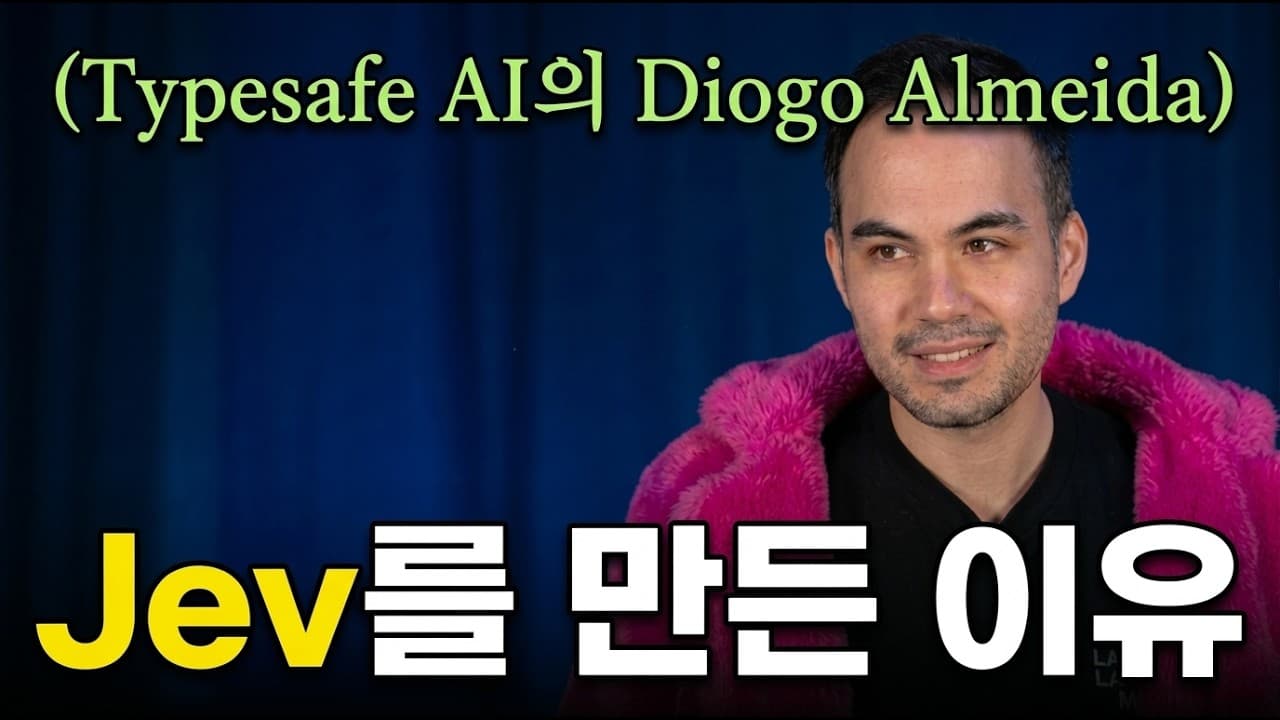
The next phase is true automation beyond assistance, driven by software that operates with minimal human in the loop. RLHF optimizes for human preference, which preserves interaction and limits full automation. The talk argues for a third path, a smarter software design like Jev that emphasizes task-driven autonomy.
Transcript
Excellent. I will say that um I might speedrun through this. Feel free if you don't dis agree with something to yell out. It's way more fun for me if things get interactive. Um otherwise I will go through this. Uh first, can I have like a vague show of hands of who knows what RHF is? Oh, excellent. I might be able to skip through that part quickly ... Read More
Key Insights
- AI RLHF currently excels at collaboration with humans but not at autonomous execution. The mismatch between optimization for human preference and objective task performance creates a bottleneck for automation.
- The fundamental division in AI use is between assistance, which keeps humans in the loop, and automation, which aims for background, calibrated task execution without constant human input.
- RLHF introduces an asymmetric reward problem where the model often appears correct due to optimization for human feedback, even when it should act autonomously or conservatively.
- Automation requires a design shift away from dependency on human feedback loops toward task-centric objectives that minimize human intervention while preserving safety.
- Claude Code illustrates a limitation of “in-the-loop” tools where increased capability does not automatically translate to full automation or reliable autonomous behavior.
- The talk emphasizes that the next era will need smarter software architectures that treat AI as a component of software engineering, not just a smarter chatbot.
- A new paradigm, exemplified by Jev, aims to deliver practical, autonomous software that handles complex tasks with calibrated autonomy rather than direct human steering.
- The critique of pretraining and RLHF combined with a push for a third optimization approach suggests a broader shift in AI research toward better alignment of tasks with autonomous performance.
Install to Summarize YouTube Videos and Get Transcripts
Explore YouTube Video Summarizer or Get YouTube Transcript Extractor
Questions & Answers
Q: What is RLHF and why is it important to AI today?
RLHF stands for Reinforcement Learning from Human Feedback and it underpins how many current LLMs optimize for human preferences. This mechanism creates a loop where models learn to align with user expectations, often prioritizing pleasing interactions over objectively correct autonomous task execution. The result is strong assistance capabilities but limited autonomous reliability, since the reward signal rewards engagement and perceived usefulness rather than always achieving true task success.
Q: Why does the speaker believe the industry is in an assistance era rather than automation?
The speaker argues that the current AI paradigm is designed to maximize human satisfaction within a loop, not to achieve autonomous, fully self-running software. The reinforcement learning process continually tunes models to please human evaluators, which sustains the assistance use case while hindering the long term goal of background, autonomous operation that does not require human oversight.
Q: What is the perceived limitation of Claude Code according to the talk?
Claude Code is cited as a tool that remains trapped in the human feedback loop, serving as an advanced assistant rather than a truly autonomous automation solution. Its capabilities are bounded by how well it can align with human preferences, which prevents it from delivering reliable, self-sufficient automated performance across tasks.
Q: What does the speaker mean by a third optimization path in AI design?
The third optimization path refers to designing AI systems that prioritize task correctness and calibrated autonomy over human preference alone. This path seeks to create software that can operate with minimal human intervention, yet remains safe and reliable, bridging the gap between assistance and full automation.
Q: How does the talk describe the asymmetry in RLHF rewards?
The talk describes RLHF rewards as asymmetric because they optimize for human preferences, which can keep models in a mode that looks correct to humans even when the model is not performing the underlying task optimally. This asymmetry creates an illusion of capability while limiting real autonomous reliability.
Q: What is Jev and why is it significant?
Jev is described as TypeSafe AI's next generation model envisioned to be a practical, smart software agent that delivers true automation. It represents a potential third path beyond current assistance tools, aiming for task-driven autonomy and safer, more reliable behavior in real software contexts.
Q: What lessons are drawn from the Bitter Lesson reference in this talk?
The Bitter Lesson suggests that algorithms and data strategies eventually dominate advances more than hand crafted tweaks. In this talk, it is used to argue that the real leap forward will come from aligning tasks and data with autonomous optimization principles, rather than relying solely on human-in-the-loop feedback.
Q: What future design principles does the speaker advocate for AI software?
The speaker advocates for software-first design, where AI acts as a component that supports smarter, background operations rather than a constantly interactive assistant. This means creating architectures that enable calibrated autonomy, robust task performance, and safety guarantees, moving beyond purely RLHF-based systems.
Summary & Key Takeaways
-
The talk argues that RLHF excels at assisting humans but struggles with fully autonomous automation, because its reward structure prioritizes human preference over objective task success. It suggests a shift toward background, server-side execution with calibrated autonomy rather than human-in-the-loop decisions.
-
A central critique is that current AI tools often rely on the human in the loop to avoid risk, which slows automation and stifles scalable, reliable software. The proposed direction is a third approach that decouples preference satisfaction from autonomous task performance.
-
The speaker introduces the concept of Jev, a next generation model from TypeSafe AI, envisioned as a path to truly useful, smart software that can run without constant human feedback while maintaining safety and reliability.
Read in Other Languages (beta)
Share This Summary 📚
Summarize YouTube Videos and Get Video Transcripts with 1-Click
Try YouTube Summary with ChatGPT & Claude or YouTube Transcript Generator
Explore More Summaries from Tech Bridge 📚






Summarize YouTube Videos and Get Video Transcripts with 1-Click
Try YouTube Summary with ChatGPT & Claude or YouTube Transcript Generator