How to Build a Personal Brand That Stands Out
TL;DR
Build a personal brand around honest credibility, work you are proud of, and a clear distinction between learning and teaching in public. Students should document experiments and progress, while experts should teach from proven achievements, mistakes, and lessons. Sustainable differentiation also comes from adding genuine interests and personality to a focused core subject instead of copying trends for views.
Transcript
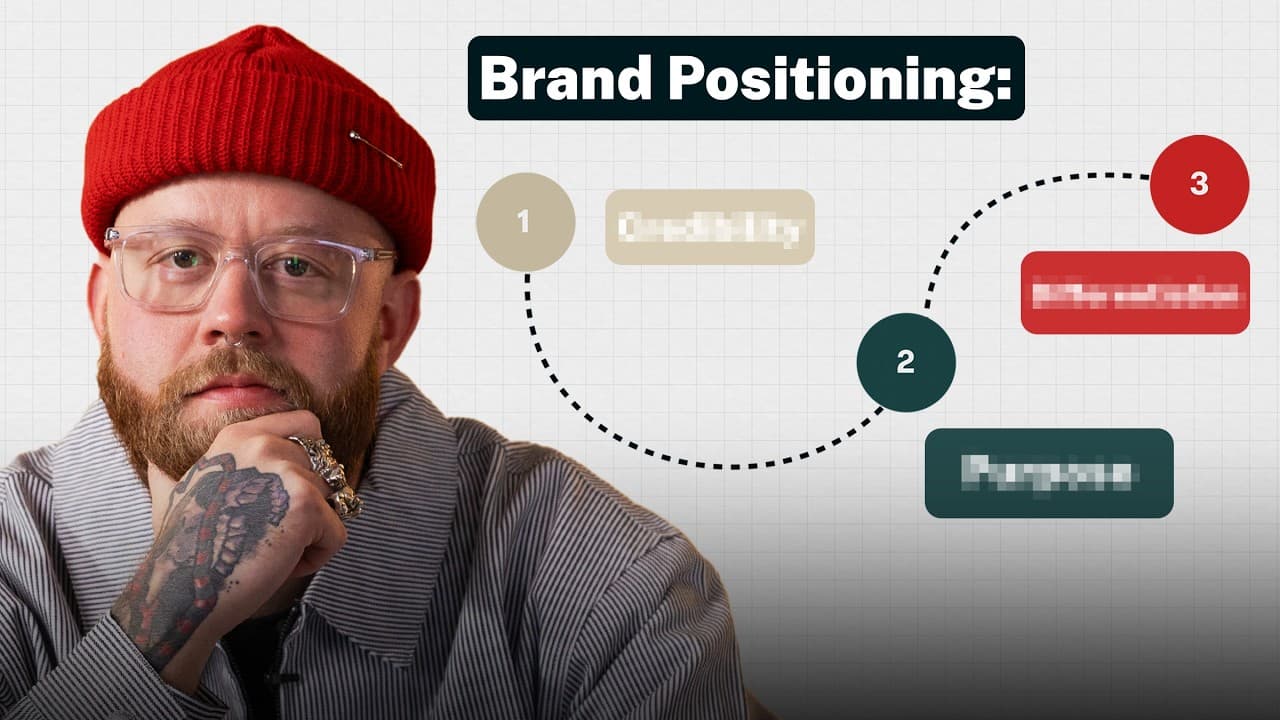
Let me paint you a picture. 99% of people who start their personal brand get zero results in the first year. What I can tell you after 17 years of building personal brands is that you are not broken. You're just missing three crucial elements. Why would anybody listen to you? Why are you starting your personal brand in the first place? And thirdly,... Read More
Key Insights
- Personal brand trust begins with honest self-positioning as either a student or an expert. A student is still becoming the person the audience wants to become, while an expert has already achieved relevant outcomes and can help others reach them more quickly.
- A student’s role is to learn in public by serving as a proxy for the audience. Students can test ideas, invest time or resources, document successes and failures, and share what they discover without pretending to possess achievements or experience they have not earned.
- An expert’s role is to teach in public from multiple relevant wins, demonstrated experience, and lessons gained through mistakes. Experts should explain how they accomplished their results and help audience members avoid unnecessary difficulties while pursuing similar outcomes.
- An interest bank is a running record of what a student studies, experiences, tests, and learns. It supplies material for content that documents improvement and shows the creator’s genuine progression toward expertise instead of presenting an unsupported image of authority.
- A credibility bank is a running record of achievements, solved problems, proven results, mistakes, lessons, projects, and career successes. It answers why people should listen and provides the foundation from which an expert can develop and amplify a personal brand.
- Stronger credibility can increase audience belief that a creator’s advice will produce a desired outcome. The creator attributes part of his first-year growth beyond 200,000 followers and roughly 39,000 to 40,000 email subscribers to several significant public career wins.
- Creator burnout can result from building a brand around trending topics that the creator neither enjoys nor understands deeply. A brand that causes embarrassment or feels disconnected from genuine interests creates a countdown to quitting, which prevents the creator from reaching the desired outcome.
- Personal differentiation comes from combining a core subject with authentic human interests. The creator centers his content on personal branding while naturally mentioning Harley-Davidsons, metal, and the Seahawks, allowing audiences to understand both his expertise and his personality.
Install to Summarize YouTube Videos and Get Transcripts
Explore YouTube Video Summarizer or Get YouTube Transcript Extractor
Questions & Answers
Q: How do you build a personal brand that stands out?
Build around three elements: a credible reason for people to listen, a clear reason for starting the brand, and an intentional approach to differentiation. Identify whether you should learn or teach in public, create a bank of relevant interests or achievements, choose work you will remain proud of, and bring genuine personal interests into content centered on a core subject.
Q: Should a beginner present as a student or an expert?
A beginner should present honestly as a student when they lack major wins, years of experience, or the outcome their audience wants. Their value comes from acting as a proxy for the audience by studying, experimenting, testing, and documenting results. Pretending to be an expert can undermine trust, while openly sharing the learning process establishes an accurate and sustainable relationship with followers.
Q: What is the difference between learning and teaching in public?
Learning in public means documenting the process of becoming more capable through study, experience, experiments, investments, successes, and failures. Teaching in public means drawing from relevant achievements and established experience to show others how an outcome was reached. Experts can also reveal parts of what they are building, but their primary responsibility is to transfer proven lessons and help others advance faster.
Q: What is an interest bank for personal branding?
An interest bank is a running list of everything a student is studying, experiencing, experimenting with, learning, and testing. It becomes a source of content ideas for documenting progress toward expertise. Instead of manufacturing authority, the creator can share useful observations from real activity, including what worked, what failed, and how their understanding or performance is improving over time.
Q: What is a credibility bank for personal branding?
A credibility bank is a running list of what an expert has done, achieved, solved, proven, built, or learned through mistakes. It provides evidence that explains why an audience should listen. It also creates a content foundation because the expert can repeatedly draw from genuine career successes, practical lessons, and difficulties that are relevant to the outcomes followers want to achieve.
Q: How does credibility affect personal brand growth?
Credibility affects how much belief and buy-in an audience gives to a creator’s advice. More relevant and impressive achievements make it easier for people to trust that the creator understands the desired outcome. The creator says his experience helping build multiple large personal brands gives his guidance value beyond tactics that worked only for one person or in one scenario.
Q: Why can copying trends cause creator burnout?
Copying trends can lead creators to discuss subjects they do not enjoy, care about, or understand deeply. Even if those choices produce more views or followers, they can create a brand the creator dislikes or feels embarrassed to share with friends. That embarrassment reduces the likelihood of continuing long enough to achieve the intended result, making brand design a sustainability decision.
Q: How can personality be added without losing a clear niche?
Keep a core subject at the center of the brand, then naturally include interests that reveal who you are as a person. The creator focuses on personal branding but also references Harley-Davidsons, metal, and the Seahawks because those topics genuinely appear in his life and conversations. These details add humanity without replacing the educational subject that gives the content its primary direction.
Summary & Key Takeaways
-
A trustworthy personal brand begins by identifying whether you are a student or an expert. Students should openly document what they are learning, testing, and experiencing. Experts should teach from proven accomplishments and mistakes. Pretending to possess expertise can damage audience trust, while honest positioning gives people a clear reason to follow the journey.
-
Students can create an interest bank containing subjects they study, experiments they conduct, and experiences they encounter. Experts should develop a credibility bank listing achievements, problems solved, lessons learned, mistakes made, and things built. These records provide a practical foundation for selecting content topics and explaining why an audience should pay attention.
-
Long-term brand building requires choosing subjects and presentation styles that make the creator proud. Copying trends may improve short-term numbers but can produce embarrassment, burnout, and quitting. A focused core topic should remain central, while authentic interests and personality can reveal the human behind the educational content and support meaningful differentiation.
Read in Other Languages (beta)
Share This Summary 📚
Summarize YouTube Videos and Get Video Transcripts with 1-Click
Try YouTube Summary with ChatGPT & Claude or YouTube Transcript Generator
Explore More Summaries from Caleb Ralston 📚
Summarize YouTube Videos and Get Video Transcripts with 1-Click
Try YouTube Summary with ChatGPT & Claude or YouTube Transcript Generator