How to Build Self-Modifying AI Software
TL;DR
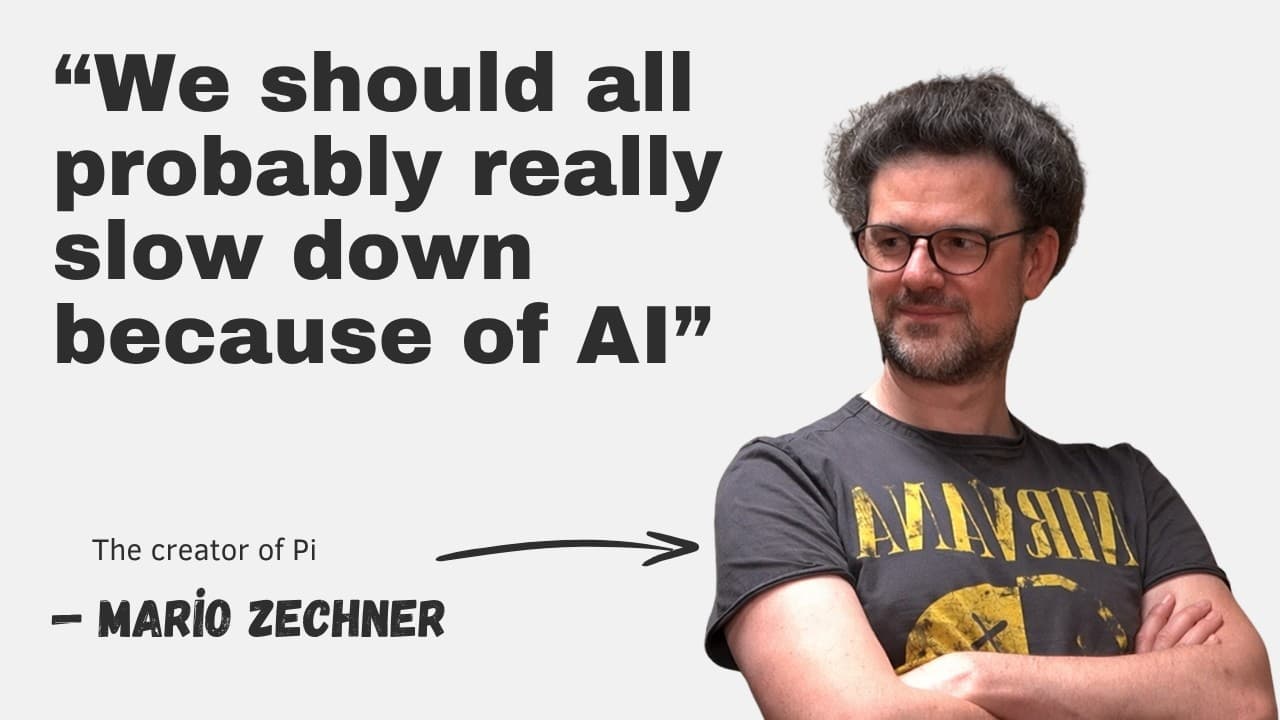
Pi is a minimalist, self-modifying AI coding agent created by Mario Zechner. It serves as the foundation for OpenClaw, a popular AI tool. Armin Ronacher, creator of Flask, discusses the use of AI tools in building software, emphasizing the importance of human judgment. The conversation explores the challenges of over-automation, agentic workflows, and maintaining open source quality amidst AI-generated code.
Transcript
Can we start with the backstory of why you decided to build Pi? I personally like simple tools that are stable that I can rely on even if they have non-deterministic parts. So you can ask Pi to modify itself. Pi doesn't have MCP. People just ask Pi to build MCP support into PI. >> Non-engineers participating in engineering process is a thing now. >... Read More
Key Insights
- Pi is a minimalist self-modifying AI coding agent created by Mario Zechner.
- OpenClaw, built on Pi, is a popular AI tool used for personal AI assistants.
- Armin Ronacher emphasizes the importance of human judgment in using AI tools.
- Over-automation and agentic workflows can lead to quality and complexity challenges.
- Self-modifying software allows for adaptability and customization in AI tools.
- Complexity in codebases is a significant challenge for both humans and AI agents.
- Open source projects face challenges from the influx of AI-generated code.
- Balancing AI-generated code with human oversight is crucial for maintaining quality.
Install to Summarize YouTube Videos and Get Transcripts
Explore YouTube Video Summarizer or Get YouTube Transcript Extractor
Questions & Answers
Q: How does Pi support self-modification?
Pi supports self-modification by allowing developers to create extensions and modify its functionality through simple TypeScript modules. This flexibility enables Pi to adapt to specific workflows and user needs, making it a versatile tool for developers looking to customize their AI coding agents.
Q: What challenges does over-automation present in software development?
Over-automation in software development can lead to increased complexity and a decline in code quality. AI-generated code may introduce errors and inefficiencies that require human oversight to identify and correct. Balancing automation with human judgment is essential to maintain software quality and ensure reliable outcomes.
Q: Why is human judgment important in using AI tools?
Human judgment is crucial in using AI tools to ensure that the generated code aligns with project goals and quality standards. Experienced engineers can identify potential issues, provide oversight, and make informed decisions that AI agents might overlook, thereby maintaining the integrity and effectiveness of the software.
Q: How does complexity impact AI agents in software development?
Complexity in codebases can hinder AI agents' ability to process and generate effective solutions. As codebases grow, AI agents may struggle to access all relevant information, leading to suboptimal or erroneous outputs. Managing complexity through thoughtful design and human oversight is vital for effective AI integration.
Q: What role does Pi play in OpenClaw's functionality?
Pi serves as the foundational engine for OpenClaw, a popular AI tool used for personal AI assistants. Its minimalist design and self-modifying capabilities allow OpenClaw to adapt and expand its functionality, providing users with a flexible and efficient AI-driven experience.
Q: What are the benefits of self-modifying software?
Self-modifying software offers adaptability and customization, allowing developers to tailor AI tools to specific needs and workflows. This flexibility enables continuous improvement and innovation, as software can evolve in response to user feedback and changing requirements, enhancing overall functionality and user satisfaction.
Q: How does AI-generated code affect open source projects?
AI-generated code can overwhelm open source projects with a high volume of contributions, some of which may lack quality or relevance. This influx requires maintainers to implement bottlenecks and review processes to ensure that only valuable contributions are integrated, preserving the project's integrity and quality.
Q: What is the significance of balancing AI efficiency with human oversight?
Balancing AI efficiency with human oversight is crucial to ensure that the benefits of automation do not compromise software quality. Human oversight provides the necessary checks and balances to identify and correct errors, maintain standards, and ensure that AI-generated code aligns with project objectives and user needs.
Summary & Key Takeaways
-
Pi, created by Mario Zechner, is a minimalist AI coding agent that supports self-modification. It is the engine behind OpenClaw, a popular AI tool for personal assistants. Armin Ronacher, creator of Flask, highlights the importance of human judgment in using AI tools, emphasizing the need for oversight to maintain quality.
-
The discussion covers the risks of over-automation and the challenges of agentic workflows. With the rise of AI-generated code, maintaining open source quality becomes a concern. Both Mario and Armin stress the importance of balancing AI efficiency with human oversight to ensure software quality.
-
Self-modifying software like Pi allows for adaptability and customization, enabling developers to tailor AI tools to their needs. However, the complexity of codebases poses challenges for AI agents, which can struggle with maintaining quality as they scale. Human oversight remains essential in navigating these challenges.
Read in Other Languages (beta)
Share This Summary 📚
Summarize YouTube Videos and Get Video Transcripts with 1-Click
Try YouTube Summary with ChatGPT & Claude or YouTube Transcript Generator
Explore More Summaries from The Pragmatic Engineer 📚



Summarize YouTube Videos and Get Video Transcripts with 1-Click
Try YouTube Summary with ChatGPT & Claude or YouTube Transcript Generator