Why Do We Feel Lonely Despite Being Connected?
TL;DR
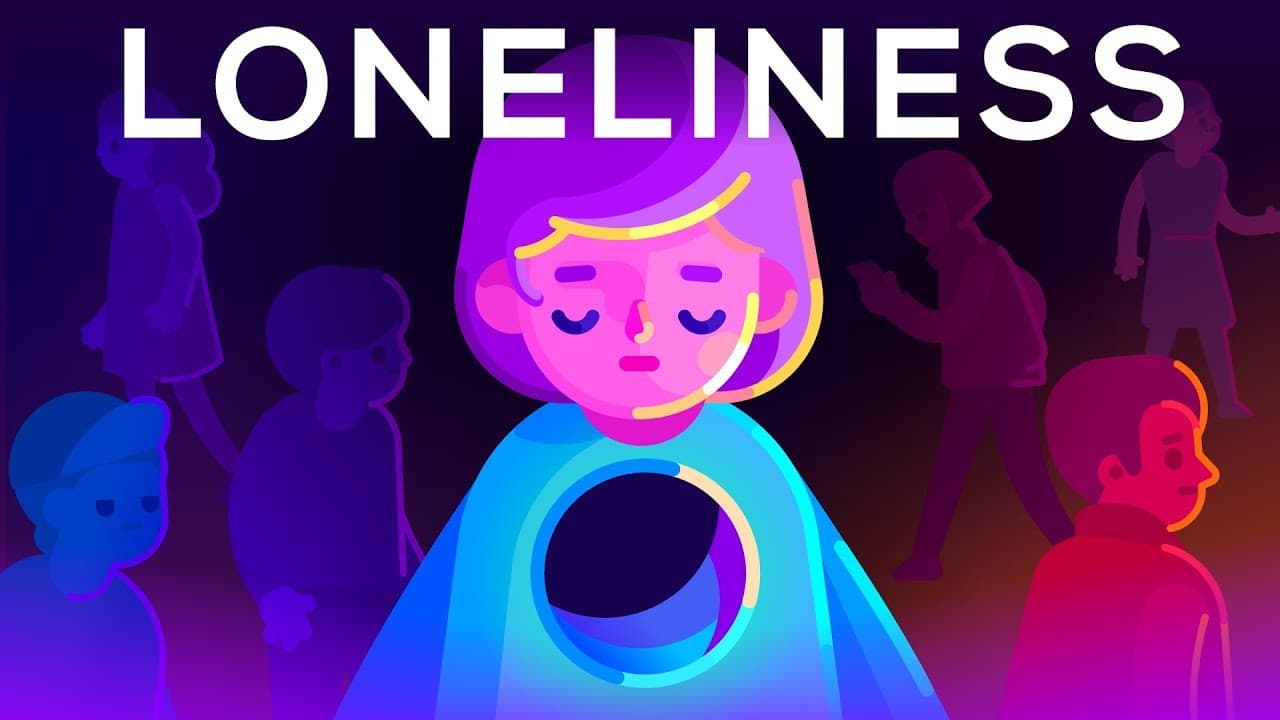
Loneliness is an evolutionary adaptation akin to hunger, alerting us to unmet social needs. Despite technological connectivity, modern life often leads to chronic loneliness, posing significant health risks. Recognizing and addressing the cycle of loneliness involves understanding its roots, challenging negative perceptions, and fostering genuine social connections.
Transcript
Everybody feels lonely from time to time When we have no one to sit next to at lunch When we move to a new city or when nobody has time for us at the weekend. But over the last few decad es, this occasional feeling has become chronic for millions. In the UK, 60% of 18 to 34 year old say they often feel lonely. In the US, 46% of the entire populatio... Read More
Key Insights
- Loneliness is a subjective experience distinct from being alone; it is a feeling indicating unmet social needs.
- Social skills have little impact on adult loneliness; it affects everyone regardless of personality or social ability.
- Loneliness is a biological function, designed to alert us to social disconnection, similar to how hunger signals physical needs.
- The modern world, despite technological advancements, often exacerbates loneliness due to reduced physical social interactions.
- Chronic loneliness poses severe health risks, including accelerated aging, increased cancer severity, and weakened immune systems.
- Loneliness can create a vicious cycle, where negative perceptions and behaviors reinforce isolation and social pain.
- Recognizing and breaking the cycle of loneliness involves challenging negative assumptions and fostering positive social interactions.
- Loneliness is a universal human experience, and addressing it requires both personal introspection and societal attention.
Install to Summarize YouTube Videos and Get Transcripts
Explore YouTube Video Summarizer or Get YouTube Transcript Extractor
Questions & Answers
Q: What causes loneliness despite being socially connected?
Loneliness occurs when social needs are unmet, despite technological connectivity. Modern life often reduces face-to-face interactions, crucial for fulfilling social needs. Additionally, loneliness is a subjective feeling, not necessarily linked to the quantity of social interactions but the quality and perceived value of those connections.
Q: How does loneliness affect physical health?
Chronic loneliness significantly impacts physical health by increasing stress levels, which accelerates aging, weakens the immune system, and exacerbates conditions like cancer and Alzheimer's. Studies show loneliness is as deadly as smoking a pack of cigarettes daily, highlighting the severe health risks associated with prolonged social isolation.
Q: Why is loneliness considered a biological function?
Loneliness is an evolutionary adaptation similar to hunger, signaling unmet social needs. It evolved to promote social bonding, crucial for survival in ancestral environments. Just as hunger prompts us to seek food, loneliness encourages us to seek social connections, essential for emotional and physical well-being.
Q: What are the psychological effects of chronic loneliness?
Chronic loneliness can lead to a cycle of negative thoughts and behaviors, increasing social anxiety and mistrust. It makes individuals more sensitive to social cues yet less accurate in interpreting them, leading to perceived hostility and self-centeredness, which further isolates them and exacerbates feelings of loneliness.
Q: How can one break the cycle of loneliness?
Breaking the cycle of loneliness involves recognizing and challenging negative perceptions about oneself and others. It requires actively seeking positive social interactions, giving others the benefit of the doubt, and being open to vulnerability. Building genuine connections and seeking professional help if needed are crucial steps.
Q: What historical factors contributed to the rise of loneliness?
The rise of loneliness began during the late Renaissance when Western culture shifted towards individualism. This trend accelerated with the Industrial Revolution, as people moved away from close-knit communities to cities, leading to reduced social support networks and increased feelings of isolation in modern society.
Q: Why is loneliness considered a public health crisis?
Loneliness is considered a public health crisis due to its widespread prevalence and severe health implications, including increased mortality risk. It affects mental health, leading to depression and anxiety, and poses physical health risks comparable to smoking and obesity, necessitating societal attention and intervention.
Q: How does societal change impact loneliness?
Societal changes, such as urbanization and technological advancements, have led to reduced face-to-face interactions and weakened community ties, contributing to loneliness. While technology connects people virtually, it often lacks the depth and quality of physical interactions, essential for fulfilling human social needs.
Summary & Key Takeaways
-
Loneliness is a natural signal of unmet social needs, similar to how hunger alerts us to physical needs. Despite living in a highly connected world, many people experience chronic loneliness, which can have severe health consequences, including increased risk of diseases and premature aging.
-
The modern lifestyle often leads to reduced face-to-face interactions, contributing to feelings of isolation. Loneliness can become self-sustaining, as negative perceptions and behaviors reinforce social disconnection, making it challenging to form close relationships.
-
To combat loneliness, individuals need to recognize its cycle, challenge negative thoughts, and actively seek meaningful social connections. Societal efforts are also necessary to address loneliness as a public health issue, emphasizing the importance of community and relationships in human well-being.
Read in Other Languages (beta)
Share This Summary 📚
Summarize YouTube Videos and Get Video Transcripts with 1-Click
Try YouTube Summary with ChatGPT & Claude or YouTube Transcript Generator
Explore More Summaries from Kurzgesagt – In a Nutshell 📚

Summarize YouTube Videos and Get Video Transcripts with 1-Click
Try YouTube Summary with ChatGPT & Claude or YouTube Transcript Generator