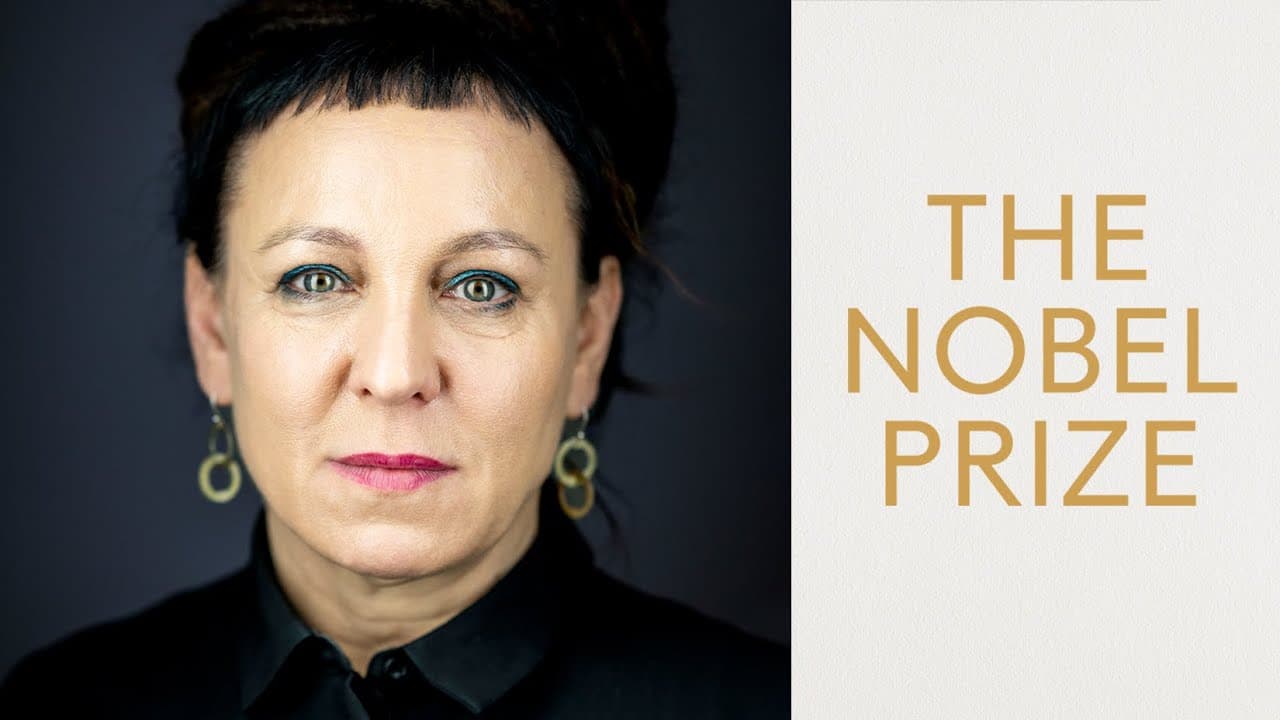
Olga Tokarczuk, Nobel Prize in Literature 2018: Official interview
TL;DR
Writing grows from attentive reading, disciplined routines, careful listening, and openness to every person as a source of stories. Olga Tokarczuk connects her fiction to psychology, rural silence, Central European literary traditions, border crossings, movement, women as philosophical subjects, and imaginative responses to climate change, arguing that literature can broaden consciousness and move readers toward change.
Transcript
it was really very good beginning for a writer the books are were very present in our house I so from from the beginning how my parents are discussing books reading books buying books and I could spend a lot of time with my father in library which I remember very good what I remember very good and like here we have a shelves and the most interestin... Read More
Key Insights
- Books are alternative worlds that Tokarczuk discovered through a childhood surrounded by reading, discussion, and library shelves. Fairy tales were an important beginning, and she continues to read the Brothers Grimm as a form of poetry rather than treating such stories as merely childhood material.
- Self-education is central to Tokarczuk’s intellectual development because she preferred studying subjects for pleasure. Astronomy became one of her fascinations, while a secondary-school biology teacher revealed the beauty of the physical existence shared by living beings and deepened her curiosity about science.
- Psychology is a foundation of Tokarczuk’s storytelling because it taught her that every individual can generate a novel or many possible stories. Her training as a psychotherapist also taught her to listen more carefully and remain open to what other people are actually saying.
- Rural life is a source of concentration in Tokarczuk’s work because returning to the countryside after living amid urban chaos produced a different state of mind. Nature gave her silence and inner quiet, creating conditions that she considers especially productive for sustained writing.
- Character creation is a mysterious relationship in which fictional people can seem to come from outside the planned story. They initially appear indistinct, then acquire voices and relationships, sometimes surprising Tokarczuk with qualities she did not consciously know when she began imagining them.
- Writing is a multidimensional practice that includes research, inventing a supporting story, consulting books and ideas, speaking with people, making notes, and sculpting the complete narrative. Tokarczuk also identifies regularity, disciplined routines, and careful time management as important qualities for a writer.
- Women are philosophical and ethical subjects who should confront literature’s most important existential and contemporary challenges. Tokarczuk objects to reducing women-centered work to a family saga merely because both the characters and author are women, since that classification can obscure broader human questions.
- Borders are both personal history and imaginative challenges in Tokarczuk’s work. Her childhood near Germany, present life near the Czech border, and family displacement after the Second World War shaped her interest in crossing boundaries and recovering an image of Poland as multilingual and multicultural.
Install to Summarize YouTube Videos and Get Transcripts
Explore YouTube Video Summarizer or Get YouTube Transcript Extractor
Questions & Answers
Q: How did Olga Tokarczuk’s childhood shape her writing?
Olga Tokarczuk grew up in a household where books were consistently visible, discussed, read, and purchased by her teacher parents. She spent substantial time with her father in a library and explored the books placed on its lower shelves. Fairy tales introduced her to alternative worlds, while later reading encouraged her to imagine travel, foreign countries, different cultures, and the crossing of borders.
Q: How did studying psychology influence Olga Tokarczuk’s storytelling?
Psychology taught Olga Tokarczuk that every human being contains the potential for a novel and for many stories. Her training as a psychotherapist also developed listening as a practical skill that can be strengthened through practice. This education helped her become more receptive to what people say and gave her a way to recognize the narrative complexity within individual lives.
Q: Why did moving to the countryside influence Olga Tokarczuk’s work?
Moving to the countryside allowed Olga Tokarczuk to return to nature after experiencing the chaotic rhythm of large cities. She describes this transition as producing a different state of mind that supported her writing. The countryside offered concentration, silence, and inner quiet, making the move one of the experiences most strongly connected to the development of her creative work.
Q: How does Olga Tokarczuk create fictional characters?
Olga Tokarczuk begins with the apparent need to invent a personality for a story, but her characters can gradually feel as though they are arriving from somewhere outside it. At first they seem cloudy and without clear physical form. Later she hears them speaking to one another or to her, creating a deep relationship in which they can reveal surprising qualities she did not previously recognize.
Q: What habits does Olga Tokarczuk consider important for writers?
Olga Tokarczuk considers the ability to live within a regular working regime important for writers. Writing requires consistency and the practical management of available time. Her own process also involves several distinct activities, including research, reading supporting books and ideas, speaking with people, taking notes, inventing a story, and gradually sculpting the complete narrative into its finished form.
Q: Which literary traditions influenced Olga Tokarczuk?
Olga Tokarczuk identifies with a Central European tradition that combines storytelling with exploration of language. She names Bruno Schulz as especially important because of what he accomplished with the Polish language, and she values the parabolic writing associated with Franz Kafka. As a teenager, she was also fascinated by South American literature, and she appreciates Russian writers for their realism and irony.
Q: Why are borders a recurring theme in Olga Tokarczuk’s writing?
Borders are rooted in Olga Tokarczuk’s personal geography and family history. She was born near the German border, later lived near the Czech border, and grew up with stories about her family’s displacement during the political redrawing of territories after the Second World War. Crossing an old border in the forest also gave her a direct feeling of freedom and challenged the border’s apparent reality.
Q: How does Olga Tokarczuk connect literature with social and environmental change?
Olga Tokarczuk does not describe herself as a public activist or fighter. Her contribution is to invent ideas and create stories capable of moving readers. She reports that readers told her they became vegetarian after reading one of her books. She also wants to address dangers connected with climate change through imagination and literary language, using fiction to broaden human consciousness.
Summary
In this video, the speaker discusses their early experiences with books, their fascination with fairy tales, their interest in psychology, and their love for writing. They also touch on the topic of characters and the writing process. Additionally, they talk about their favorite books, influential experiences, and their views on borders and movement. The speaker also shares their thoughts on activism and their plans for the future.
Questions & Answers
Q: How did the speaker's upbringing influence their love for books and writing?
The speaker grew up in a household where books were highly valued and discussed. They spent a lot of time with their father in the library, exploring the shelves and discovering the power of words. They were particularly drawn to fairy tales, which they still find poetic. This early exposure to books and storytelling ignited their passion for writing.
Q: What motivated the speaker to explore other countries and cultures in their writing?
The speaker's fascination with literature from a young age made them curious about other countries and cultures. They wanted to cross borders, both literal and metaphorical, and delve into different perspectives and experiences. This gave them a broader worldview and became a strong driving force in their writing.
Q: Why did the speaker choose to study psychology alongside their love for literature?
Although the speaker initially wanted to study literature, their mother encouraged them to explore psychology as well. This decision turned out to be instrumental in their writing career. They learned that every individual is a source of endless stories, and their training as a psychotherapist helped them to truly listen to people. This ability to deeply understand others has become an essential aspect of their writing.
Q: What was the most influential experience that impacted the speaker's work?
Moving to the countryside after living in big cities was a significant moment for the speaker. It allowed them to reconnect with nature and find a sense of inner silence and concentration that greatly enhanced their writing. This experience shaped their writing style and provided the necessary environment for deep introspection and creativity.
Q: How does the process of creating characters unfold for the speaker?
The speaker describes the process of creating characters as an intriguing journey. At first, it seems like they are inventing the characters to fit their story, but they soon realize that these characters already exist somewhere else. The characters start as vague shapes, but as the writing progresses, the speaker can hear their conversations and understand their personalities. This deep, almost mystical connection between the author and their characters brings the writing to life.
Q: What are the different dimensions of writing that the speaker finds engaging?
Writing encompasses a multitude of dimensions for the speaker. It involves conducting research, inventing stories, discussing ideas with others, making notes, and ultimately sculpting the entire narrative. This multi-faceted process keeps the speaker engaged and prevents monotony. They find joy and fulfillment in exploring these various dimensions.
Q: What challenges does the speaker face as a writer?
The speaker identifies two challenges they encounter as a writer. The first is maintaining a disciplined writing routine and managing their time effectively. This requires maintaining a regular schedule and dedicating enough time to writing. The second challenge is creating stories that resonate with readers across various demographics. The speaker acknowledges that there is no one-size-fits-all book, and the target audience plays a crucial role in determining the success of a book.
Q: Who are some influential writers for the speaker, and what kind of writing tradition do they belong to?
The speaker feels a strong affiliation to the Central European writing tradition. They specifically mention Bruno Schultz as a Polish writer who had a profound impact on them. Schultz's innovative use of the Polish language and parabolic writing style resonated with the speaker. They also mention authors such as Franz Kafka from Central Europe and Russian realist writers who have influenced their writing journey.
Q: Is the speaker planning to address climate change and environmental issues in their writing?
The speaker acknowledges the urgency of climate change and the need for action. They make it clear that while they are not an activist, they have a responsibility as a writer to address these important issues. They intend to provide general ideas and instructions on how to deal with the challenges posed by climate change through their writing. Their goal is to raise awareness and encourage readers to take action without being activist in a traditional sense.
Q: How has the speaker's perspective and approach to writing changed since the announcement of being awarded the Nobel Prize?
The speaker feels a new sense of responsibility and motivation after receiving the Nobel Prize. They have always been active in their community, but now they realize they have an opportunity to do even more. They are in the process of planning the goals and activities of their foundation, which will focus on supporting writers and translators through residencies. They also aim to concentrate on ecological initiatives and animal rights within their local community.
Takeaways
In this video, the speaker reflects on the influence of their upbringing, their fascination with books and fairy tales, and their interest in psychology. They discuss the process of creating characters, the various dimensions of writing, and the challenges they face as a writer. The speaker also shares their favorite authors, their connection to Central European writing traditions, and their plans to address climate change through their work. Ultimately, they emphasize the importance of literature as a means of understanding and connecting with the world.
Summary & Key Takeaways
-
Tokarczuk’s early literary imagination developed in a home filled with books and through time spent in her father’s library. Fairy tales offered alternative worlds and retained poetic value for her, while later reading encouraged curiosity about distant countries, unfamiliar cultures, travel, and the possibility of crossing physical and imaginative borders.
-
Studying psychology taught Tokarczuk that every person contains the potential for many stories. Psychotherapy training also developed her ability to listen closely. Her writing combines research, conversations, notes, invention, and the gradual sculpting of stories, while characters sometimes seem to arrive independently and reveal unexpected qualities to their author.
-
Tokarczuk links her recurring themes to personal geography and history. Growing up near the German border, living near the Czech border, and inheriting family memories of postwar displacement made borders central to her imagination. Her work also examines movement, women’s voices, multicultural Poland, sustainability, and literature’s capacity to transform consciousness.
Read in Other Languages (beta)
Share This Summary 📚
Summarize YouTube Videos and Get Video Transcripts with 1-Click
Try YouTube Summary with ChatGPT & Claude or YouTube Transcript Generator
Explore More Summaries from Nobel Prize 📚

Summarize YouTube Videos and Get Video Transcripts with 1-Click
Try YouTube Summary with ChatGPT & Claude or YouTube Transcript Generator