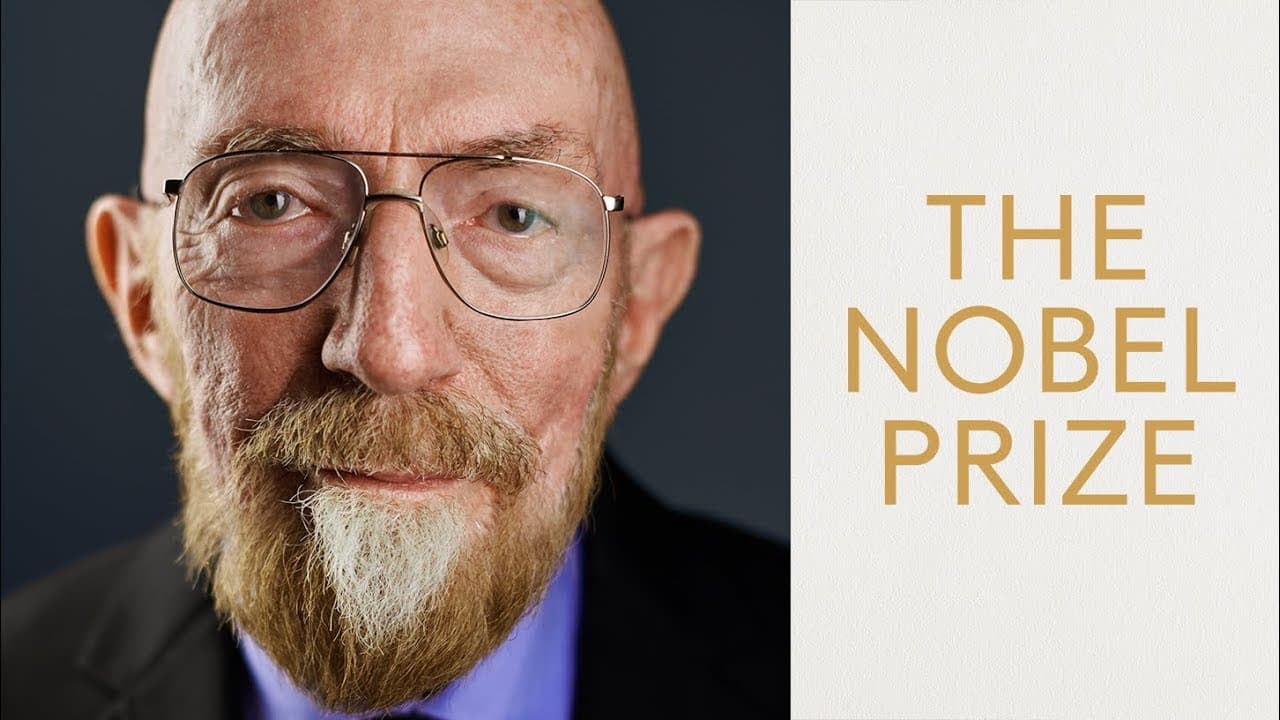
Interview with Kip Thorne, Nobel Prize in Physics 2017
TL;DR
Kip Thorne says scientific progress comes from imaginative ideas tested through experiment, mathematical analysis, and consistency with established laws of nature. Inspired by George Gamow at age 13 and mentored by John Wheeler, he pursued physics connected to astronomy. His experience with LIGO showed why ambitious experiments require broad collaboration, specialized expertise, and support from funding agencies. Read on for his views on discovery, mentorship, and meaningful work.
Transcript
I grew up in Logan Utah which is high in the Rocky Mountains altitude nearly nearly 2,000 meters we had deep snow when I was growing up and so obviously and before I was eight years old I wanted to be a driver of a snow plow because you could push the snow to such great heights but then when I was eight my mother took me to a lecture about astronom... Read More
Key Insights
- Kip Thorne's initial interest in astronomy shifted to physics after reading George Gamow's book.
- The joy of scientific discovery is a major motivator for Kip Thorne, outweighing the challenges.
- Imagination and creativity are essential in science but must be validated through experiments.
- Collaboration is crucial for large-scale projects like LIGO, involving thousands of scientists.
- Government funding, particularly from the National Science Foundation, was vital for LIGO's success.
- Mentoring students in diverse fields has been a significant and rewarding part of Thorne's career.
- Popular culture, such as films, can inspire interest in science, though it's more about inspiration than education.
- Kip Thorne finds inspiration in unexpected opportunities and enjoys working at the intersection of science and arts.
Install to Summarize YouTube Videos and Get Transcripts
Explore YouTube Video Summarizer or Get YouTube Transcript Extractor
Questions & Answers
Q: What shaped Kip Thorne’s approach to physics, collaboration, and creativity?
George Gamow’s book One, Two, Three... Infinity inspired Thorne at age 13 to pursue physics connected to astronomy. Mentors including John Wheeler and Robert Dicke shaped how he approached theoretical understanding and experimental work, while LIGO taught him that some scientific goals require a large collaboration.
Q: How did Kip Thorne become interested in physics?
Thorne first became excited about astronomy after his mother took him to a lecture about the solar system. At age 13, reading George Gamow’s One, Two, Three... Infinity shifted his interest toward mathematics, theoretical physics, and cosmology, leading him to choose physics while retaining a connection to astronomy.
Q: What motivates Kip Thorne in his scientific work?
Thorne says the joy of discovery is his primary motivation. He describes finally understanding a difficult puzzle as an adrenaline rush, whether or not he is the first person to reach that understanding.
Q: Why are imagination and creativity important in science?
Thorne considers imagination and creativity crucial for major leaps in understanding, but says they are not sufficient by themselves. New insights must be tested through experiment, detailed mathematical analysis, logical consistency, and compatibility with well-established laws of nature.
Q: Who influenced Kip Thorne as a physicist?
John Wheeler, Thorne’s PhD mentor, profoundly influenced how he understood nature. Robert Dicke’s research group, along with experimental physicist Ray Weiss, also helped Thorne learn how experimental physics is conducted.
Q: Why did LIGO require a large scientific collaboration?
Thorne says LIGO could not have been completed any other way because many different things could go wrong. The project required experts across numerous areas of physics and engineering, making it the collective achievement of an experimental team of a thousand people.
Q: What was Kip Thorne’s main contribution to LIGO?
As a theorist, Thorne understood the expected strength of gravitational waves, how they would interact with the detector, and what the project needed to accomplish. He also explained his confidence in the experimental team to funding agencies and the scientific community, helping make the case that LIGO should proceed.
Q: What career advice does Kip Thorne give students?
Thorne advises students to find work they love enough that it feels like play, while recognizing that it still requires dedication. He also encourages them to discover their own effective ways of learning, mastering material, and solving difficult problems.
Summary
In this video, Dr. Kip Thorne discusses his journey into becoming a physicist and his work on gravitational waves. He talks about the joy of discovery and the power of science in understanding and benefiting humanity. Dr. Thorne also emphasizes the importance of imagination, creativity, experimentation, and mathematical analysis in validating scientific insights. He shares the influences and collaborations that have shaped his career, including his work with the LIGO project. He explains the challenges and significance of LIGO, as well as the role of government funding in its success. Dr. Thorne discusses the different approaches to scientific research, the role of mentoring in his career, and the advice he gives to aspiring physicists. He also discusses his involvement in the movie industry, including his collaboration on the movie "Interstellar", and the potential of popular culture to inspire and convey scientific concepts. Finally, he talks about his hobbies and interests outside of physics, including his collaboration on a book of poetry and paintings.
Questions & Answers
Q: How did Dr. Thorne's interests in astronomy and physics develop?
Dr. Thorne grew up in Logan, Utah, where he was fascinated by snow plows due to the deep snow in the area. However, when he was eight years old, his mother took him to a lecture on astronomy, which sparked his interest in the solar system. He began doing projects and reading about astronomy, which led him to want to become an astronomer. However, at age 13, he found a book on theoretical physics and cosmology, which excited him even more than astronomy. Hence, at that point, he decided he wanted to be a physicist working on topics related to astronomy.
Q: What does Dr. Thorne find most enjoyable about science?
Dr. Thorne finds the process of doing science to be the most enjoyable part. Although it can be difficult and frustrating at times, the reward of suddenly understanding something after struggling with it for a long time is immensely satisfying. He describes it as an adrenaline rush. The ability of humans to understand the physical world in such detail and make true predictions and discoveries, such as black holes colliding with gravitational waves, is remarkable. Dr. Thorne also highlights the usefulness of scientific understanding for technology and human benefit.
Q: How does Dr. Thorne validate scientific insights?
While imagination and creativity are crucial for making breakthroughs in scientific understanding, they are not enough on their own. Dr. Thorne emphasizes the necessity of validation through experimentation and detailed mathematical analysis. Insights that go beyond the frontiers of current knowledge need to be tested and verified through experiments. Additionally, they need to align with the well-established laws of nature and fit logically into the complex structure of these laws.
Q: Who were the people that influenced Dr. Thorne's thinking and work as a physicist?
Dr. Thorne mentions several individuals who have influenced him throughout his career. One of his biggest inspirations was his PhD mentor, John Wheeler, who had a different political view but shared the same perspective on how to understand nature. Another influential figure was Robert Dicke, a superb experimental physicist who mentored Ray Weiss, Dr. Thorne's colleague on the LIGO project. Dr. Thorne also mentions Ronald Drever and Robbie Vogt, who played important roles in the early stages of LIGO.
Q: How does Dr. Thorne describe his role in the LIGO project?
Dr. Thorne describes LIGO as a project that could only be done as a big collaboration. While his preferred way of working is on small teams or by himself, he recognized the necessity of a large team for LIGO due to the complexity and number of things that could go wrong. His biggest contribution was understanding where the experimental team needed to go, as he had theoretical knowledge about the strength of gravitational waves and how they interact with the detector. He conveyed his faith in the experimental team to funding agencies and the physics community, played a role in laying the foundations for LIGO, and helped make it a reality.
Q: How was LIGO funded and how much did it cost?
LIGO was funded by the National Science Foundation (NSF), as it required a large amount of funding that could only be provided by a governmental agency. The project has cost approximately $1.1 billion so far, making it the largest project that the NSF has undertaken. Richard Isaacson, an NSF program director, played a crucial role in understanding the science behind gravitational waves and securing the necessary funding. Without the support of the NSF and Isaacson, LIGO would not have been possible.
Q: Can breakthrough scientific work be done in small teams?
Yes, according to Dr. Thorne, the majority of breakthrough work in physics can still be done in small teams, especially in areas like condensed matter physics. Many recent Nobel Prize-winning discoveries in physics were made by small teams. However, there are certain projects, such as the study of gravitational waves, that require a large collaboration due to the complexity and variety of expertise needed. Both small and large teams have their place in scientific research, depending on the nature of the problem being addressed.
Q: What does Dr. Thorne consider his greatest joy and achievement in his career?
Dr. Thorne takes great joy in mentoring others and seeing his students go on to pursue a wide range of careers. He has mentored over 50 PhD students who have gone into various fields, such as academia, industry, finance, and even the CIA. He believes that the problem-solving skills developed through a physics PhD are transferable and valuable in many different areas of human enterprise. Dr. Thorne is proud of his mentoring efforts and finds joy in seeing his students succeed.
Q: What advice does Dr. Thorne give to aspiring physicists?
Dr. Thorne advises aspiring physicists to find a field or direction that they absolutely love, as they will be spending a significant portion of their lives working on it. It should be something important and capable of benefiting the world, but ultimately, it has to be something they love. Another piece of crucial advice is to be ready and willing to work hard, as success in physics does not come easily. Dr. Thorne also encourages students to find their own way of functioning and mastering material. Experimentation and finding their own approach is key to finding success in their own unique way.
Q: How did Dr. Thorne become involved in the movie industry, particularly with the movie "Interstellar"?
Dr. Thorne's involvement in the movie industry began through a personal connection. He dated a woman named Linda Orbs, a movie producer, when he was single in Southern California. Although their romantic relationship did not work out, they became close friends, and many years later, Linda reached out to Dr. Thorne to brainstorm ideas for a movie. Dr. Thorne saw it as a fun opportunity to work with brilliant people who were different from him and to convey the beauty and power of science to a wide audience. This collaboration led to the creation of the movie "Interstellar" and Dr. Thorne's involvement in its scientific accuracy.
Q: What movies does Dr. Thorne consider his favorites?
Dr. Thorne mentions two movies, "2001: A Space Odyssey" and "Contact", as his favorites. Both movies were scientific from the beginning, with the science being deeply embedded in the stories. In "2001: A Space Odyssey", physicist Arthur C. Clarke provided the scientific underpinnings, and Dr. Thorne appreciates how the science was interwoven with the film. "Contact" was a collaboration between Carl Sagan and Linda Orbs, who Dr. Thorne collaborated with on "Interstellar". In both cases, the science was integral to the films and resonated with Dr. Thorne.
Q: How has Dr. Thorne's scientific work influenced the movie industry, if at all?
Dr. Thorne explains that his influence on the movie industry has mainly been in the form of scientific input and collaboration, rather than the other way around. In the case of "Interstellar", he worked closely with the visual effects team and the chief scientist at Double Negative, a visual effects company, to develop a new method for creating high-resolution visualizations of black holes and other astrophysical phenomena. While the methods derived from this collaboration have been beneficial to astrophysicists, the main direction of influence has been from the science into the film and through the film to popular culture.
Q: What is Dr. Thorne working on currently outside of physics?
Dr. Thorne is currently working on various projects at the interface of arts and sciences. He is collaborating with a young painter and photographer named Leah Halloran on a book that combines her paintings of phenomena related to gravitational waves, such as black holes and cosmic strings, with his poetry. He is also pursuing hobbies such as hiking, scuba diving, and skiing, although he mentions that these activities have taken a backseat in recent years due to the demands of his work. Dr. Thorne finds joy in pursuing different creative endeavors and embracing new challenges.
Summary & Key Takeaways
-
Kip Thorne's journey to becoming a physicist began with childhood interests in astronomy, shaped by influential mentors and a shift towards theoretical physics. He emphasizes the thrill of scientific discovery and the necessity of collaboration for projects like LIGO, which required extensive teamwork and government support. Thorne also values mentoring students and contributing to science communication through films.
-
Imagination and creativity are vital in science, but they must be supported by experimentation and logical consistency. Thorne's work on LIGO exemplifies the importance of collaboration, as it involved a large team and significant funding from the National Science Foundation. He highlights the role of mentors like John Wheeler and the importance of finding personal methods for problem-solving.
-
Thorne's involvement in popular culture, such as his contribution to the film Interstellar, demonstrates his belief in the power of media to inspire scientific interest. He enjoys exploring new creative outlets, such as poetry, and values the interdisciplinary collaboration between science and the arts. His advice to students emphasizes finding a career that feels like play and pursuing it with passion.
Read in Other Languages (beta)
Share This Summary 📚
Summarize YouTube Videos and Get Video Transcripts with 1-Click
Try YouTube Summary with ChatGPT & Claude or YouTube Transcript Generator
Explore More Summaries from Nobel Prize 📚


Summarize YouTube Videos and Get Video Transcripts with 1-Click
Try YouTube Summary with ChatGPT & Claude or YouTube Transcript Generator