How does the brain control spermatogenesis?
TL;DR
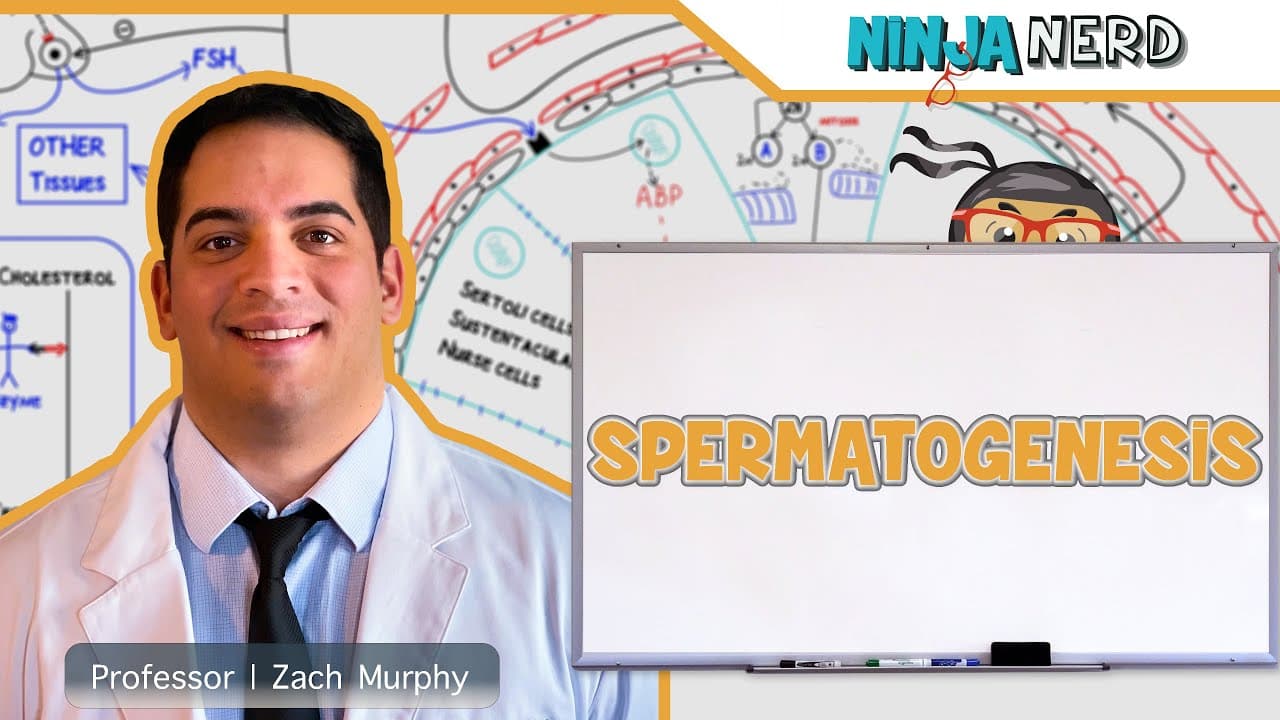
GNRH from the hypothalamus activates the hypophyseal portal system to stimulate gonadotropes in the pituitary. These cells release LH and FSH, which trigger Leydig and Sertoli cells, respectively, supporting sperm development in the seminiferous tubules and establishing the blood-testis barrier to protect developing germ cells.
Transcript
all right engine nerd so what we're going to do in this video is we're going to talk about the brain testicular axis okay so first off let's go ahead and look at what specific organs are involved here so if you look here what I have zoomed in on right here this is the hypothalamus so the hypothalamus is basically the master endocrine regulator righ... Read More
Key Insights
- The hypothalamus secretes gonadotropin releasing hormone to regulate reproductive function.
- GNRH acts on gonadotropes in the pituitary to produce LH and FSH.
- LH stimulates testosterone production from Leydig cells.
- FSH acts on Sertoli cells to promote spermatogenesis and barrier maintenance.
- Sertoli and Leydig cells respond to hormonal signals to coordinate sperm development.
- The seminiferous tubules contain a basil compartment and an ad luminal compartment where development occurs.
- Tight junctions and adherence junctions form the blood-testis barrier.
- Meiosis and mitosis drive the transformation from spermatogonia to mature spermatozoa.
Install to Summarize YouTube Videos and Get Transcripts
Explore YouTube Video Summarizer or Get YouTube Transcript Extractor
Questions & Answers
Q: How is GnRH released and what does it stimulate in the reproductive axis?
GnRH is released from nuclei in the hypothalamus, including the pre-optic nucleus and the arcuate nucleus, into the hypothalamic portal system. It stimulates gonadotropes in the pituitary to produce two key hormones: luteinizing hormone and follicle stimulating hormone. These hormones then coordinate the maturation of sperm by acting on Leydig and Sertoli cells respectively.
Q: What are the roles of LH and FSH in spermatogenesis?
LH stimulates testosterone production from Leydig cells, which supports sperm development, while FSH acts on Sertoli cells to promote spermatogenesis and maintain the blood-testis barrier. Together, they regulate the hormonal environment and cellular interactions necessary within the seminiferous tubules for continuous sperm production.
Q: What is the blood-testis barrier and why is it important?
The blood-testis barrier is formed by tight junctions between Sertoli cells that separate the basil compartment from the ad luminal compartment. It prevents sperm cell antigens from leaking into the bloodstream, thereby protecting developing germ cells from immune attack and maintaining a controlled environment for maturation.
Q: Which cells are referred to as nurse cells, and what is their role?
Sertoli cells are referred to as nurse cells. They support germ cell development, respond to FSH, and help maintain the blood-testis barrier. They create a nurturing environment in the seminiferous tubules, regulate the movement of developing cells, and participate in forming tight and adherent junctions essential for spermatogenesis.
Q: Describe the progression from spermatogonia to mature sperm based on the video.
Spermatogonia reside in the basil compartment as diploid stem cells. They undergo mitosis to form type A and type B cells; type B cells move into the ad luminal compartment and become primary spermatocytes. Primary spermatocytes then undergo meiosis I to create secondary spermatocytes, which undergo meiosis II to form haploid spermatids that mature into spermatozoa.
Q: What happens during meiosis in spermatogenesis as described in the video?
During meiosis, primary spermatocytes divide to form secondary spermatocytes, which then divide again to produce haploid spermatids. This sequence reduces chromosome number and creates genetic diversity through recombination, as indicated by the discussion of diads, tetrads, and crossovers that occur during meiosis in the meiotic process.
Q: Why are tight junctions and adherent junctions important in the seminiferous tubules?
Tight junctions and adherent junctions link Sertoli cells to each other, forming the compartments within the seminiferous tubules. They regulate the environment for germ cell development, help form the blood-testis barrier, and coordinate the passage of cells between basil and ad luminal compartments during spermatogenesis.
Q: What is a key distinction between mitosis and meiosis in germ cell development?
Mitosis in spermatogonia yields two identical diploid daughter cells that can renew the germ cell pool, while meiosis produces haploid gametes. Meiosis involves two rounds of division and genetic recombination, resulting in four haploid cells that mature into spermatozoa, as contrasted with the diploid outcomes of mitosis.
Summary & Key Takeaways
-
The video explains the hypothalamic control of the brain testicular axis, highlighting GnRH release from the hypothalamus and its travel through the hypophyseal portal system to the pituitary. It covers how LH and FSH regulate Leydig and Sertoli cells to support spermatogenesis, including barrier formation.
-
Spermatogenesis begins with spermatogonia in the basil compartment, moves through meiosis to form haploid sperm cells, and involves the remodeling of cells within the ad luminal compartment to produce mature spermatozoa.
-
A key concept is the blood-testis barrier created by tight junctions among Sertoli cells, which protects germ cells from immune attack and regulates the microenvironment necessary for sperm maturation.
Read in Other Languages (beta)
Share This Summary 📚
Summarize YouTube Videos and Get Video Transcripts with 1-Click
Try YouTube Summary with ChatGPT & Claude or YouTube Transcript Generator
Explore More Summaries from Ninja Nerd 📚





Summarize YouTube Videos and Get Video Transcripts with 1-Click
Try YouTube Summary with ChatGPT & Claude or YouTube Transcript Generator