How to Nail Your Raise and Lure VCs: Pitching Advice from Vinod Khosla
TL;DR
To pitch venture capitalists effectively, prepare thoroughly, align your team, disclose risks, and build a simple narrative that addresses investor fear and greed. Research each investor’s recent activity, communicate with confidence and transparency, and place supporting detail in the appendix. Vinod Khosla also explains how every presentation should engineer a clear takeaway that a sponsoring partner can defend. Read on for the practical principles behind that approach.
Transcript
well good afternoon everybody if we can settle down I warn you ahead of time this will go at a blistering pace so I'll walk you through how to present to ACS this is roughly the agenda what are the axioms what does prep involve too many people skip that step what's the narrative arc of your storytelling and that's sort of the crux of it uh so you y... Read More
Key Insights
- Preparation is crucial; ensure your team is aligned and ready to address potential risks.
- Investors are driven by fear and greed; address both to appeal to them.
- Simplify complex information to avoid inducing fear in investors.
- Storytelling is more effective than logical completeness in pitches.
- Use the appendix for detailed data, allowing the main presentation to focus on the narrative.
- Tailor your pitch to each investor's interests and priorities.
- Rehearse with less critical investors first to refine your pitch.
- Highlight your unique value proposition clearly and concisely.
Install to Summarize YouTube Videos and Get Transcripts
Explore YouTube Video Summarizer or Get YouTube Transcript Extractor
Questions & Answers
Q: How do you pitch effectively to venture capitalists?
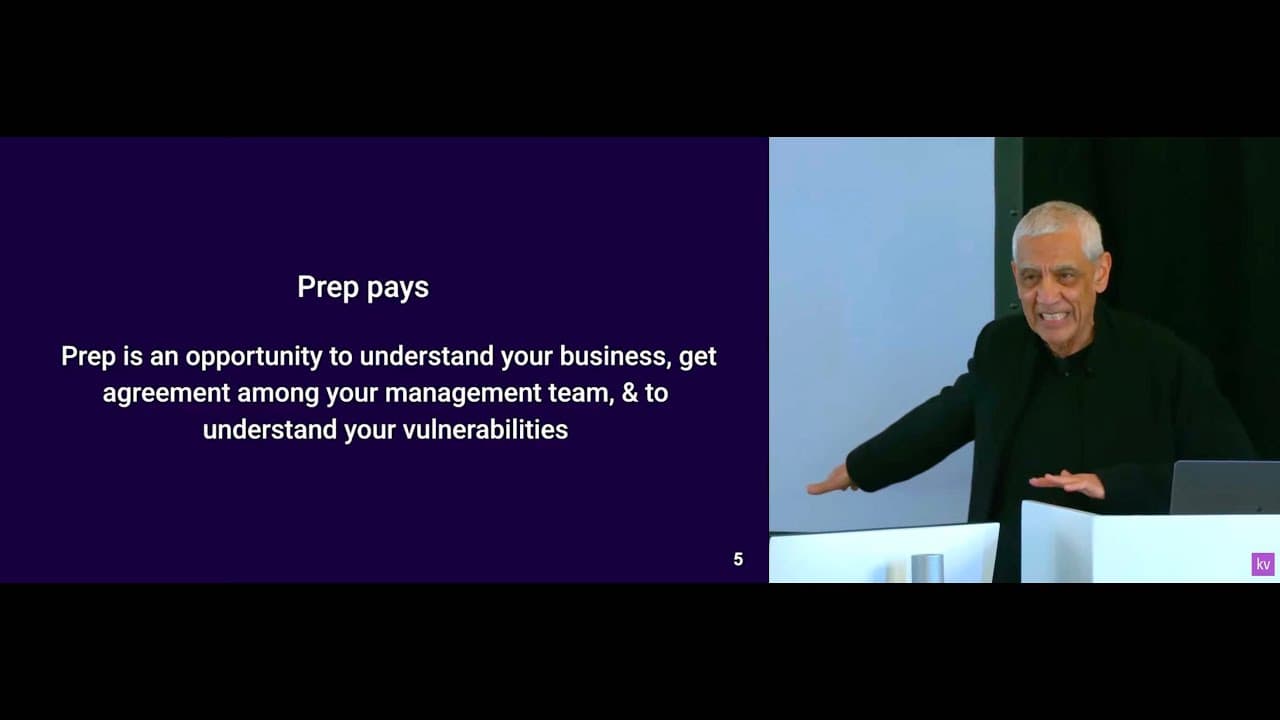
Prepare thoroughly, align your management team, and identify both the strengths and weaknesses of the business before presenting. Keep the main story simple because complexity can induce fear, while communicating with confidence and transparency. Shape the presentation around the takeaway you want the investor and sponsoring partner to share afterward.
Q: What preparation should a team complete before a VC pitch?
The team should discuss the business together so members do not give inconsistent answers during the pitch. Encourage everyone to surface doubts, anxieties, and hidden risks before investors discover them. This process can also help the team understand its own business better.
Q: What two emotions drive investors?
Vinod Khosla says investors have two emotions: fear and greed. He argues that investors often make an emotional decision and then use logic to explain it. A pitch should therefore address both emotions while remaining clear and credible.
Q: Why should a VC pitch keep things simple?
Complexity can induce fear, particularly when entrepreneurs explain too many nuances early in the pitch. Investors may decide that they do not want to deal with the complexity. Clear communication also helps them judge whether the entrepreneur is a clear thinker.
Q: Why are confidence and transparency important when pitching investors?
Investors judge whether founders can build a successful company and raise money again in the future. Hiding information may make them think the founder cannot be trusted, while unsupported or misleading numbers can derail the presentation. The pitch should therefore combine confidence with candid disclosure.
Q: How should founders research a venture capitalist before pitching?
Research what the investor has done recently and what they currently like, dislike, and value. Do not rely only on investments from five or 10 years ago because their preferences may have changed. This preparation helps account for how investors filter a message through their own language and recent experiences.
Q: Should founders disclose the weaknesses and risks of their business?
Yes, founders should identify the pros and cons of the business and disclose the important weaknesses. If they do not identify the cons, investors may invent their own concerns. Openly addressing risks also demonstrates preparation and transparency.
Q: What takeaway should a VC presentation create?
The presentation should engineer the summary that an investor will write afterward about what is good or bad about the opportunity. A sponsoring partner may then need to sell and defend the investment to other partners. Every part of the pitch should help that partner communicate the intended takeaway clearly.
Summary & Key Takeaways
-
Preparation is key to a successful pitch, ensuring team alignment and readiness to address potential risks. This involves understanding each team member's perspective and fostering a culture of open communication.
-
Investors make decisions based on emotions like fear and greed. Simplifying complex information and focusing on storytelling over logical completeness can help engage them effectively.
-
Using an appendix for detailed data allows the main presentation to focus on a compelling narrative. Tailoring the pitch to each investor's interests and rehearsing with less critical investors first can refine the presentation.
Read in Other Languages (beta)
Share This Summary 📚
Summarize YouTube Videos and Get Video Transcripts with 1-Click
Try YouTube Summary with ChatGPT & Claude or YouTube Transcript Generator
Explore More Summaries from Khosla Ventures 📚




Summarize YouTube Videos and Get Video Transcripts with 1-Click
Try YouTube Summary with ChatGPT & Claude or YouTube Transcript Generator