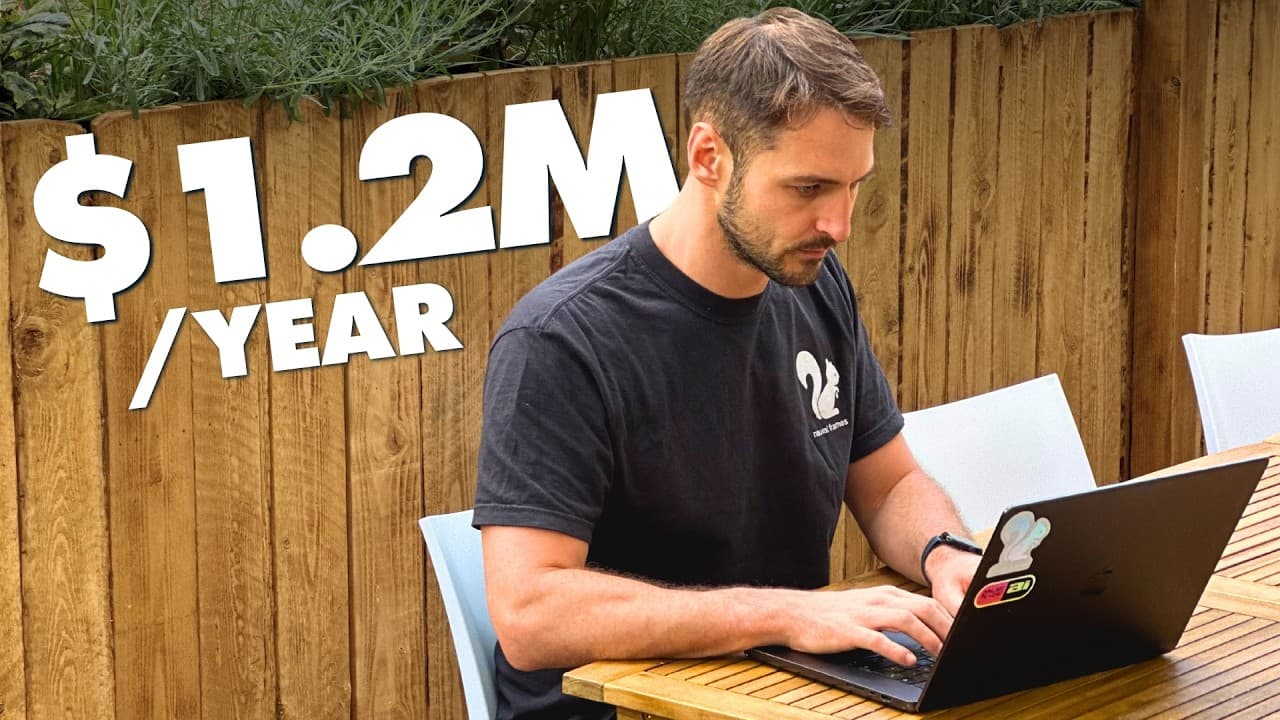
How Did Neural Frames Grow to $100K a Month?
TL;DR
Neural Frames grew to $100,000 in monthly revenue by focusing its AI video product on musicians, launching early, improving continuously, and attracting customers through SEO, free tools, outreach, and a personal founder presence. Nicolai Klemke reports that around 1,500 customers use the platform, which is now run by a five-person team. Read on for the positioning, validation, launch, and growth tactics behind the business.
Transcript
I walked away from my career to build my own thing. This is Nico, and he did something that, let's be honest, is really hard. He gave up his entire career. I didn't really know what I was doing. He was on the traditional path until two letters made him rethink everything. AI. AI. AI. AI. Building an AI is the best decision I ever made. I know, I kn... Read More
Key Insights
- A narrow market position is easier for prospective customers to understand. Neural Frames replaced a broad text-to-video message with a clear promise to help musicians create music videos, removing the need for visitors to identify the relevant use case themselves.
- Neural Frames is an AI music video generator designed to reduce the difficulty of producing visual content for songs. Its users include hobby and independent musicians, some professional musicians, and people who create songs with AI music tools.
- Nicolai Klemke’s business idea emerged from combining previous interests and experience. His work in computer vision and his activity as a musician intersected in AI animation for music videos, providing a focused application for skills developed across different fields.
- Keyword research is a practical way to evaluate potential product ideas. Klemke looks for a relevant term with more than one thousand monthly searches and low difficulty, reasoning that this combination indicates existing demand without an overwhelming number of competing solutions.
- An early launch can produce useful momentum before a product looks polished. A Hacker News post published about a week after launch reached roughly the top six on a Sunday, attracted hundreds of simultaneous visitors, generated backlinks, created conversations, and produced the product’s first revenue.
- Search-focused pages and free tools are central parts of Neural Frames’ growth approach. Klemke began using SEO early, built dedicated landing pages, and said free tools still work well on Google, while continued product development and outreach expanded awareness.
- A personal founder presence can strengthen customer connection. Neural Frames highlighted that it had no venture capital, displayed Klemke’s photograph, and used tutorials recorded by him, reflecting his belief that customers buy from people rather than faceless companies.
- Neural Frames reached substantial usage while remaining a small company. Klemke reported around 1,500 customers producing $100,000 in monthly revenue, approximately 100,000 monthly site visitors, 1.5 million completed AI videos, and a team that grew from one founder to five people.
Install to Summarize YouTube Videos and Get Transcripts
Explore YouTube Video Summarizer or Get YouTube Transcript Extractor
Questions & Answers
Q: How did Neural Frames grow to $100,000 per month?
Neural Frames combined narrow positioning, an early Hacker News launch, continuous product improvements, outreach, SEO-focused landing pages, and free tools. Nicolai Klemke reported that around 1,500 customers eventually generated $100,000 in monthly revenue while the company grew to a team of five.
Q: What does Neural Frames do for musicians?
Neural Frames is an AI music video generator that helps musicians create visual content for their songs. Its users include hobby and independent musicians, some professional musicians, and people who make songs with AI music tools.
Q: Why did Neural Frames focus specifically on musicians?
The original product offered text-to-video creation broadly, which required visitors to determine their own use case. Positioning it as a music video platform made the purpose immediately clear to musicians and helped guide development around their specific needs.
Q: How did Nicolai Klemke find the idea for Neural Frames?
Klemke combined his experience in computer vision with his ongoing interest as a musician. Those two areas converged in AI animation for music videos, giving him a focused application for skills and interests he had developed separately.
Q: How can keyword research validate a niche AI app idea?
Klemke recommends identifying a search term that prospective customers would use and checking its search volume and difficulty with an SEO tool such as Ahrefs. He looks for more than one thousand monthly searches with low difficulty, which he interprets as evidence of demand with limited competition.
Q: How did Hacker News help launch Neural Frames?
Klemke posted Neural Frames on Hacker News about a week after launch, while the product still looked rough. The post reached roughly the top six on a Sunday, brought hundreds of simultaneous visitors, generated backlinks and conversations, and produced the company’s first revenue.
Q: What growth channels did Neural Frames use after launch?
Klemke continued improving the product, contacted people working in AI, created dedicated SEO landing pages, and offered free tools that performed well on Google. Neural Frames also emphasized its independent identity through Klemke’s photograph and founder-recorded tutorials.
Q: What advice does Nicolai Klemke give people considering an AI career change?
Klemke says fear of failure and technical difficulty commonly hold people back. He argues that building a product creates valuable learning even if the business fails, that AI tools make software faster to build, and that someone can still return to their previous type of job.
Summary & Key Takeaways
-
Nicolai Klemke moved from physics into software after discovering that he enjoyed programming during scientific simulations. Experience at a deep-tech startup introduced him to AI and computer vision. In late 2022, he began building Neural Frames, his first full-stack software project, initially working alone before expanding the company to five people.
-
Neural Frames helps hobby, independent, professional, and AI-assisted musicians create visual content for songs. The product initially offered text-to-video creation for everyone, but focusing specifically on music videos made its purpose clearer. Musicians could immediately recognize the relevant use case without translating a broad video-generation message into their own needs.
-
Early growth came from a Hacker News launch, ongoing product improvements, outreach to people working in AI, SEO-focused landing pages, and free tools. Klemke also emphasized the company’s independent, personal identity through his photograph and tutorials. The platform eventually reached $100,000 monthly revenue from around 1,500 customers and a team of five.
Read in Other Languages (beta)
Share This Summary 📚
Summarize YouTube Videos and Get Video Transcripts with 1-Click
Try YouTube Summary with ChatGPT & Claude or YouTube Transcript Generator
Explore More Summaries from Starter Story 📚

Summarize YouTube Videos and Get Video Transcripts with 1-Click
Try YouTube Summary with ChatGPT & Claude or YouTube Transcript Generator