How Did Mike Build 3 SaaS Apps to $200K MRR? His Exact Playbook
TL;DR
Mike built three SaaS businesses doing over $200K in combined monthly recurring revenue by repeatedly choosing proven ideas, improving weak user experiences, and launching with a tech-heavy team. His 10-step playbook uses early content marketing, lifetime deals, reviews, and customer feedback, while the four co-founders split ownership equally at 25% each. Read on for the specific process he applies to every SaaS launch.
Transcript
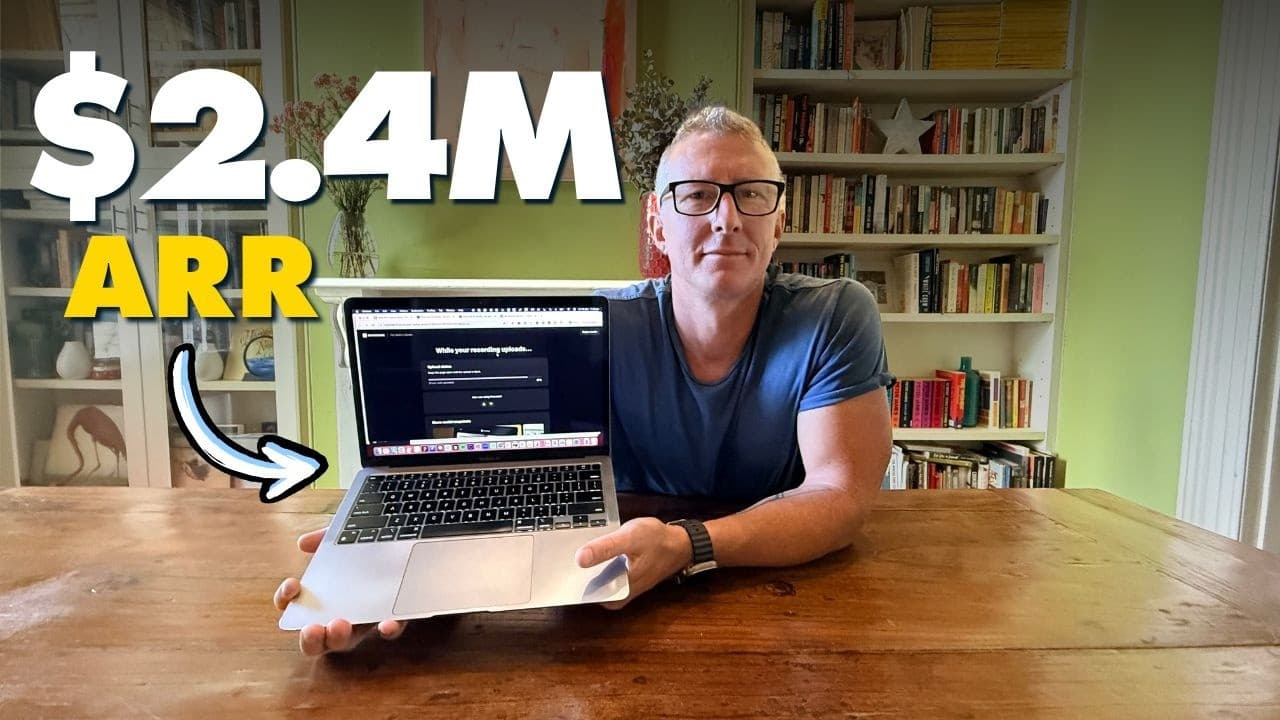
Right now, we have five apps and we're doing just over 200 grand MR. This is Mike, a founder from Australia who built five different SAS apps that make a combined $200,000 MR. But here's what's interesting. Each successful app he's created follows the same repeatable framework. And this framework works so well that he guarantees every app he puts t... Read More
Key Insights
- Mike's playbook involves a 10-step process that includes picking proven ideas and selling lifetime deals.
- He emphasizes the importance of minimizing risk by avoiding new, unvalidated ideas.
- A strong tech-heavy team is crucial, with roles like front-end and back-end developers and a designer.
- Design is prioritized heavily, as good design is seen as a key factor in selling products.
- Mike's businesses focus on generating high salaries rather than aiming for big exits.
- Content marketing is started early to build visibility and leverage search engine indexing.
- Lifetime deals are used strategically to raise initial capital and gain early users.
- Avoiding reliance on external APIs and focusing on stable, well-documented tools is crucial for sustainability.
Install to Summarize YouTube Videos and Get Transcripts
Explore YouTube Video Summarizer or Get YouTube Transcript Extractor
Questions & Answers
Q: How did Mike build three SaaS apps to over $200K MRR?
Mike uses a repeatable framework designed to minimize risk: find a proven idea performing despite poor UX, assemble a tech-heavy team, prioritize design, and launch through a structured 10-step process. His three current SaaS businesses generate over $200K per month, with two more products on the way.
Q: What is Mike's 10-step SaaS playbook?
The playbook is to pick a proven idea, define an MVP, offer a lifetime deal, charge for accounts, use private lifetime-deal groups, publish content early, launch on marketplaces such as AppSumo, run a final private lifetime deal, gather reviews, and improve the product using customer feedback. Mike says he has used the same playbook to launch all five apps.
Q: How does Mike choose SaaS ideas?
Mike looks for ideas that have already been proven rather than starting with unvalidated concepts. He examines products that perform well despite a bad user experience, then builds a better-designed alternative to reduce market risk.
Q: How is Mike's SaaS founding team structured?
Mike starts each business with four co-founders: a front-end developer, a back-end developer, ideally a designer, and someone like Mike who handles the remaining product work. The company is split equally, giving each founder 25% ownership.
Q: Why does Mike prioritize product design and UX?
Mike believes good design sells, so he prioritizes having a designer on the founding team. He also wants every team member to think about the product's user experience and prefers people who can do a little of everything.
Q: How does Mike use lifetime deals to launch SaaS products?
Lifetime deals are built into several stages of his launch playbook, including an initial offer, promotion through private lifetime-deal groups, an AppSumo launch, and a final private deal. The existing page summary says these offers provide initial capital, attract early users, and generate feedback.
Q: When do Mike's SaaS founders begin taking profits?
The team first grows each company to about $10,000 in monthly recurring revenue, which approximately covers costs depending on the business. After reaching that level, the founders split the profits and begin paying themselves.
Q: What SaaS products has Mike built?
His portfolio includes Curator, a social media aggregator; Frill, a customer-feedback tool; Juno, a digital-signage business; and Fluke, a no-code onboarding-tour platform. The fifth product, Smile, was described as a group ecard product for B2B businesses that was due to launch within two weeks.
Summary & Key Takeaways
-
Mike, an Australian founder, has developed a successful method for building SaaS apps, leading to a combined $200K MRR. His 10-step playbook focuses on minimizing risk by choosing proven ideas, assembling a tech-heavy team, and leveraging lifetime deals and content marketing.
-
The playbook involves picking ideas that have been done before, creating a minimum viable product, and selling lifetime deals to raise initial capital. Mike emphasizes the importance of good design and a strong team to ensure product success.
-
Avoiding risky ventures like AI dependencies, Mike ensures sustainable growth by focusing on stable, well-documented tools and avoiding reliance on external APIs. His businesses prioritize high salaries over big exits, maintaining a lean operation.
Read in Other Languages (beta)
Share This Summary 📚
Summarize YouTube Videos and Get Video Transcripts with 1-Click
Try YouTube Summary with ChatGPT & Claude or YouTube Transcript Generator
Explore More Summaries from Starter Story 📚

Summarize YouTube Videos and Get Video Transcripts with 1-Click
Try YouTube Summary with ChatGPT & Claude or YouTube Transcript Generator