How to validate a SaaS idea before building it
TL;DR
You validate by testing willingness to pay before building. Start with a landing page and a fake demo to gauge interest, then secure a refundable deposit to prove buyers will commit. The first $500 payment confirms product market fit and signals a viable opportunity worth pursuing.
Transcript
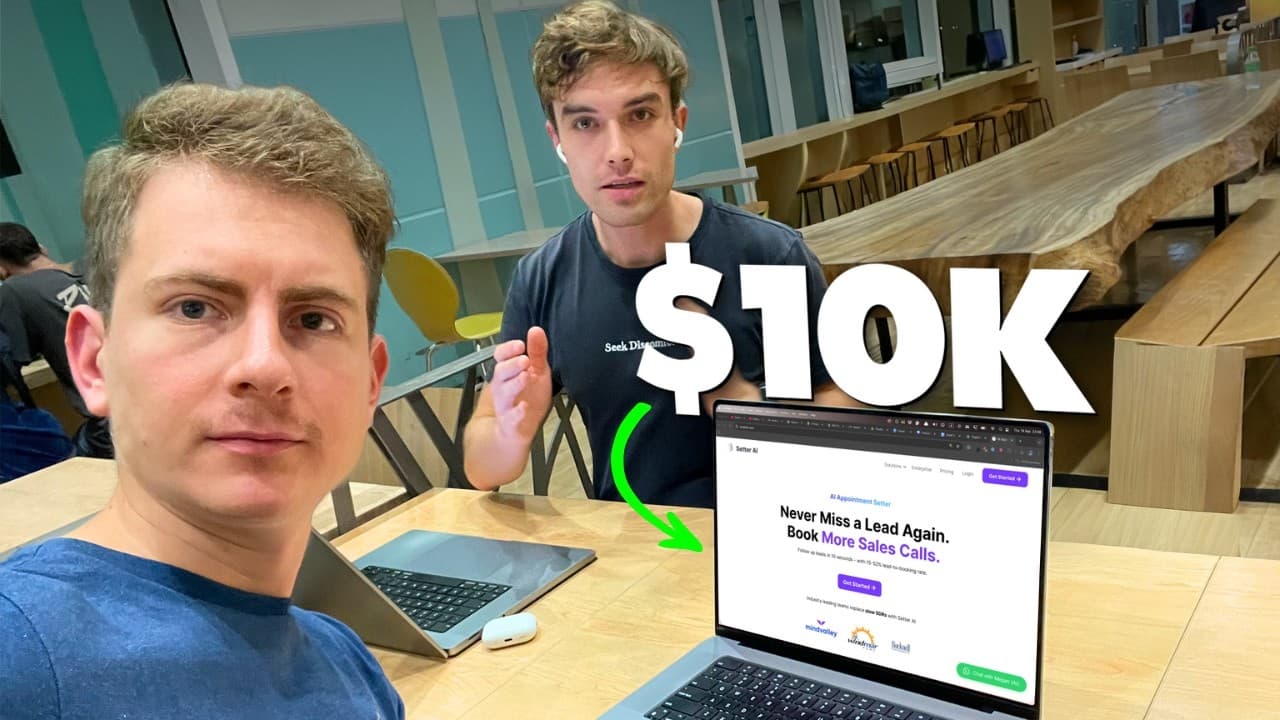
My name is Joseph and I'm Teimmo. Together, we built Cedari to 10K MR. These two guys met each other in a co-working space and decided to partner up. But they were burned out by what I like to call builder's disease. I quit my job and spent a whole year building without any traction. So, they came up with a better strategy. Get paid before building... Read More
Key Insights
- Validation requires buyers swiping their credit card before building. The first payment acts as proof of market demand. A landing page with a fake demo can test the concept quickly and cheaply.
- Set up a landing page on a preexisting domain to leverage existing SEO power and accelerate indexing on Google Search Console.
- Ask for a refundable deposit to reduce risk for both you and the buyer, creating momentum toward a real launch.
- Lead with a high ticket offer to filter serious buyers and maximize early revenue and feedback.
- Use a Calendly link and a real face to increase trust and conversion during early outreach.
- Involve a simple, clear demo that shows value without building the full product yet, reducing wasted effort.
- A combination of SEO, content, and long-form YouTube content can drive high intent traffic and qualified inquiries.
- Validate ideas before coding, then focus on inbound channels that already showed traction during the test phase.
- More videos from this channel:
- More from this channel: Starter Story
Install to Summarize YouTube Videos and Get Transcripts
Explore YouTube Video Summarizer or Get YouTube Transcript Extractor
Questions & Answers
Q: What is the core idea behind validating a SaaS before building it?
The core idea is to test demand and willingness to pay before writing code. This is done by creating a landing page with a fake demo, ranking it for relevant keywords, and offering a refundable deposit to capture real commitments from potential buyers. A confirmed payment serves as the strongest signal of product viability.
Q: How did they demonstrate initial proof of demand for Setter AI?
They demonstrated demand by obtaining a $500 payment before any product existed. This first Stripe payment served as a clear validation signal that buyers were willing to commit money to a concept, which the founders used to justify building the product and pursuing the idea further.
Q: What is the deposit framework described in the video?
The deposit framework involves offering a high value, refundable deposit rather than asking for ongoing payments for a non existent product. The buyer pays a substantial amount upfront, secures a spot in the launch, and gains access to value or previews of the product, with the option for a full refund if not satisfied.
Q: Why is a landing page important in the validation process?
A landing page serves as the test surface for demand. It communicates the concept, showcases a fake demo, includes a clear call to action, and, crucially, is indexed by search engines to attract organic traffic. This helps assess whether buyers search for the problem and are willing to engage.
Q: What role does SEO play in their growth strategy?
SEO drives inbound traffic and credibility. By ranking for relevant keywords and creating content that compares tools or offers free resources, they attract potential buyers who later convert on calls. SEO provided scalable, ongoing demand without expensive paid campaigns.
Q: How do they use YouTube in their growth strategy?
YouTube long-form content builds trust and intent, acting as a discovery channel that educates viewers and leads them to book calls. It complements SEO by reaching audiences who prefer video and helps establish authority in the space, resulting in higher-quality inquiries.
Q: What did they consider the biggest signal of validation before building?
The biggest signal of validation was the moment a buyer swiped their credit card for a deposit before the product existed. This strong, revenue-based signal indicated real market demand and justified accelerating product development rather than sticking to theory.
Q: How did they structure pricing for Setter AI?
The pricing structure includes a subscription model starting at around $50 per month, with higher tiers for larger customers and multiple configurations, including up to $5,000 per month for some clients. The range demonstrates the ability to serve both smaller and enterprise-like customers while validating demand.
Summary & Key Takeaways
-
The founders validated Setter AI by creating a simple landing page with a fake demo and ranking it on Google, then observed buyers willing to pay before any code existed. This approach reduced risk and demonstrated market interest early. The deposit framework played a crucial role in translating interest into cash.
-
They used SEO driven growth and content, plus a strong YouTube strategy to build trust and inbound inquiries, enabling rapid scale after initial validation. The core concept was to remove guesswork by confirming demand with real customers before building.
-
The numbers show $500 upfront payment before product creation, a subscription model starting at $50 per month, and high ticket options up to $5,000 per month showing a wide market fit and potential for scalable revenue.
Read in Other Languages (beta)
Share This Summary 📚
Summarize YouTube Videos and Get Video Transcripts with 1-Click
Try YouTube Summary with ChatGPT & Claude or YouTube Transcript Generator
Explore More Summaries from Starter Story 📚






Summarize YouTube Videos and Get Video Transcripts with 1-Click
Try YouTube Summary with ChatGPT & Claude or YouTube Transcript Generator