How Astronauts Survive a Dangerous ISS Mission
TL;DR
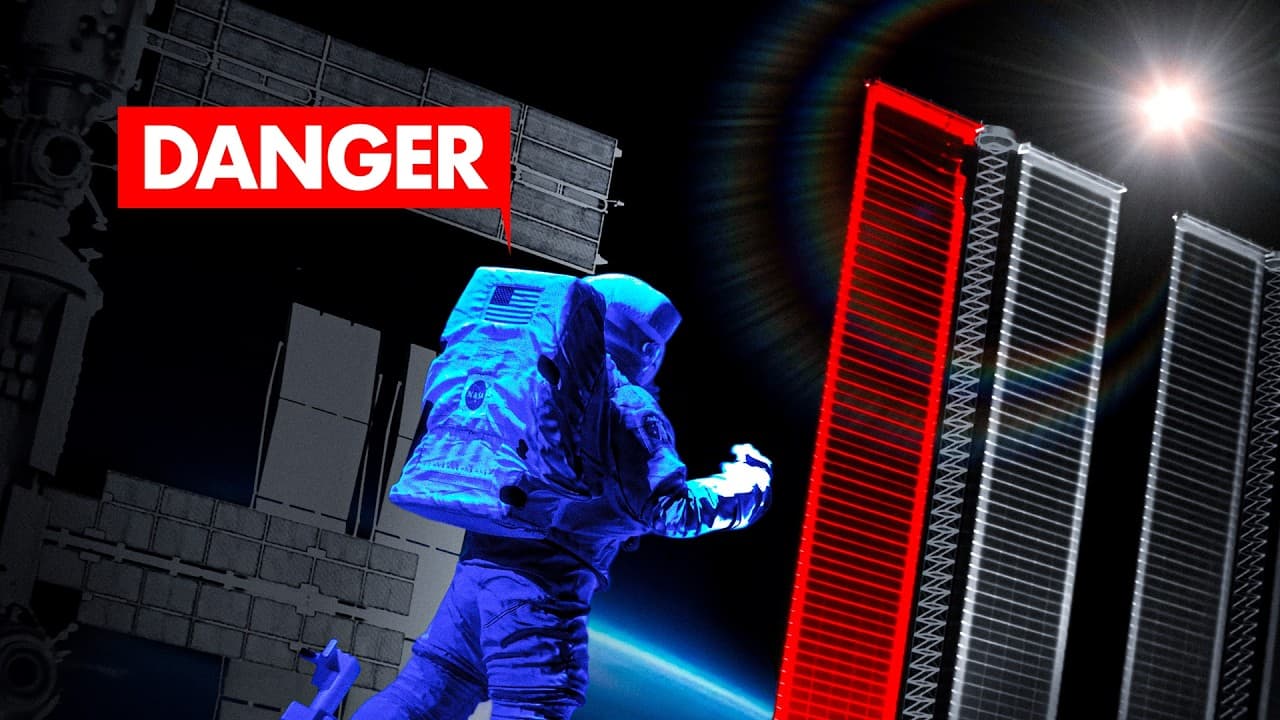
Astronauts survive a dangerous ISS mission by relying on life-support systems, ground control, safety procedures, and careful teamwork. When two tears, one nearly a meter long, damaged a live 100-volt solar array, the crew had no proper replacement parts or tools and prepared an exceptionally risky repair using improvised equipment. Read on to see how ventilation, water recycling, thermal control, docking, and spacewalk precautions keep the station operating.
Transcript
this is the ISS the biggest and most complex structure humanity has ever assembled in space Racing around the planet at 28,000 kmh 400 km above Earth completing a full orbit every 90 minutes One of the most ambitious engineering projects in history Built by 15 nations including the US and Russia A transnational cuttingedge research outpost A fragil... Read More
Key Insights
- The ISS is a fragile research outpost operating in vacuum, radiation, temperature extremes, and fast-moving debris. Its crew relies on interconnected systems that must continuously provide breathable air, manageable temperatures, electrical power, water, communications, and safe working conditions far above Earth.
- Ventilation is essential in weightlessness because exhaled carbon dioxide does not naturally rise or disperse as it does under gravity. Fans circulate cabin air, prevent carbon dioxide from lingering around a sleeping astronaut’s head, and contribute to the station’s constant background noise.
- Water conservation is fundamental aboard the station because showers are unavailable and nearly all available moisture is recovered. A filtration system processes water from sweat, breath, and urine, turning it back into drinking water and reducing the amount that must be supplied from Earth.
- Thermal control works through passive insulation and active cooling loops. Water absorbs heat produced by people and electronics, heat exchangers transfer that energy to ammonia circuits, and large radiators release it into space while the exterior alternates between intense sunlight and Earth’s shadow.
- International cooperation is built into the ISS structure and daily operations. American and Russian crew members work together despite political tensions, while European, Canadian, and Japanese contributions provide laboratories, robotic equipment, connecting infrastructure, and other capabilities needed to operate the shared orbital outpost.
- Solar power is vital to station operations, so torn arrays threaten both available electricity and dependent systems. Repairing a damaged panel is especially dangerous when exposed current remains live, proper replacement parts are unavailable, and astronauts must work outside the station with improvised equipment.
- Spacewalk safety depends on isolation from electrical hazards, secure attachment, and controlled airlock procedures. Astronauts depressurize the airlock before opening its hatch, fasten safety tethers to avoid drifting away, and wrap exposed metal on suits and tools in insulating tape.
- ISS research uses weightlessness to study processes that behave differently from those on Earth. The transcript describes mice used to investigate antibody effects on bone growth and plants whose roots and leaves lose their usual gravity-guided growth directions while orbiting the planet.
Install to Summarize YouTube Videos and Get Transcripts
Explore YouTube Video Summarizer or Get YouTube Transcript Extractor
Questions & Answers
Q: How do astronauts survive a dangerous ISS mission?
Astronauts depend on interconnected systems that circulate air, recycle water, regulate temperature, provide solar power, and maintain communication with ground teams. During the damaged-array emergency, the crew also relied on insulated equipment, safety tethers, controlled airlock procedures, and improvised braces made from aluminium strips, wire, and duct tape.
Q: Why was the torn ISS solar array so dangerous to repair?
The array had two tears, including one nearly a meter long, and carried 100 volts of live current. The crew lacked the necessary replacement parts and proper tools, while reduced solar input threatened system throttling and possible shutdowns.
Q: How did the astronauts prepare for the hazardous spacewalk?
The astronauts lowered the Quest airlock’s pressure before opening its hatch and secured safety tethers to prevent themselves from drifting away. Because the damaged panel remained electrically live, exposed metal on their suits and tools was repeatedly wrapped in insulating tape.
Q: Why is ventilation necessary when astronauts sleep on the ISS?
In zero gravity, exhaled carbon dioxide does not naturally move away from an astronaut’s head and could cause suffocation during sleep. Fans continuously circulate the air, creating a constant hum described as being as loud as a busy city street.
Q: How does the ISS recycle water for its crew?
A filtration system recovers water from sweat, breath, and urine. It turns 98% of that moisture back into drinking water, at least 6,000 liters per year, which is crucial because the ISS has no showers and water is precious.
Q: How does the ISS control extreme temperatures?
Passive systems use insulation, surface coatings, heaters, and heat pipes, while active water loops absorb heat from the crew and electronics. Heat exchangers transfer that energy to ammonia circuits and radiators, keeping the interior between 18°C and 24°C even as exterior temperatures range from 120°C to minus 160°C.
Q: How was the new Russian module docked with the ISS?
The module approached after separating from its carrier rocket and aligning its orbit with the station. Its automatic docking system handled the final approach while the crew and ground controllers monitored alignment, range, roll, and closing speed until it locked into place.
Q: What scientific research does the ISS support?
The ISS supports research in fields including biology, medicine, physics, and plant growth under weightlessness. The examples described include mice used to study antibody effects on bone growth and plants whose roots and leaves grow in unusual directions without normal gravity cues.
Summary & Key Takeaways
-
The ISS is a multinational research outpost whose crew depends on continuous ventilation, water recycling, thermal regulation, solar power, and ground support. Weightlessness changes sleeping, hygiene, eating, waste disposal, and human physiology, while the station’s rapid movement between sunlight and shadow creates environmental conditions that its engineering systems must constantly control.
-
A new Russian module approaches and docks automatically while astronauts and ground teams monitor its alignment, range, and closing rate. The station combines Russian, American, European, Japanese, and Canadian contributions, including pressurized laboratories, living quarters, storage areas, docking infrastructure, solar arrays, and a mobile robotic arm used for construction and spacewalk support.
-
A torn solar array creates the central emergency because it supplies essential power while carrying exposed electrical current. Astronauts prepare an extravehicular repair with improvised braces made from aluminium strips, wire, and duct tape. Their suits and tools require extra insulation, safety tethers, airlock depressurization, and close coordination throughout the hazardous operation.
Read in Other Languages (beta)
Share This Summary 📚
Summarize YouTube Videos and Get Video Transcripts with 1-Click
Try YouTube Summary with ChatGPT & Claude or YouTube Transcript Generator
Explore More Summaries from fern 📚





Summarize YouTube Videos and Get Video Transcripts with 1-Click
Try YouTube Summary with ChatGPT & Claude or YouTube Transcript Generator