How to Talk About Your Daily Routine in English
TL;DR
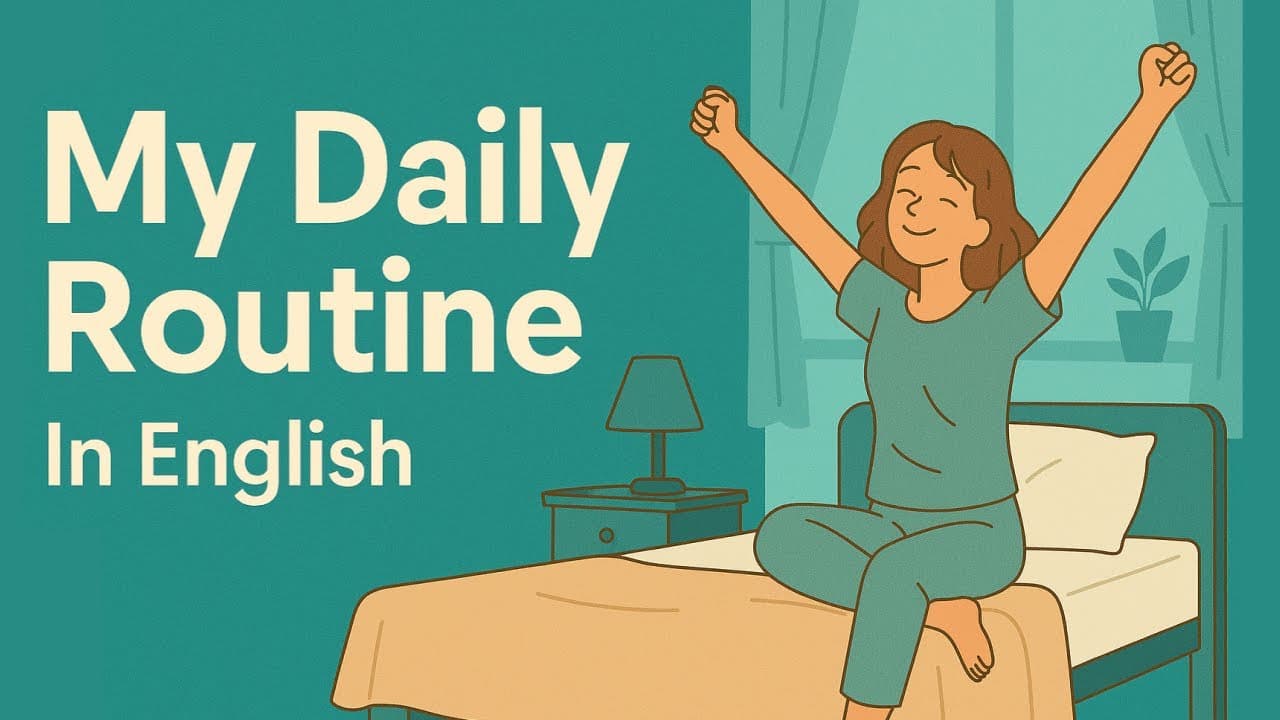
Use the simple present with frequency words such as “usually,” “often,” “sometimes,” and “always” to describe a typical day. Organize activities chronologically, from getting up and preparing breakfast to working, relaxing, eating dinner, and going to bed, while using common expressions such as “take the bus,” “get home,” and “tidy up.”
Transcript
hello everyone and welcome back to Mr english Channel i'm Emily and I'm Paul so happy to be here with you all today yes it's great to have you back with us and today we have a super fun and helpful topic for all our English learners out there we're going to talk about something we all do every single day our daily routine oh I love this topic it's ... Read More
Key Insights
- The simple present is used to describe repeated daily activities, including getting up, traveling to work, eating meals, and going to bed. Sarah consistently uses present-tense verbs because she is describing what normally happens during her typical day.
- Frequency words show how regularly an activity happens. “Usually” describes Sarah’s common habits, “often” introduces reading the news, “sometimes” marks occasional choices, “always” describes brushing before bed, and “might” presents possible evening activities.
- “Get up” and “get out of bed” describe related but distinct actions. “Get up” refers to beginning the day, while “get out of bed” emphasizes physically leaving the bed after Sarah turns off her alarm and stretches.
- “Have” is a flexible verb in daily English. Sarah has a shower, has oatmeal and tea for breakfast, and has lunch with her colleagues. In these expressions, it can describe washing, eating, or drinking according to the accompanying noun.
- Time expressions make a routine clear and chronological. Sarah uses “at around” for approximate times, “for a few minutes” and “for a while” for durations, and “throughout the morning” for activity continuing across the entire morning.
- Transportation expressions depend on how Sarah travels. She “takes the bus” when using public transport, goes home “by bus” when describing the travel method, and “walks home” when the weather is nice and she travels on foot.
- Common phrasal verbs make descriptions of daily life sound natural. Sarah turns off her alarm, tidies up the kitchen, puts on makeup, goes back to work, gets home, has a friend come over, and gets ready for bed.
- A daily routine can be organized into morning, workday, and evening sections. Sarah first describes personal preparation and breakfast, then commuting and workplace activities, and finally traveling home, relaxing, eating dinner, completing chores, and preparing to sleep.
Install to Summarize YouTube Videos and Get Transcripts
Explore YouTube Video Summarizer or Get YouTube Transcript Extractor
Questions & Answers
Q: How do you describe a daily routine in English?
Describe a daily routine with the simple present and arrange activities in chronological order. Begin with morning actions such as getting up, showering, dressing, and making breakfast. Continue with commuting, working, meetings, and lunch. Finish with returning home, relaxing, cooking dinner, washing dishes, brushing your teeth, and going to bed.
Q: What is the difference between “get up” and “get out of bed”?
“Get up” is a common expression for beginning the day after waking, while “get out of bed” focuses on physically leaving the bed. Sarah says she usually gets up at around 6:00 a.m. She then turns off her alarm, stretches for a few minutes, and gets out of bed before going to the bathroom.
Q: How can frequency words describe everyday habits?
Frequency words indicate how regularly different activities occur. Sarah uses “usually” for her normal habits, such as taking the bus and eating dinner around 7:30 p.m. She uses “often” for reading the news, “sometimes” for walking home or seeing a friend, and “always” for brushing her teeth before bed.
Q: What English phrases describe a morning routine?
Useful morning expressions include “get up,” “turn off my alarm,” “stretch in bed,” “get out of bed,” “have a shower,” “dry myself,” and “get dressed.” Sarah also says she goes downstairs, makes breakfast, reads the news on her phone, washes the dishes, tidies up the kitchen, brushes her teeth, and puts on makeup.
Q: How does Sarah describe traveling to and from work?
Sarah says she leaves the house at around 7:30 a.m. and usually takes the bus to work. The trip takes about 30 minutes, so she arrives at 8:00 a.m. After finishing work at 5:00, she returns home by bus, but she sometimes walks home when the weather is nice.
Q: What does Sarah do during her workday?
Sarah arrives at work at 8:00 a.m. and starts working immediately. She usually works on her computer and attends meetings throughout the morning. At around noon, she has lunch with her colleagues in the cafeteria. They chat and relax during the lunch break, after which she continues her tasks until 5:00.
Q: What English expressions describe activities after work?
Useful after-work expressions include “finish work,” “go back home,” “get home,” “feel tired,” and “relax on the sofa.” Sarah may also say that a friend “comes over,” meaning the friend visits her home. They talk or watch a movie, while on other evenings Sarah cooks dinner for herself.
Q: How can learners practice the daily routine vocabulary?
Learners can listen to Sarah’s routine again, focus on the highlighted verbs and expressions, and repeat the sentences after her as shadowing practice. The description specifically recommends replaying the episode and repeating Sarah’s speech. Useful targets include “get dressed,” “take the bus,” “attend meetings,” “tidy up,” and “get ready for bed.”
Summary & Key Takeaways
-
Sarah begins her typical day at around 6:00 a.m. She turns off her alarm, stretches, gets out of bed, showers, dries herself, and gets dressed. After choosing comfortable clothes, she goes downstairs, prepares oatmeal with fruit and tea, reads the news, cleans the kitchen, brushes her teeth, and applies makeup.
-
At around 7:30 a.m., Sarah leaves home and takes a bus to work. The journey takes about 30 minutes, and she begins working immediately at 8:00 a.m. Her morning includes computer work and meetings. Around noon, she eats lunch with her colleagues, chats, relaxes, and then continues working until 5:00.
-
After work, Sarah normally returns home by bus, although she sometimes walks when the weather is pleasant. She rests on the sofa, visits with a friend, watches a movie, or cooks dinner. Later, she washes the dishes, reads or watches television, brushes her teeth, and goes to bed around 10:00 or 10:30 p.m.
Read in Other Languages (beta)
Share This Summary 📚
Summarize YouTube Videos and Get Video Transcripts with 1-Click
Try YouTube Summary with ChatGPT & Claude or YouTube Transcript Generator
Explore More Summaries from Mr. English Channel 📚






Summarize YouTube Videos and Get Video Transcripts with 1-Click
Try YouTube Summary with ChatGPT & Claude or YouTube Transcript Generator