If You Want to Be Respected, Stop Pleasing Others – Carl Jung
TL;DR
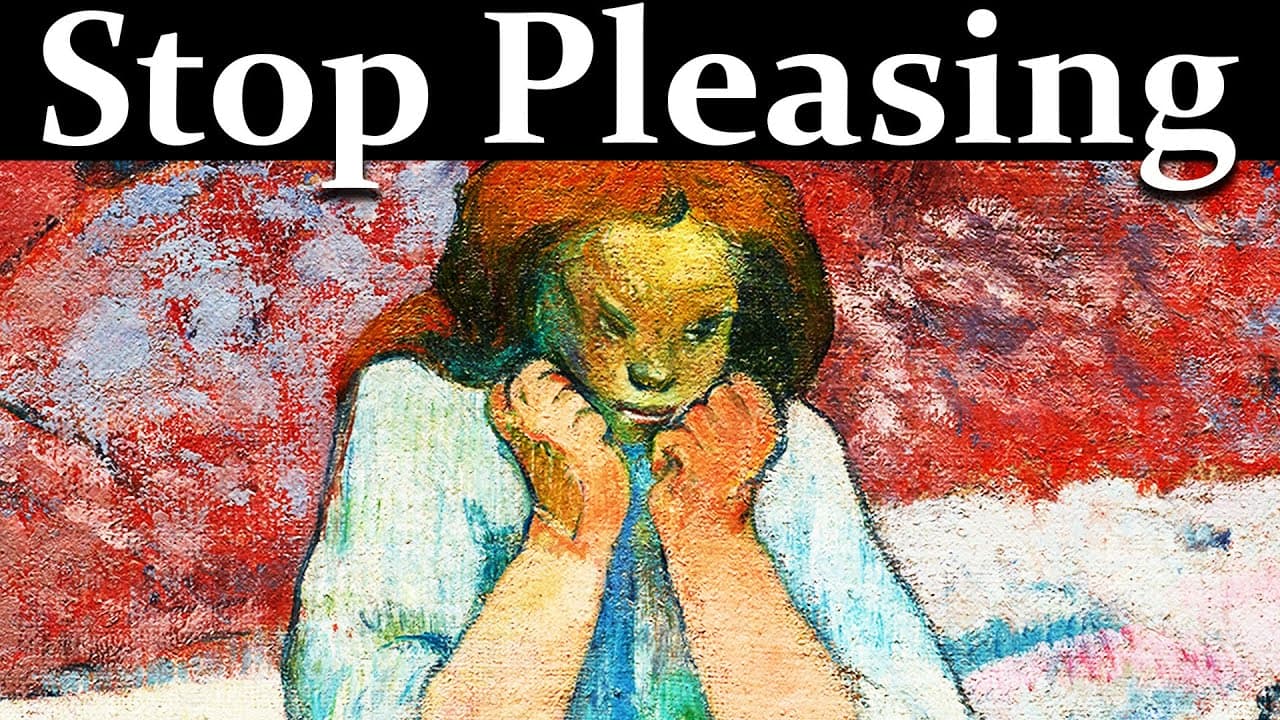
Discover how people-pleasing sabotages your authenticity and how to reclaim your true self.
Transcript
you are destroying yourself and you don't even realize it every time you say yes when you mean no every time you swallow your anger to avoid seeming unpleasant every time you give up your time your energy your own dreams all to avoid disappointing anyone you dig a little deeper into your own prison maybe you think you are being generous selfless ma... Read More
Key Insights
- People-pleasing is not altruism but self-abandonment, leading to a loss of identity and authenticity.
- The persona, a social mask, traps individuals in a cycle of seeking approval and negating true desires.
- Confronting the shadow, the repressed part of the psyche, is essential for breaking free from self-sacrifice.
- The unconscious desire for social acceptance drives people-pleasing behavior, rooted in childhood conditioning.
- Setting boundaries and saying no can activate guilt and fear, but are necessary for personal freedom.
- Authentic relationships are built on mutual respect, not on fear and manipulation driven by people-pleasing.
- Practical strategies like conscious pausing and deliberate practice of saying no can help break the pleasing pattern.
- Valuing personal time, energy, and worth is not selfish but essential for genuine self-respect and freedom.
Install to Summarize YouTube Videos and Get Transcripts
Explore YouTube Video Summarizer or Get YouTube Transcript Extractor
Questions & Answers
Q: What is the main message of the video?
The video emphasizes that people-pleasing is a form of self-abandonment that undermines personal authenticity. It explains how individuals can break free from this pattern by confronting their shadow and valuing their own needs and boundaries, ultimately leading to inner freedom.
Q: How does the persona affect one's authenticity?
The persona acts as a social mask that people wear to gain acceptance from others. Over-identifying with this mask distances individuals from their true selves, as they prioritize external approval over their genuine desires and emotions, leading to a loss of authenticity.
Q: What role does the shadow play in people-pleasing behavior?
The shadow contains repressed emotions and desires that individuals avoid confronting. People-pleasing serves as a mechanism to escape facing the shadow, as it involves suppressing authentic feelings like anger and frustration to maintain social harmony and gain approval.
Q: Why is it difficult to break the cycle of people-pleasing?
Breaking the cycle is challenging because it involves confronting deep-seated fears, guilt, and shame associated with setting boundaries and saying no. These emotions are often rooted in childhood conditioning, where acceptance was linked to survival and belonging.
Q: What practical strategies can help overcome people-pleasing?
Practical strategies include the conscious pause technique, deliberate practice of saying no, re-evaluating relationships, and clear communication of boundaries. These actions help individuals interrupt automatic pleasing behaviors and gradually build autonomy and self-trust.
Q: How does valuing personal time and energy impact relationships?
Valuing personal time and energy leads to more authentic relationships, as individuals present themselves truthfully rather than through a pleasing persona. This authenticity fosters connections based on mutual respect and understanding, rather than fear and manipulation.
Q: What is the significance of confronting guilt and fear in this process?
Confronting guilt and fear is crucial because these emotions often prevent individuals from setting boundaries and prioritizing themselves. By facing these emotions, individuals can break free from the pleasing pattern and move towards living a life aligned with their true values.
Q: What is the ultimate goal of breaking the people-pleasing pattern?
The ultimate goal is to achieve inner freedom by living authentically and valuing one's own needs and desires. This involves integrating the shadow, setting boundaries, and building genuine relationships, leading to a life where choices are made freely and not dictated by the need for external approval.
Summary & Key Takeaways
-
This video explores the psychological traps of people-pleasing, emphasizing how it leads to self-abandonment. It draws on Jung's concept of the persona and the shadow, highlighting the need to confront repressed emotions.
-
The content delves into the unconscious desire for acceptance, rooted in childhood, and how it fuels the cycle of self-sacrifice. Practical strategies are offered to help break this pattern and reclaim personal authenticity.
-
By valuing personal time and energy, individuals can build more authentic relationships. The video encourages confronting guilt and fear, and emphasizes that true freedom comes from living authentically, not from pleasing others.
Read in Other Languages (beta)
Share This Summary 📚
Summarize YouTube Videos and Get Video Transcripts with 1-Click
Try YouTube Summary with ChatGPT & Claude or YouTube Transcript Generator
Explore More Summaries from Psyphoria 📚





Summarize YouTube Videos and Get Video Transcripts with 1-Click
Try YouTube Summary with ChatGPT & Claude or YouTube Transcript Generator