What Causes Back Pain and How to Strengthen Your Spine?
TL;DR
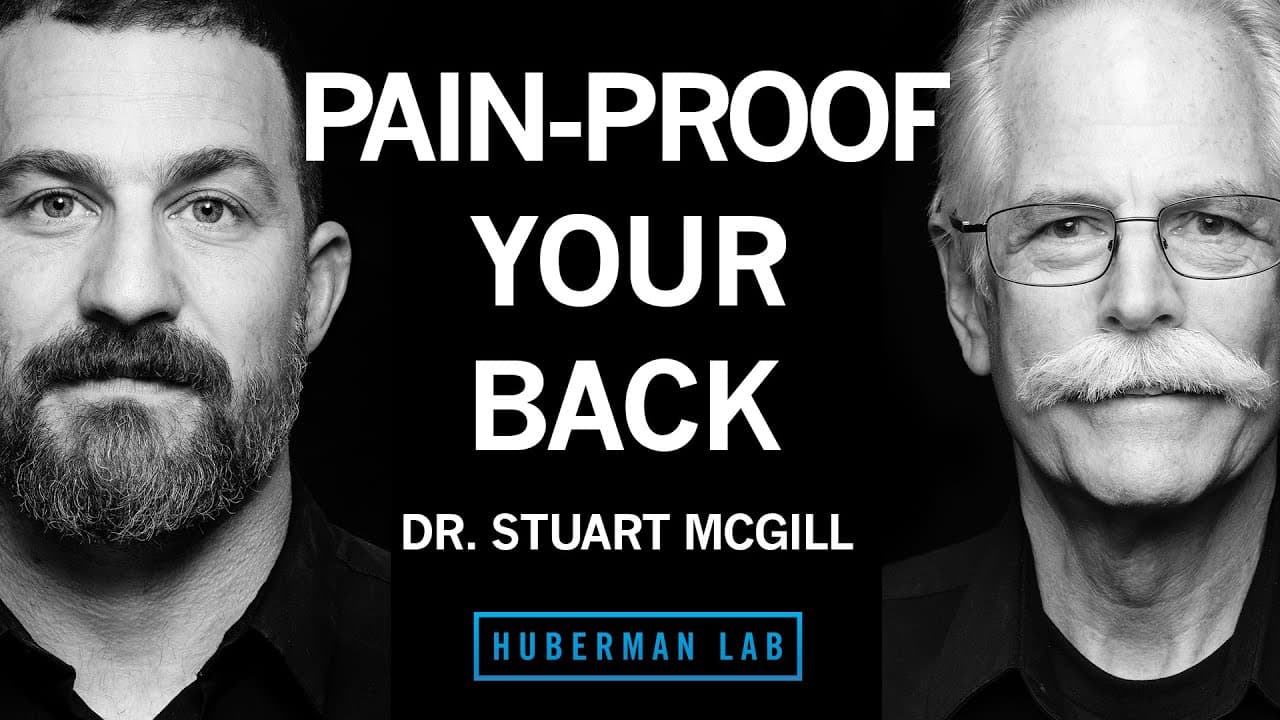
Back pain results from multiple factors, including genetics, biomechanics, and psychosocial influences. To strengthen your spine and reduce pain, focus on the 'Big Three' exercises: the curl-up, side bridge, and bird-dog, which foster spinal stability. Additionally, self-assess your movement patterns and avoid activities that trigger discomfort to enhance back health.
Transcript
welcome to the huberman Lab podcast where we discuss science and science-based tools for everyday life I'm Andrew huberman and I'm a professor of neurobiology and Opthalmology at Stanford School of Medicine my guest today is Dr Stuart McGill Dr Stuart McGill is a distinguished professor of spine biomechanics at the University of waterl as a profess... Read More
Key Insights
- 🧑🏭 Back pain is often multifaceted, involving genetic, biomechanical, and psychosocial factors.
- 🤳 Self-diagnosis of back pain should consider movement patterns, specific activities triggering discomfort, and any past injuries.
- 🏃 The "Big Three" exercises promote spinal stability and are beneficial for both rehabilitation and prevention of future back issues.
- 👨🎨 Personalized exercise plans, considering individual strengths and weaknesses, may enhance overall resilience against back pain.
- 👨🎨 Recovery protocols should focus on restoring movement patterns carefully and avoiding pain-inducing activities until sufficient stability is regained.
- 🧑⚕️ Walking, particularly after meals, is emphasized for promoting back health and preventing stiffness.
- 👂 It is critical to listen to one's body and adjust training intensity, especially post-injury, to avoid exacerbating existing issues.
Install to Summarize YouTube Videos and Get Transcripts
Explore YouTube Video Summarizer or Get YouTube Transcript Extractor
Questions & Answers
Q: What are the common causes of back pain according to Dr. McGill?
Dr. McGill explains that back pain can arise from a multitude of factors, including genetics, physical activity, muscle imbalances, and psychosocial influences. Back pain is often a symptom rather than a singular issue, necessitating a comprehensive assessment to identify the specific cause for effective treatment.
Q: How can someone self-diagnose their back pain?
Dr. McGill recommends paying attention to the patterns of pain occurrence, such as when the pain intensifies or alleviates during certain activities or postures. Self-diagnosis also involves understanding individual genetics and past injuries, alongside noting any changes in pain level related to specific movements or loads.
Q: What are the key exercises referred to as the "Big Three" by Dr. McGill?
The "Big Three" exercises include the bird dog, side plank, and modified curl-up. These exercises are designed to enhance core stability and strength around the spine, which is crucial for preventing and alleviating back pain. They focus on engaging different muscle groups while maintaining proper spine alignment.
Q: How does Dr. McGill suggest one should approach training after experiencing back pain?
After recovering from back pain, Dr. McGill stresses the importance of gradually reintroducing movements, focusing on form and controlled loading. Initially, individuals should emphasize mobility, stability, and core control before progressing back to strength training to prevent re-injury.
Summary & Key Takeaways
-
Dr. Stuart McGill shares insights on spine anatomy, common back pain causes, and various treatment approaches, emphasizing there is no one-size-fits-all solution.
-
The conversation covers how genetics and biomechanics affect individual susceptibility to back pain, as well as strategies for strengthening the back and avoiding injuries.
-
Dr. McGill introduces the "Big Three" exercises to foster spine stability and overall movement quality, while encouraging a balanced regimen of strength, mobility, and cardiovascular training.
Read in Other Languages (beta)
Share This Summary 📚
Summarize YouTube Videos and Get Video Transcripts with 1-Click
Try YouTube Summary with ChatGPT & Claude or YouTube Transcript Generator
Explore More Summaries from Huberman Lab 📚

Summarize YouTube Videos and Get Video Transcripts with 1-Click
Try YouTube Summary with ChatGPT & Claude or YouTube Transcript Generator