Which AI Image Model Is Best for Each Task?
TL;DR
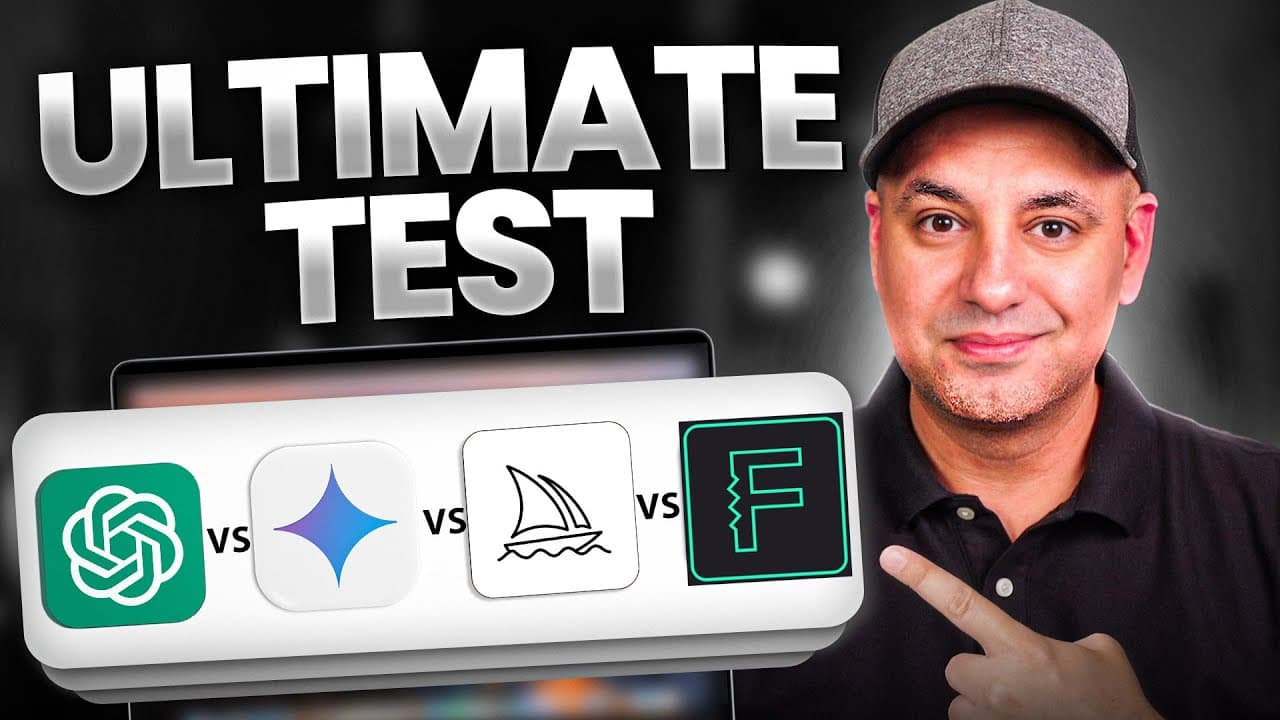
Nano Banana Pro produced the most natural portrait and strongest character consistency, while Midjourney created the most cinematic composition for conversion into video. Flux 2 Pro closely followed Nano Banana Pro in character consistency and delivered a strong product image, showing that the best choice depends on the specific image-generation task rather than one model excelling everywhere.
Transcript
I put the top AI image models to the ultimate head-to-head test to see who comes out on top. Just in the last week, we have a brand new model from Google called Nano Banana Pro, which is unbelievable. I covered it in my last video. We have another image model from Flux called Flux 2 Pro, which is also amazing. I'm going to show you that one, too. A... Read More
Key Insights
- Nano Banana Pro produced the most realistic portrait in the comparison, preserving natural skin texture, sharp reflected eyes, subtle freckles, directional window lighting, and a believable background while avoiding the more artificial or game-like appearance seen in several competing outputs.
- Character consistency was strongest in Nano Banana Pro because the generated person remained recognizably the same across a coffee shop, a beach, and Times Square. The model also retained the character's jacket and shirt, satisfying both identity and wardrobe requirements across changing scenes.
- Flux 2 Pro followed the requested 85 millimeter portrait characteristics by creating shallow focus, although the resulting person appeared more visibly AI-generated to the reviewer. Its character-consistency results were much stronger, even carrying subtle tears in the jacket through multiple scenes.
- ChatGPT followed the realistic portrait prompt reasonably well, but its portrait appeared more artificial than Nano Banana Pro's result. During the consistency test, facial features changed between scenes, and the final variation looked almost like a different person despite retaining some clothing details.
- Midjourney generated a tightly framed portrait that followed the prompt and used a suitable lens look, but the close crop removed much of the environmental background. The reviewer thought its subject resembled a video-game character more than a natural photographic portrait.
- Product photography exposed the importance of prompt interpretation because Gemini literally placed the requested softbox inside the frame. ChatGPT concealed too much detail in pitch-black areas, while Flux 2 Pro retained black-surface detail, produced a clean reflection, and omitted a visible light source.
- Midjourney's character-reference workflow required downloading and uploading the source image, selecting the omni reference option, and then entering the new scene prompt. Using ordinary style or image references instead could significantly alter the result, making the process more involved than competing workflows.
- Image-to-video suitability favored Midjourney in the astronaut test because its composition produced the most cinematic and interesting animated shot. Every source image was evaluated through the same Veo 3.1 model, so the comparison focused on how well each original composition translated into motion.
Install to Summarize YouTube Videos and Get Transcripts
Explore YouTube Video Summarizer or Get YouTube Transcript Extractor
Questions & Answers
Q: Which AI image model created the most realistic portrait?
Nano Banana Pro created the most realistic portrait among the four tested models. Its result included natural-looking skin texture, sharp eyes with visible reflections, subtle freckles, a believable smile, and convincing directional window lighting. The retained window and softly rendered background made the lighting source understandable and helped the portrait look more like a real photograph than the ChatGPT, Flux 2 Pro, or Midjourney outputs.
Q: Which AI image model had the best character consistency?
Nano Banana Pro had the strongest character consistency in the demonstrated test. After creating a character from a text prompt, the reviewer placed that person in a coffee shop, on a beach, and in Times Square. The character remained recognizably the same in every setting, and the model preserved the jacket and shirt. Flux 2 Pro was identified as a close second in this category.
Q: How did ChatGPT perform in the AI portrait comparison?
ChatGPT followed the realistic portrait prompt fairly well, but its result appeared more visibly AI-generated than Nano Banana Pro's portrait. Its character-consistency performance was also weaker. Although it preserved the character's jacket and shirt in some scenes, facial details changed, particularly around the eyes, and the final scene looked almost like an entirely different person from the original image.
Q: How did Flux 2 Pro perform in the image tests?
Flux 2 Pro produced mixed but generally strong results in the shown tests. Its portrait reflected the requested 85 millimeter lens look through shallow focus, although the person appeared somewhat artificial. Its product photograph retained detail in the matte-black headphones, showed an attractive reflection, and avoided exposing a light source. It also placed close behind Nano Banana Pro for character consistency across multiple scenes.
Q: Why was Nano Banana Pro's product image imperfect?
Nano Banana Pro interpreted the product prompt too literally by placing the requested softbox lighting equipment inside the frame. The result otherwise followed the instructions, but a visible softbox would be undesirable in a finished advertisement. The reviewer noted that a follow-up instruction could request a crop or remove the light source, illustrating how conversational editing can correct an initially faithful but impractical interpretation.
Q: How do you maintain character consistency in Midjourney?
Maintaining character consistency in Midjourney requires downloading the original character image, uploading it to the platform, selecting the omni reference option, and then entering the prompt for the new scene. The reviewer emphasized choosing omni reference before attaching the image. A standard style reference or image reference can alter the character substantially, so the correct reference setting is important for identity preservation.
Q: Which generated image worked best for image-to-video creation?
Midjourney's astronaut image worked best when the four generated compositions were converted into video. Each image was animated with the same Veo 3.1 model so that the test focused on the source composition rather than differences between video generators. The reviewer selected Midjourney because its resulting shot looked the most cinematic and visually interesting after animation.
Q: How were the four AI image models compared fairly?
The comparison used the same prompts across Nano Banana Pro, ChatGPT's image model, Flux 2 Pro, and Midjourney. The broader evaluation covered 15 prompts and categories including realism, text accuracy, style, character consistency, image editing, hands, and lighting. For the image-to-video test, every source image was animated with Veo 3.1, reducing variation caused by using different video models.
Summary & Key Takeaways
-
Nano Banana Pro, ChatGPT, Flux 2 Pro, and Midjourney were evaluated with matching prompts across categories including realism, text accuracy, style, character consistency, image editing, hands, and lighting. The comparison used Gemini, ChatGPT, Artlist, and Midjourney, with a winner selected for each test before the results were tallied.
-
Nano Banana Pro won the realistic portrait test because its natural skin, eye reflections, freckles, background, and visible window lighting made the result resemble a real photograph. It also preserved the same character and clothing across a coffee shop, beach, and Times Square more reliably than the other tested models.
-
The models displayed different strengths rather than identical capabilities. Flux 2 Pro produced a polished product photograph and placed close behind Nano Banana Pro for character consistency. Midjourney required extra reference-image steps, but its astronaut composition created the most cinematic result when every generated image was animated with the same Veo 3.1 model.
Read in Other Languages (beta)
Share This Summary 📚
Summarize YouTube Videos and Get Video Transcripts with 1-Click
Try YouTube Summary with ChatGPT & Claude or YouTube Transcript Generator
Explore More Summaries from Skill Leap AI 📚


Summarize YouTube Videos and Get Video Transcripts with 1-Click
Try YouTube Summary with ChatGPT & Claude or YouTube Transcript Generator