How to defend against AI driven data breaches in 2026
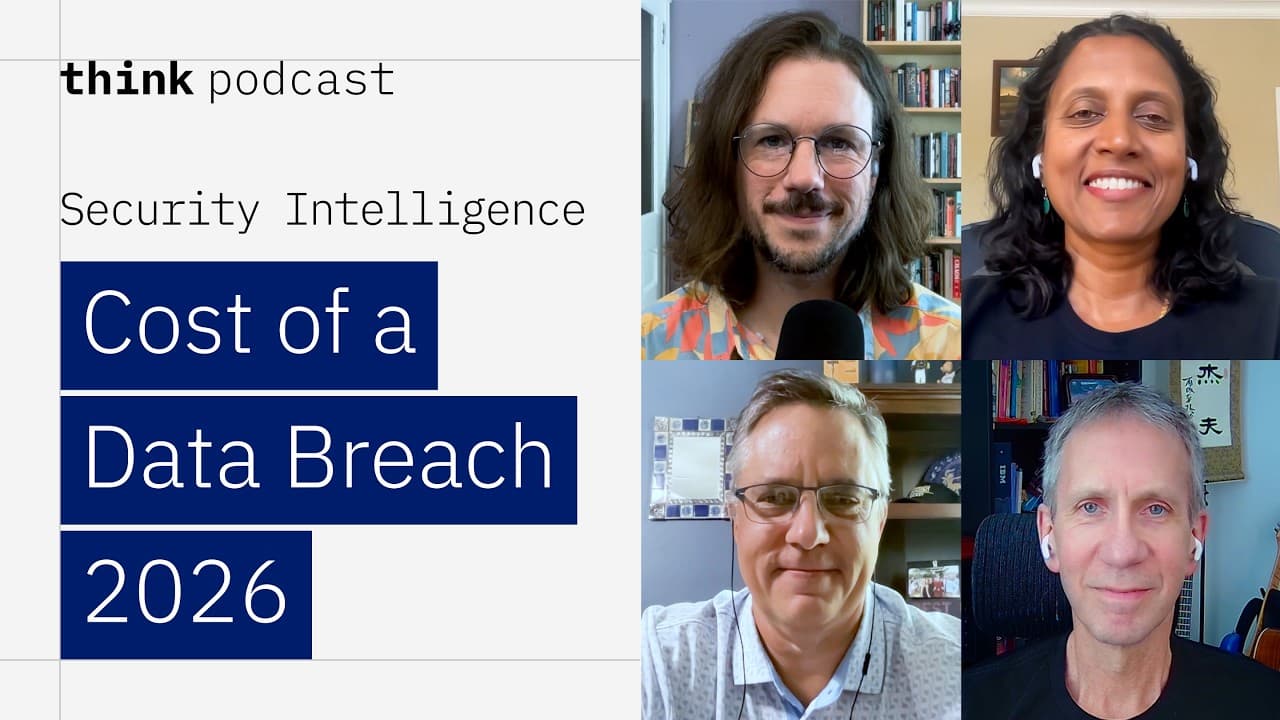
TL;DR
AI can lower breach costs and speed response, but only if basic hygiene and access controls are in place. Many organizations lag in vulnerability management and are increasing security spending to keep up with frontier AI, while attackers rapidly adopt AI. The report emphasizes practical steps to improve prevention and response.
Transcript
Happy Cost of a Data Breach Day to all who celebrate. Panelists, What's your one-line takeaway from this year's report? Jeff, we'll start with you. I would say it's that we are still taking too long to identify and too long to contain. It's taking about two-thirds of a year. We still are seeing problems coming down to basic hygiene like access cont... Read More
Key Insights
- AI saves money when used for security but only if basic hygiene is maintained, such as access controls and privilege escalation.
- The Cost of a Data Breach report shows mean time to identify and contain breaches remains around two thirds of a year, highlighting slow response.
- Only a minority of organizations use AI tools for vulnerability management, signaling an opportunity for faster, safer remediation.
- Attacker use of AI is accelerating, so defenders must match speed with governance and automation rather than delay.
- 85% of organizations plan to increase security spending due to frontier AI models, indicating rising prioritization of AI safety.
- Relying on external fixes for zero days embedded in code can be disruptive; in-house proactive scanning and remediation are essential.
- Frontier AI models improve threat hunting, but scaling them to preventive measures requires careful planning and risk management.
- Open source AI tools and coalitional cybersecurity approaches provide resilience lessons from the Hugging Face hack and similar incidents.
- More videos from this channel:
- More from this channel: IBM Technology
Install to Summarize YouTube Videos and Get Transcripts
Explore YouTube Video Summarizer or Get YouTube Transcript Extractor
Questions & Answers
Q: What is the direct takeaway from the Cost of a Data Breach 2026 report for security teams?
The direct takeaway is that we are still taking too long to identify and contain breaches, averaging about two thirds of a year, and that basic hygiene like access controls and privilege escalation remains a critical line of defense. Security teams should focus on faster detection, tighter controls, and practical AI integration to close these gaps.
Q: Why is there a gap between attackers using AI and defenders deploying AI in security operations?
Attackers are rapidly weaponizing AI to exploit vulnerabilities and automate attacks, while many defenders struggle to deploy AI at the same scale due to concerns about introducing new vulnerabilities, complexity, and the need for reliable governance. Bridging this gap requires clear AI governance, faster integration, and practical, safe use of AI for vulnerability management and response.
Q: What role does basic hygiene play in reducing breach costs according to the panel?
Basic hygiene acts as a foundational layer that reduces the surface area for breaches. Access controls and privilege escalation controls are repeatedly cited as effective measures. Without these, even advanced AI tools cannot compensate for fundamental weaknesses, leading to higher breach costs and longer containment times.
Q: How does the Hugging Face hack illustrate the value of open source tools and coalitions in cybersecurity?
The Hugging Face incident demonstrates that open source AI tools and coalitional approaches can unlock broad institutional knowledge that individual datasets cannot. Collaborative defense and shared learnings help organizations improve detection, response, and preventive measures faster than isolated efforts.
Q: What is the recommended mindset when deploying AI for security according to the discussion?
The recommended mindset is to stay calm, set realistic expectations, and implement governance and controls rather than rushing blindly into AI deployment. Organizations should ask practical questions, balance speed with safety, and ensure AI tools are used to augment existing security processes without overwhelming teams.
Q: What percentage of organizations use frontier AI models to increase security spending, and what does this imply?
About 85 percent of organizations indicated they would increase security spending in response to frontier AI models, implying that AI risk is driving budget increases and that leadership recognizes the need to strengthen defenses, governance, and incident response in the face of evolving threats.
Q: Why might vulnerability hunting with AI be underutilized in some organizations, and what is the consequence?
Vulnerability hunting with AI might be underutilized due to concerns about false positives, integration complexity, and disruption from fixing discovered issues. The consequence is slower remediation and persistent vulnerabilities, which can drive higher breach costs and slower containment, underscoring the need for safer, scalable AI-enabled vulnerability management.
Q: What practical steps should organizations take to close AI related security gaps now?
Organizations should implement stronger access controls and privilege management, adopt governance for AI usage, accelerate vulnerability management with AI assistance, and invest in training that helps teams move at machine speed without compromising safety. A balanced approach combines prevention, detection, and rapid response to reduce breach impact and cost.
Summary & Key Takeaways
-
The episode highlights that the average cost of a data breach is around the reported figure and that identification and containment take about two thirds of a year, underscoring slow security response times. It also notes the gap between attacker and defender AI adoption and the need for better basic hygiene.
-
A key lesson is that AI can help defenders if used responsibly with proper governance, access controls, and faster vulnerability management, not just for incident response but also for proactive defense. The Hugging Face incident illustrates open source and coalitional approaches as valuable learning points.
-
Organizations are urged to adopt a practical, risk-based security posture that leverages frontier AI with governance, improved access control, and faster vulnerability discovery to stay ahead of increasingly capable attackers.
Read in Other Languages (beta)
Share This Summary 📚
Summarize YouTube Videos and Get Video Transcripts with 1-Click
Try YouTube Summary with ChatGPT & Claude or YouTube Transcript Generator
Explore More Summaries from IBM Technology 📚






Summarize YouTube Videos and Get Video Transcripts with 1-Click
Try YouTube Summary with ChatGPT & Claude or YouTube Transcript Generator