How to Build Muscle Effectively: Key Steps Explained
TL;DR
To build muscle effectively, lift weights with a focus on progressive overload, increasing the weight, reps, or intensity over time. Additionally, consume 1.6 to 2.2 grams of protein per kilogram of body weight daily to provide the necessary amino acids for muscle growth. Mechanical tension is the primary driver of hypertrophy, while muscle damage and metabolic stress contribute minimally.
Transcript
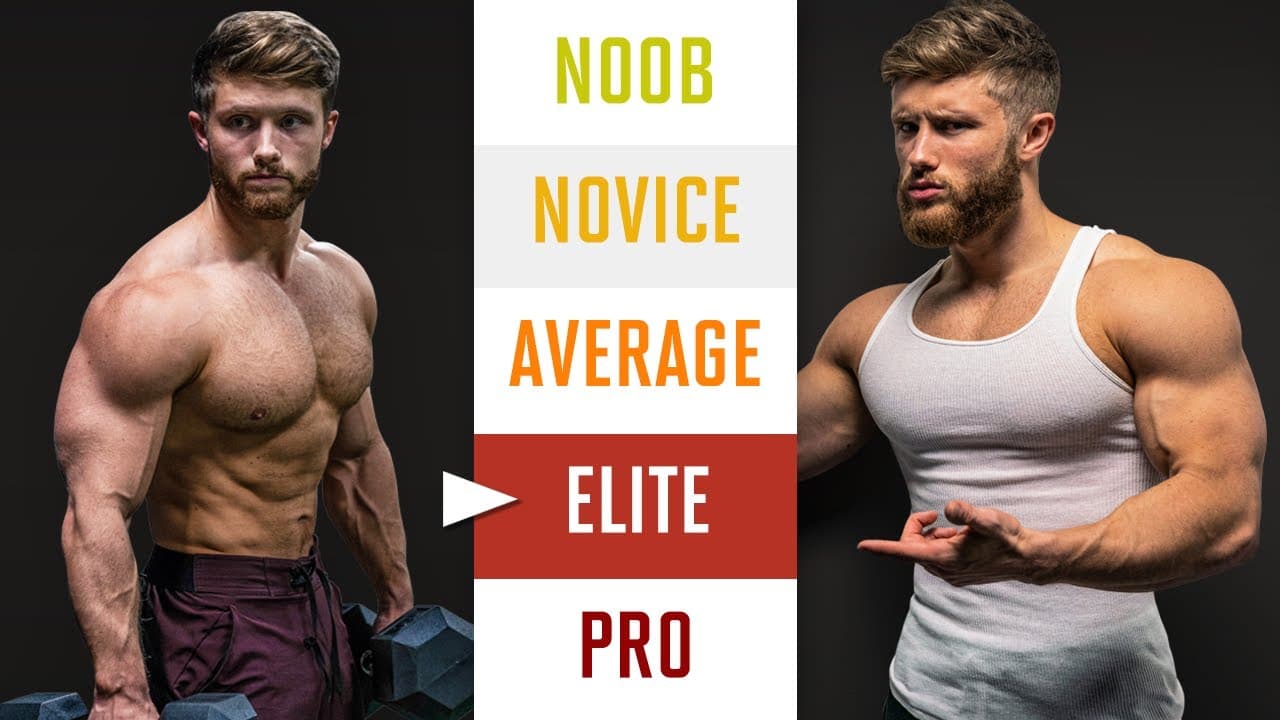
in this video i'm going to explain how to build muscle in five levels of increasing complexity starting with the most basic explanation and getting more detailed as we go now in preparing this video i consulted with a number of different experts including a professor in muscle metabolism an industry leader in the field of biomechanics and an active... Read More
Key Insights
- 🏋️ Lift weights and eat protein to provide the necessary stimulus and building blocks for muscle growth.
- 💪 Progressive overload, by gradually increasing the challenge, is essential for continued muscle development.
- 💪 Mechanical tension is the primary stimulus for muscle growth, while muscle damage and metabolic stress play minimal roles.
- 💪 The acute training variables of effort, volume, intensity, exercise selection, and frequency contribute to effective muscle growth.
- 💪 Muscle protein synthesis is triggered by mechanical tension and amino acids from protein consumption.
- 🧡 Hormonal factors, such as testosterone, have a minor impact on muscle growth within the natural range.
- 💪 Further research is needed to understand factors like sarcoplasmic hypertrophy and myonuclear addition in muscle growth.
Install to Summarize YouTube Videos and Get Transcripts
Explore YouTube Video Summarizer or Get YouTube Transcript Extractor
Questions & Answers
Q: What is the role of protein in building muscle?
Protein provides the necessary amino acids, the building blocks for muscle growth. It is important to consume enough protein to support muscle development, with a recommended range of 1.6 to 2.2 grams per kilogram of body weight per day.
Q: How does progressive overload contribute to muscle growth?
Progressive overload involves consistently increasing the challenge placed on muscles during weight training. This can be achieved by adding weight, reps, sets, or intensity to each workout, stimulating further muscle growth.
Q: Is the number of sets and reps more important than weight for muscle growth?
The number of sets and reps, along with the weight, is crucial for muscle growth. It is recommended to focus on a range of 10 to 20 sets per body part per week, with most sets falling within the 6 to 12 rep range.
Q: How does muscle tension affect muscle growth?
Mechanical tension, created through weightlifting, is the primary driver of muscle growth. Good technique, mind-muscle connection, and eccentric control help maximize intramuscular tension, leading to optimal muscle growth.
Key Insights:
- Lift weights and eat protein to provide the necessary stimulus and building blocks for muscle growth.
- Progressive overload, by gradually increasing the challenge, is essential for continued muscle development.
- Mechanical tension is the primary stimulus for muscle growth, while muscle damage and metabolic stress play minimal roles.
- The acute training variables of effort, volume, intensity, exercise selection, and frequency contribute to effective muscle growth.
- Muscle protein synthesis is triggered by mechanical tension and amino acids from protein consumption.
- Hormonal factors, such as testosterone, have a minor impact on muscle growth within the natural range.
- Further research is needed to understand factors like sarcoplasmic hypertrophy and myonuclear addition in muscle growth.
- The scientific understanding of muscle growth continues to expand with potential future implications for medical applications and exercise interventions.
Summary & Key Takeaways
-
Building muscle requires lifting weights to create an adaptive response and eating protein to provide the necessary building blocks.
-
Simply lifting weights and eating protein is not enough for long-term muscle growth; progressive overload is essential.
-
Progressive overload can be achieved by gradually increasing weight, reps, sets, or intensity over time.
Read in Other Languages (beta)
Share This Summary 📚
Summarize YouTube Videos and Get Video Transcripts with 1-Click
Try YouTube Summary with ChatGPT & Claude or YouTube Transcript Generator
Explore More Summaries from Jeff Nippard 📚


Summarize YouTube Videos and Get Video Transcripts with 1-Click
Try YouTube Summary with ChatGPT & Claude or YouTube Transcript Generator