How to test a Renaissance rapier for balance
TL;DR
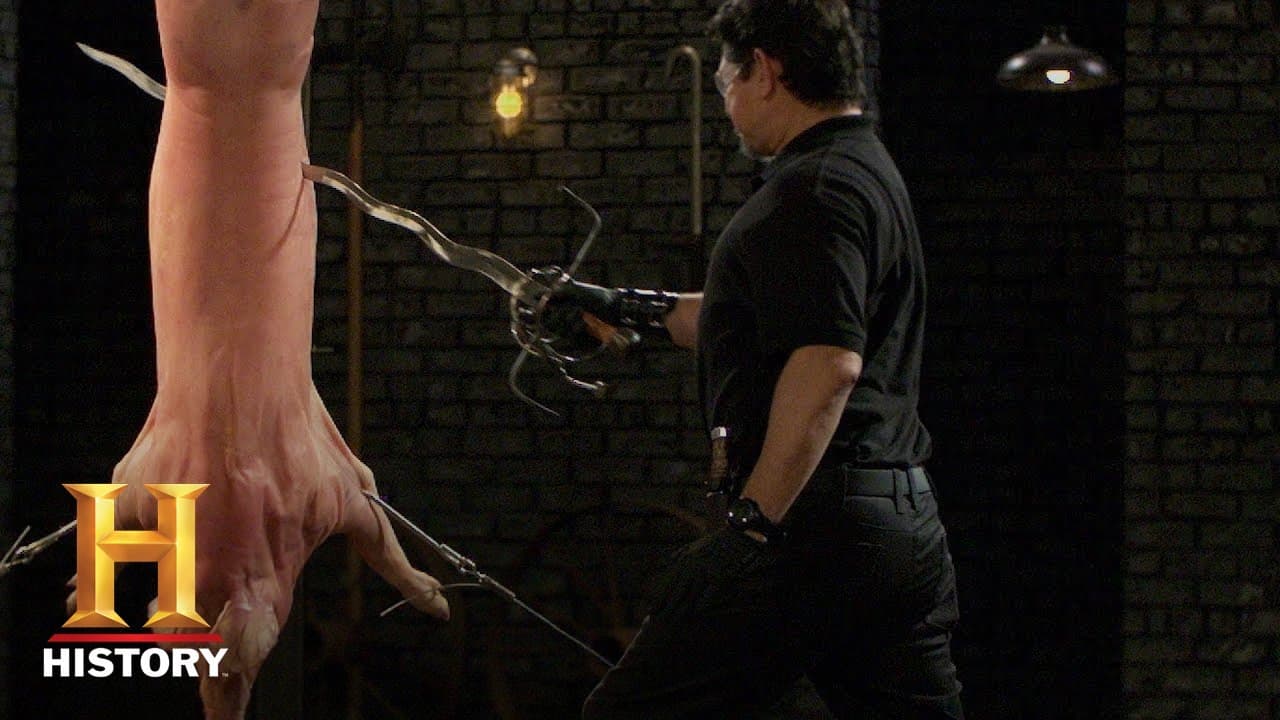
The video demonstrates three tests for a Renaissance rapier, focusing on sharpness, balance, and thrusting ability. Testers describe how balance forward of the grip affects maneuverability and how the blade responds to cutting and thrusting actions. The host team then selects a champion to represent metalwork in a larger tournament.
Transcript
We'ree're now goi going tot your weapoeapons throuhrougs yo of thr three testsests. Th test, a sha sharpness ess t, There'll bll be a stresh and up fup first, th, the kil. I'm rea ready. Let's t's do it.t. [r [rock musimusic playi] I balance nce of a rap rapi. It does nes not have ae It's so so forward ard he. I shoushould be abe able to mooh my m... Read More
Key Insights
- Balance is described as a critical factor for maneuverability, with forward balance enabling wrist control and rapid movements.
- Thrusting performance is evaluated by penetration potential and how the blade maintains control during lunges.
- The ability to recover the blade after a thrust is highlighted as important for continuous offense.
- Edge sharpness is tested to gauge potential cutting effectiveness in actual use.
- The blade construction is discussed in terms of how it supports quick cuts and accurate thrusts.
- Slicing and spine contact are noted as indicators of cutting efficiency and overall blade feel.
- The event culminates with a final match to determine which smith represents the tournament.
- Judges comment on overall readiness of the weapon for competitive use in the tournament context.
- More videos from this channel:
- More from this channel: HISTORY
Install to Summarize YouTube Videos and Get Transcripts
Explore YouTube Video Summarizer or Get YouTube Transcript Extractor
Questions & Answers
Q: How is balance assessed during the rapier tests?
Balance is assessed by describing where the weight of the blade sits relative to the grip, with a forward balance said to allow better wrist control and easier maneuvering. The testers discuss how the balance point influences the ease of recovering the blade after a strike and how it affects overall handling during thrusts and cuts.
Q: What aspects of the rapier are tested for cutting performance?
Cutting performance is evaluated by noting how the blade performs when slashing and contacting the spine, and by describing the potential for deep cuts in flesh during a strike. The testers focus on the blade’s ability to transfer energy into a cut and how the edge holds up under stress.
Q: How is thrusting capability evaluated in the video?
Thrusting capability is evaluated by examining penetration potential and how easy it is to guide the blade into a target. The testers also consider how the blade responds when moving in and out, maintaining control of the tip, and how balance affects the efficiency of thrusts.
Q: What makes the final test decisive for tournament selection?
The final test determines which smith earns the right to represent the metalworkers in the Tournament of Champions by showing the best combination of balance, control, and cutting/thrusting effectiveness under pressure. The judges observe consistency across multiple testers to decide a winner.
Q: What is said about the blade's recoverability after a thrust?
Recoverability after a thrust is described as how quickly the blade returns to position and readiness for subsequent actions. The testers mention that flexible balance and blade geometry influence how easily the weapon can be moved back into position for another strike or parry.
Q: How do testers describe the blade’s handling during fast movements?
Testers describe handling during fast movements as influenced by forward balance and the blade’s responsiveness. The person swinging notes how easily they can move the tip, adjust direction, and maintain control through rapid sequences, which is crucial for effective offense in actual use.
Q: What role does edge sharpness play in the evaluation?
Edge sharpness is a factor in evaluating cutting potential, with comments on how a sharp edge can enhance laceration during slashes and contribute to overall lethality of the weapon in practice, though balance and control remain central to performance.
Q: Who is involved in selecting the final champion and what is the outcome?
Doug Marcaida and Dave Baker participate in testing and giving feedback, and the final champion is selected to represent the metalworkers in the Tournament of Champions. The chosen champion expresses confidence in competing and advancing in the competition based on the tested attributes of the rapier.
Summary & Key Takeaways
-
The video reviews three tests of the rapier including sharpness, balance, and thrusting in a competitive setting.
-
Tests assess how the blade feels during quick movements and thrusts, predicting real world performance.
-
A champion is chosen to move on to a larger tournament against other artisans and weapons.
Read in Other Languages (beta)
Share This Summary 📚
Summarize YouTube Videos and Get Video Transcripts with 1-Click
Try YouTube Summary with ChatGPT & Claude or YouTube Transcript Generator
Explore More Summaries from HISTORY 📚


Summarize YouTube Videos and Get Video Transcripts with 1-Click
Try YouTube Summary with ChatGPT & Claude or YouTube Transcript Generator