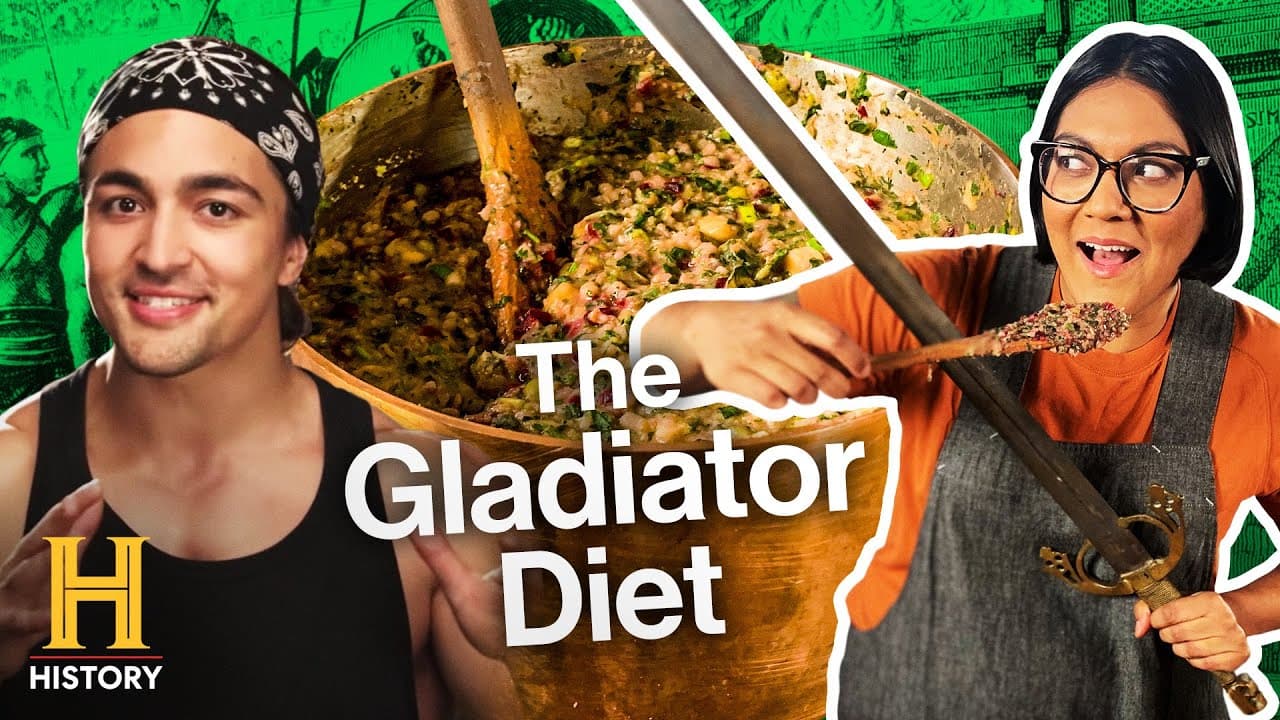
What Did Gladiators Eat for Energy and Endurance?
TL;DR
Gladiators ate a barley and legume mash called tisanes to fuel workouts, with goat cheese and greens for flavor. This carb heavy diet supported energy and injury protection, while viewers recreate the dish and explore how ancient doctors and graves influenced dietary ideas. The episode blends cooking and history to bring an ancient recipe to life.
Transcript
happy new years everybody it's crazy it's already 20 22. where the hell did the year go i know i don't understand anyways in today's episode we're gonna make a staple of the ancient gladiator diet a barley and vegetable mash and pair it with a fresh goat cheese and we'll explain how they were actually carved bingers and had dad bods thank you archa... Read More
Key Insights
- Tisanes is a barley and legume mash rooted in Apicius and used to fuel ancient workouts.
- The gladiator diet emphasized carbs from barley and beans to provide energy and protection for injuries.
- The preparation includes soaking grains, crushing barley, and simmering with chickpeas, lentils, and peas to reach a porridge like texture.
- Green and herb additions such as dill, cilantro, oregano and lovage are used to flavor the mash.
- Garum like seasoning is reserved as the salt source, reflecting ancient taste and preservation methods.
- Olive oil is added for flavor, moisture and to emulate ancient Roman culinary practices.
- The recipe uses cabbage sprouts and beets for texture and nutrition, aligning with the idea of a plant heavy, fiber rich diet.
- The episode connects historical diet concepts with modern cooking demonstrations to show how nutrition influenced performance.
- More videos from this channel:
- More from this channel: HISTORY
Install to Summarize YouTube Videos and Get Transcripts
Explore YouTube Video Summarizer or Get YouTube Transcript Extractor
Questions & Answers
Q: A real search query question about the video (e.g. 'How to...', 'What is...', 'Why does...'). Question 1
Gladiators followed a carb heavy diet that relied on barley as a staple, augmented with legumes like chickpeas, lentils and peas, to provide long lasting energy for training and combat. This approach reduced reliance on expensive meat while still offering carbohydrates and fiber for fuel, recovery and gastrointestinal comfort during intense activity. The program explains how such a porridge like dish could cushion blows and support endurance in the arena.
Q: Question 2
Why was barley chosen as the main grain in the episode, and how did it function within the tisanes dish? The narrative explains that barley was a common grain in ancient Rome and that when broken down it forms a mash that releases starches slowly, creating a filling porridge that sustains energy through workouts. This slow release supports stamina and helps maintain strength during repeated exertions.
Q: Question 3
What role do greens and herbs play in the recipe, and how are they incorporated? The recipe includes dill, cilantro, oregano, lovage and greens like Swiss chard and leeks. These ingredients add flavor, micronutrients and natural aroma, while aligning with historical practices of using fresh herbs to brighten a heavy porridge. They are added toward the end to preserve their brightness and texture.
Q: Question 4
How does the video relate ancient medical ideas to diet, particularly Galen and the concept of meat versus grain? The host mentions Galen’s ideas that meat was ideal for muscle but impractical for enslaved workers, leading to porridge based diets that still supported strength and recovery. This historical context helps explain why the barley and legume mash was favored.
Q: Question 5
What is the role of garum like seasoning and salt in the dish, and how is NaCl represented? Salt is introduced through a garum like seasoning or a substitute, used to season the mash in place of more modern salt sources. This echoes ancient flavor practices where fermentation products and fish sauces contributed saltiness and depth, enhancing the porridge without modern salt alone.
Q: Question 6
Why is olive oil included in the finished dish, and what purposes does it serve? Olive oil is added for moisture, flavor and to echo Roman culinary and ritual use. It mirrors the broader Roman practice of using olive oil in cooking, medicine and cleaning acts, creating a smoother texture and more satisfying mouthfeel for the mash.
Q: Question 7
How does the video connect archaeology to cooking in the context of gladiator nutrition? It discusses isotopic analysis from a gladiator grave and how this evidence supports a carb rich diet, including barley and beans. The cooking segment then translates those findings into a tangible dish showcased on camera, bridging science and kitchen practice.
Q: Question 8
What is the intended dining experience of the dish as portrayed by Sohla, and how is it presented? Sohla treats the mash as a nourishing fuel, served with fresh goat cheese and a bright green herb mix. The presentation emphasizes a balance between nutrition and flavor, reflecting a modern interest in ancient recipes that are both tasty and historically grounded.
Summary & Key Takeaways
-
The episode demonstrates a barley based mash called tisanes, a staple linked to gladiator diets in ancient sources. It uses whole barley, chickpeas, lentils, peas and greens to form a hearty porridge like dish. The preparation is shown alongside historical context.
-
The host discusses gladiator nutrition with references to Pliny and Galen, highlighting carb loading and the belief that meat was ideal but impractical for enslaved individuals. The dish is finished with olive oil, garum like seasoning, and fresh greens.
-
The video combines cooking with archaeology by describing graves and isotopic studies, explaining how evidence supports carb heavy diets and energy needs, while also offering a modern tasting of the mash topped with fresh goat cheese.
Read in Other Languages (beta)
Share This Summary 📚
Summarize YouTube Videos and Get Video Transcripts with 1-Click
Try YouTube Summary with ChatGPT & Claude or YouTube Transcript Generator
Explore More Summaries from HISTORY 📚





Summarize YouTube Videos and Get Video Transcripts with 1-Click
Try YouTube Summary with ChatGPT & Claude or YouTube Transcript Generator