How to decide if paying for OpenAI Dots is worth it for your work
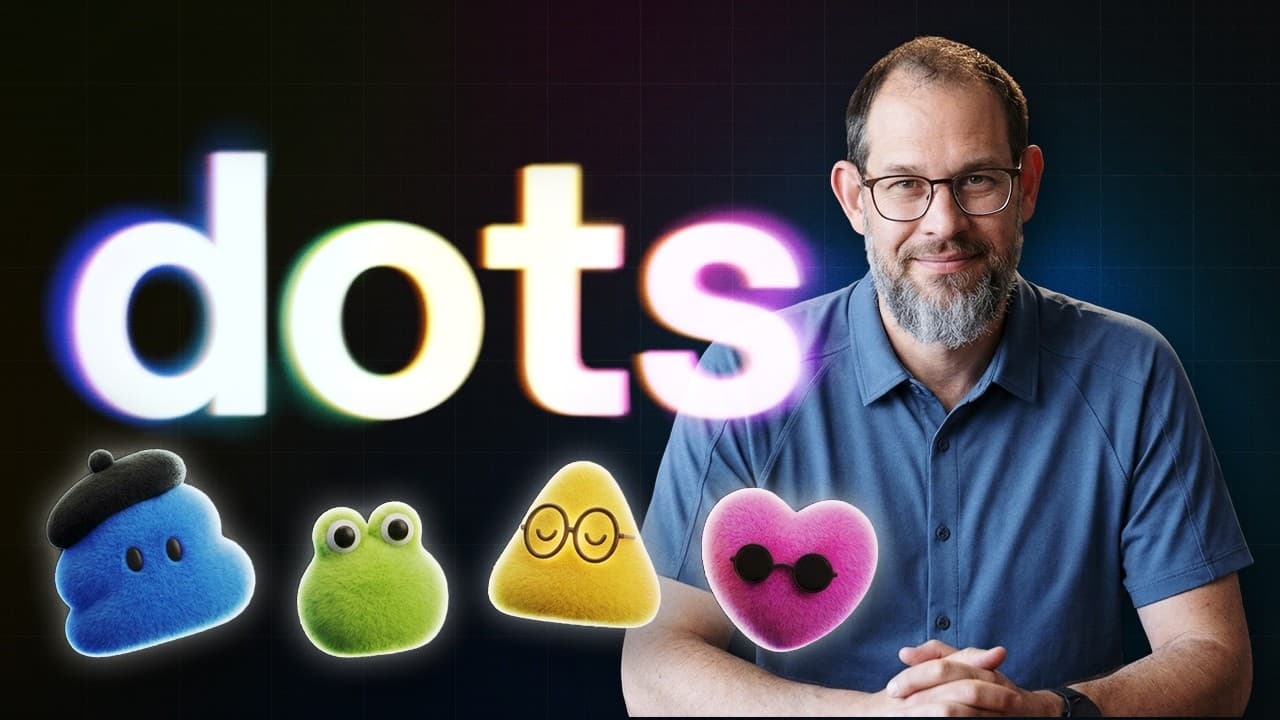
TL;DR
Dots costs start at 100 dollars per month for Pro and include a personal dot with its own cloud computer and memory. Muse offers a free option, while Soul 6.1 provides higher efficiency at a lower cost per token. The decision hinges on how much you value persistent context and automated task handling for your work.
Transcript
The agent wars are here. Open AAI just launched DOTs, an agent with a computer, a memory, and the ability to keep working after you log off. Meta offers the same basic setup with Muse, including a free option, which Dots does not have. Your first Dot only comes with Chat GPG Pro starting at a 100 bucks a month. So, are you going to pay? Why pay? If... Read More
Key Insights
- Dots runs its own cloud computer and memory for each agent, enabling continued work after sign-off.
- The first DOT is available with pro plan options starting at 100 dollars per month, with higher usage available at 200 or 500 dollar levels.
- Soul 6.1 offers increased efficiency and closer performance to Astra at a lower cost, reducing weekly plan consumption for heavy users.
- OpenAI Space provides a shared workspace for collaboration between people and AI, integrating with Pages for document editing.
- Dots emphasizes context retention as a key differentiator, aiming to make AI context smarter and more accessible across tasks.
- Muse delivers a free entry point with practical tasks like email handling and making calls, illustrating the value of a free tier in the ecosystem.
- CodeEx introduces reusable cloud environments for software development, enabling applications to operate inside chat GPT and reducing local laptop reliance.
- The broader strategy links more work to ChatGPT over time, pushing a future where a common AI workspace competes with traditional office tools.
Install to Summarize YouTube Videos and Get Transcripts
Explore YouTube Video Summarizer or Get YouTube Transcript Extractor
Questions & Answers
Q: How should I decide if I should buy a DOT for work
If you need ongoing automation and a persistent AI context that can manage recurring tasks and stay connected after you log off, a DOT offers a dedicated cloud computer and memory to support those needs. The decision depends on your workload size, whether you require continuous background work, and if you value having a unified workspace across chat GPT, Space, and Pages. Compare your weekly task volume to the plan allowances and weigh the cost against the potential time saved and accuracy gained by automating routine actions.
Q: What is the basic cost to start using Dots
The basic entry for Dots starts with a DOT that comes with eligible pro plans beginning at 100 dollars per month. This pricing tier is designed for users who need more usage than a free model but do not require the largest allowances. If your usage increases, you can consider higher tiers such as 200 or 500 dollars to get more capacity, but the initial commitment is 100 dollars per month. Consider your expected workload and whether the added context and automation justify the expense.
Q: How does Soul 6.1 influence costs and usage
Soul 6.1 is presented as a more efficient model that can handle demanding work at a lower input cost relative to usage. It can reduce the weekly plan consumption for heavy users and may allow you to do more complex tasks without hitting plan limits quickly. When deciding on plans, evaluate how often you need high performance, how much you value lower token costs, and whether Soul 6.1’s efficiency aligns with your typical workflows.
Q: What role does Space play in the OpenAI ecosystem
Space acts as a shared workspace for people and AI to collaborate, enabling teams to work together within a common context. This feature complements Dots by providing a centralized area where context threads and documents called pages can be edited collectively. The aim is to create a more integrated, Microsoft Office like environment where AI assistance is embedded into everyday work processes.
Q: What is the significance of Pages in this context
Pages refers to documents that can be edited within the Space workspace, allowing teams to maintain and evolve contextual materials alongside AI agents. The integration of Pages helps preserve collaboration history and makes it easier to resume work where it was left off, reinforcing the value of context as a core productivity asset in an AI driven workflow.
Q: How do Muse and Instinct differ in approach to AI assistants
Muse provides a free entry point focused on practical, low to medium intelligence tasks such as email and simple automation, including making calls. Instinct emphasizes proactive, travel and transactions oriented interactions. The comparison highlights how different AI assistants target distinct use cases and audience demographics, with Muse serving general productivity needs and Instinct pursuing more transaction heavy functionality.
Q: What is the broader strategic takeaway from DevDay releases
OpenAI is pushing to embed AI context into work lives by offering agents with memory and background capabilities, a shared workspace, and more capable but cost effective models. The aim is to create a dense, collaborative AI work environment that competes with traditional office tools, suggesting a shift toward an AI powered, context centered office workflow.
Q: What should a small team consider before investing in Dots
A small team should evaluate whether persistent context and automated background work will meaningfully reduce manual tasks and improve efficiency. Consider the cost of pro plans starting at 100 dollars per month, weigh the potential productivity gains against the budget, and compare with free options like Muse. Also assess whether a shared workspace and Pages can streamline collaboration and reduce friction across team members.
Summary & Key Takeaways
-
Dots introduces a dedicated agent with cloud resources and memory tied to your account, enabling ongoing tasks even after you log off. The product emphasis is on preserving and leveraging AI context to improve work flow across apps like ChatGPT, Space, and Pages.
-
Muse provides a free entry point with practical automation features such as email help, shopping, and calling, highlighting a free tier advantage that contrasts with Dots.
-
Soul 6.1 is positioned as a cheaper, high-utility model that can handle more demanding work, influencing how teams allocate usage and plan levels while maintaining context continuity across the workspace.
Read in Other Languages (beta)
Share This Summary 📚
Summarize YouTube Videos and Get Video Transcripts with 1-Click
Try YouTube Summary with ChatGPT & Claude or YouTube Transcript Generator
Explore More Summaries from AI News & Strategy Daily | Nate B Jones 📚






Summarize YouTube Videos and Get Video Transcripts with 1-Click
Try YouTube Summary with ChatGPT & Claude or YouTube Transcript Generator