How Does Psilocybin Rewire Brain Connections?
TL;DR
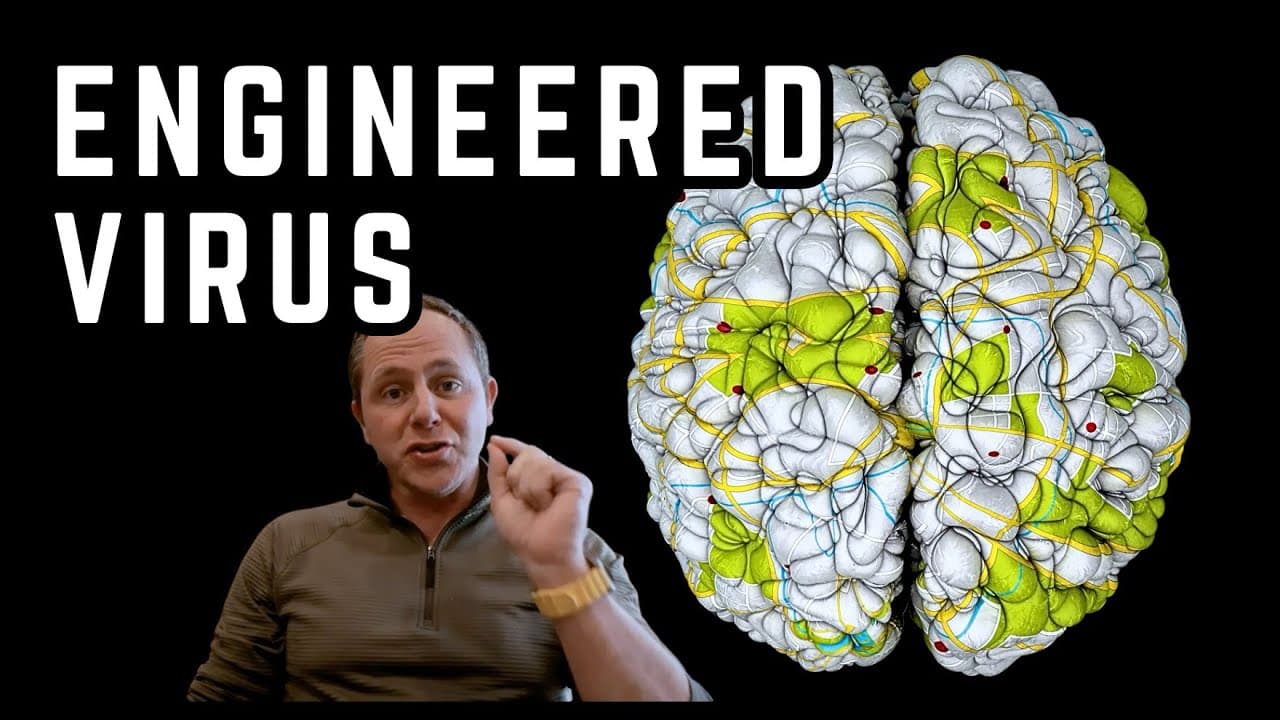
Psilocybin altered neural connectivity in mice according to which brain regions were active during the experience. Researchers used engineered rabies-virus tracing and light-sheet microscopy to map stronger sensory inputs and weaker inputs from regions associated in the transcript with memory, fear, anxiety, emotion, and rumination. Silencing one region prevented its rewiring, suggesting that context and attention help determine which circuits change.
Transcript
Something massive just happened in neuroscience that should not be possible. These researchers took the deadliest virus on the planet. Then they rewired this thing and they used it to watch psilocybin, which is magic mushrooms, physically repair the brain in real time all the way down to the exact neurons that are involved. What they discovered in ... Read More
Key Insights
- The experiment mapped psilocybin-related connectivity changes in mice by using an engineered rabies virus as a fluorescent retrograde tracer. The virus traveled backward across one synapse, allowing researchers to identify neurons that sent direct inputs into specifically prepared frontal-cortex cells.
- The modified rabies virus was engineered by deleting the gene associated with lethal replication and adding a green fluorescent marker. This transformed the pathogen into a neural-circuit tracing tool that highlighted connected cells without allowing the unrestricted spread described for natural rabies.
- The experimental schedule separated neural preparation, psilocybin exposure, tracing, and analysis. Researchers introduced a helper virus on day one, administered psilocybin or saline on day 14, injected the fluorescent rabies tracer on day 16, and harvested the brains on day 21.
- The brain maps contained more than 500,000 traced inputs per brain distributed across 316 regions. Light-sheet microscopy produced images of extremely thin brain sections, enabling the researchers to count fluorescent neurons and assign each labeled input to a precise anatomical location.
- The strengthened connections came from sensory and spatial-processing regions, including the primary somatosensory cortex, primary visual cortex, motor cortex, and retrosplenial cortex. The transcript reports increases of up to 10 percent and links this pattern to intensified perception of the external world.
- The weakened connections came from regions associated in the transcript with fear, anxiety, memory, emotion, expectations, and rumination. These included the infralimbic area, insula, hippocampus, amygdala, and orbitofrontal cortex, with reductions reported as reaching 15 percent.
- The rewiring depended on regional activity during psilocybin exposure. When researchers chemically silenced one selected brain region, that region did not undergo the observed connectivity changes, while other active regions did, indicating that the process was context-dependent and experience-dependent rather than random.
- The activity-dependent result gives therapeutic context and guided attention a potentially important role during periods of psilocybin-related plasticity. The transcript also identifies a risk: whoever shapes attention during such a period might influence which patterns are strengthened or weakened, creating opportunities for healing or manipulation.
Install to Summarize YouTube Videos and Get Transcripts
Explore YouTube Video Summarizer or Get YouTube Transcript Extractor
Questions & Answers
Q: How did researchers map psilocybin-related brain rewiring?
Researchers first injected a helper virus into a specific area of the mice's frontal cortex to prepare selected neurons. After administering either psilocybin or saline, they injected an engineered rabies virus containing a green fluorescent marker into the same region. The tracer traveled backward across one synapse, labeling direct input neurons. Light-sheet microscopy then captured thin brain sections so every labeled cell could be counted and anatomically mapped.
Q: Why was a modified rabies virus used as a neural tracer?
Rabies naturally moves backward through the nervous system, from a neuron into neurons that send signals to it. Researchers adapted that property for circuit mapping. They deleted the gene that enables lethal replication, limited the engineered virus to crossing one neuron, and added a green fluorescent marker. The resulting tracer acted as a biological highlighter for identifying direct inputs to the prepared frontal-cortex neurons.
Q: What was the timeline of the psilocybin mouse experiment?
On day one, researchers injected a helper virus into the mice's frontal cortex to prepare specific neurons, then allowed it to incubate for about 13 days. On day 14, one group received psilocybin and another received saline. The modified fluorescent rabies virus was injected on day 16. By day 21, it had traced connections backward across one synapse, after which the brains were harvested and analyzed.
Q: Which brain connections became stronger after psilocybin exposure?
The transcript reports connectivity increases of up to 10 percent from regions involved in sensory processing, movement, and spatial memory. These included the primary somatosensory cortex, primary visual cortex, motor cortex, and retrosplenial cortex. The presented interpretation is that stronger sensory inputs may help explain why the external world can feel more vivid during psilocybin experiences, although the mapped experiment itself was conducted in mice.
Q: Which brain connections became weaker after psilocybin exposure?
The transcript describes decreases reaching 15 percent in inputs from the infralimbic area, insula, hippocampus, amygdala, and orbitofrontal cortex. It associates these regions with functions such as fear responses, anxiety, threat detection, memory, emotion, expectations, and rumination. The proposed interpretation is that reduced input from these systems may temporarily loosen established internal narratives and repetitive self-referential patterns.
Q: Why does brain activity during psilocybin exposure matter?
Brain activity mattered because the connectivity changes were not distributed randomly. Researchers chemically silenced one selected brain region during the psilocybin session, and that region did not undergo the observed rewiring. Other regions that remained active did change. This result indicates that psilocybin-related plasticity was context-dependent and experience-dependent, with active circuits more likely to participate in lasting connectivity changes than inactive circuits.
Q: How could context influence the effects of a psilocybin experience?
The experiment suggests that regions active during psilocybin exposure are the ones positioned to undergo connectivity changes, while an experimentally silenced region does not change. On that basis, the transcript argues that attention, sensory input, and guided mental content could influence which pathways become stronger or weaker. This makes the surrounding experience potentially relevant to therapeutic outcomes and also creates a risk of deliberate psychological manipulation.
Q: What are the potential benefits and risks of activity-dependent rewiring?
The potential benefit is more targeted intervention. If clinicians can determine which circuits are active during a period of increased plasticity, they may eventually guide experiences toward reducing patterns associated with anxiety, trauma, depression, or rumination while reinforcing more helpful ones. The risk is that another person could control attention or context to shape identity-related patterns without appropriate safeguards, turning the same mechanism toward manipulation.
Summary & Key Takeaways
-
Researchers injected a helper virus into the frontal cortex of mice, administered either psilocybin or saline, and later introduced a modified rabies virus carrying a green fluorescent marker. Because the engineered tracer crossed only one synapse backward, it revealed neurons sending direct inputs to the targeted cells without undergoing lethal replication.
-
After harvesting the brains, the researchers used light-sheet microscopy to photograph extremely thin sections and count fluorescent neurons. More than 500,000 inputs per brain were assigned to exact locations across 316 regions. The resulting maps showed that psilocybin-related connectivity changes followed a highly specific pattern rather than appearing randomly distributed.
-
Inputs from sensory and spatial-processing regions strengthened, while inputs from regions associated in the transcript with fear, anxiety, memory, emotion, expectations, and rumination weakened. When researchers chemically silenced one region during psilocybin exposure, that region was not rewired, although active regions were, demonstrating that neural activity shaped the observed changes.
Read in Other Languages (beta)
Share This Summary 📚
Summarize YouTube Videos and Get Video Transcripts with 1-Click
Try YouTube Summary with ChatGPT & Claude or YouTube Transcript Generator
Explore More Summaries from Chase Hughes 📚





Summarize YouTube Videos and Get Video Transcripts with 1-Click
Try YouTube Summary with ChatGPT & Claude or YouTube Transcript Generator