How to Build Authority Through Five Core Traits
TL;DR
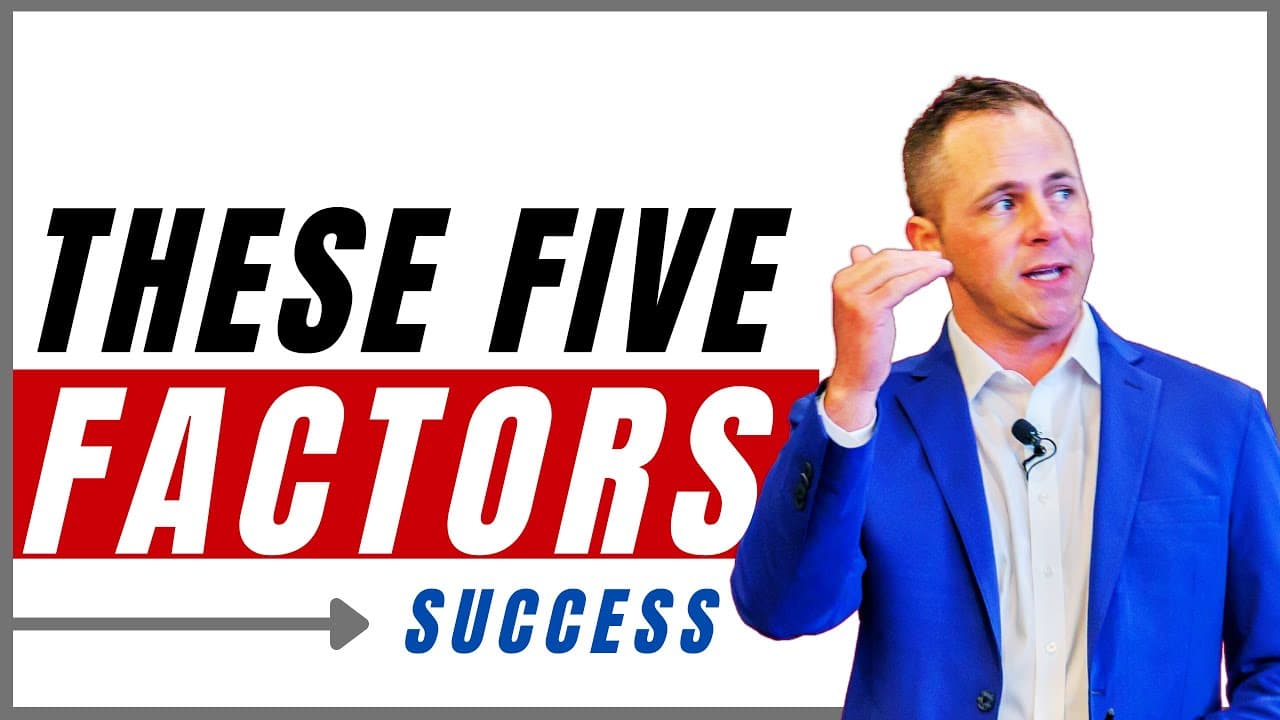
Authority grows through five behavioral traits: confidence, discipline, leadership, gratitude, and enjoyment. Confidence comes from feeling safe and challenging limiting beliefs, while discipline means serving your future self. Consistent role-model behavior creates followership, gratitude supports feelings of security, and genuine enjoyment makes a person more magnetic to others.
Transcript
the most expensive store where you can buy luggage and I think is probably our maze is that right ladies so let's let's assume the most expensive I think Hermes the most the cheapest purse that they have is like fifteen sixteen thousand so let's assume that's out of your budget to spend in a single day on a purse that you probably don't even need a... Read More
Key Insights
- Confidence is primarily framed as safety, meaning the belief that speaking, acting boldly, or entering an intimidating environment will not produce physical or social catastrophe. Building confidence therefore requires identifying limiting beliefs, including unconscious rules about silence, submission, judgment, and making oneself uncomfortable for others.
- Internal evidence is capable of changing behavior even when nobody else can see it. In the luxury-store example, carrying a company Platinum Card changes posture, price reactions, and communication despite identical clothing, appearance, employees, and surroundings, demonstrating how perceived capability influences confidence.
- Discipline is the ability to prioritize the future self's needs over present impulses. The principle applies to spending, eating, hygiene, health, and social engagement because disciplined choices treat the future person as someone whose comfort and welfare deserve attention now.
- Small acts of preparation are a practical starting point for discipline. Setting up coffee, laying out clothes, leaving notes, or saving a future gift creates tiny successes that reinforce self-care and gradually broaden concern from tomorrow toward later needs and consequences.
- Leadership is the ability to generate followership through behavior alone. A title, uniform, or prepared script does not establish genuine leadership if a person's conduct fails to model the standards they want customers, clients, patients, colleagues, or other people to follow.
- Consistency is essential because people can sense when someone's private conduct conflicts with their public message. The transcript argues that language is less influential than nonverbal and emotional signals, so off-camera behavior can either strengthen trust or create a vague feeling that something is wrong.
- Gratitude is presented as a practice that changes neurotransmitter levels and supports safety. The speaker says it can lower norepinephrine and adrenaline while raising GABA, a neurotransmitter associated in the talk with feeling safe, secure, and confident.
- Enjoyment is described as the most magnetic human quality in the speaker's experience. Genuine enjoyment can be sensed without a survey or extended conversation, making it an important contributor to authority alongside confidence, discipline, leadership, and gratitude.
Install to Summarize YouTube Videos and Get Transcripts
Explore YouTube Video Summarizer or Get YouTube Transcript Extractor
Questions & Answers
Q: What are the five behavioral traits of authority?
The five behavioral traits of authority are confidence, discipline, leadership, gratitude, and enjoyment. Confidence centers on feeling safe, discipline prioritizes the future self, and leadership generates followership through behavior. Gratitude is presented as supporting safety through neurotransmitter changes, while enjoyment is described as a magnetic quality that other people can sense without needing a verbal explanation.
Q: How can someone build confidence without external proof?
Confidence can be built by recognizing that external evidence is not always necessary. The luxury-store example shows that an unseen payment card can transform posture and behavior even though no employee can see it. A person can manufacture internal evidence by questioning feared judgment, recognizing physical safety, and identifying limiting beliefs about speaking up, social roles, submission, or keeping others comfortable.
Q: What is discipline according to the authority framework?
Discipline is defined as the ability to prioritize the needs of the future self over present desires. It appears in decisions about money, food, health, hygiene, and social behavior. The recommended starting point is small acts of care, such as preparing coffee or clothes in advance, because repeated successes help extend concern beyond immediate comfort toward later needs and consequences.
Q: Why should discipline begin with small actions?
Discipline should begin with small actions because each tiny success reinforces concern for the future self. The transcript connects these successes with dopamine and serotonin, arguing that the time horizon of personal concern can gradually expand beyond tomorrow. As that concern reaches further ahead, choices involving hygiene, financial hygiene, health, eating, and relationships begin to reflect longer-term consequences.
Q: What makes someone a genuine leader without a title?
A genuine leader generates followership through behavior alone, without depending on a title, uniform, or secret script. The central test is whether the person lives as a role model for those they want to influence, including when customers, clients, patients, or colleagues are not watching. Consistent private and public conduct communicates credibility more effectively than instructions that the leader does not follow.
Q: Why does private behavior affect authority and trust?
Private behavior affects authority because people continually communicate through nonverbal and emotional signals, not only through words. The transcript argues that language is comparatively less effective than older systems associated with emotion and nonverbal communication. When someone's conduct away from an audience conflicts with their message, others may sense inconsistency and conclude that something about the person does not feel trustworthy.
Q: How does gratitude contribute to confidence and authority?
Gratitude contributes to authority by supporting feelings of safety, security, and confidence. The speaker states that gratitude can lower norepinephrine and adrenaline and raise GABA, which is described as a critical neurotransmitter for feeling safe and secure. Because safety is treated as the foundation of confidence, gratitude becomes more than appreciation within this framework, it becomes a behavioral support for confident presence.
Q: How can the five authority traits diagnose a failure?
The five traits can be used as an autopsy tool after a disappointing result. A person can examine a lost sale, rejected date, unsuccessful job attempt, failed negotiation, or other poor outcome and ask whether confidence, discipline, leadership, gratitude, or enjoyment was weakest. The framework does not guarantee a specific outcome, but it provides five behavioral categories for structured self-evaluation and improvement.
Summary & Key Takeaways
-
Confidence is presented as a sense of safety rather than visible proof of status. The luxury-store example shows how an unseen company Platinum Card could change posture, interpretation, and behavior without changing clothing or appearance. The lesson is that internal evidence can be manufactured by challenging fears and limiting beliefs carried from earlier experiences.
-
Discipline is defined as prioritizing the needs of your future self over immediate desires. Small acts, such as preparing coffee, laying out clothes, leaving notes, or hiding a gift for later, build a pattern of self-care. Repeated successes gradually extend concern beyond tomorrow into hygiene, health, spending, food, and social behavior.
-
Leadership, gratitude, and enjoyment complete the authority framework. Leadership creates followership through behavior alone, without relying on a title, uniform, or script. Gratitude is said to support safety and confidence through neurotransmitter changes. Enjoyment is described as highly magnetic. Together, the five traits can diagnose disappointing outcomes and identify areas for development.
Read in Other Languages (beta)
Share This Summary 📚
Summarize YouTube Videos and Get Video Transcripts with 1-Click
Try YouTube Summary with ChatGPT & Claude or YouTube Transcript Generator
Explore More Summaries from Chase Hughes 📚





Summarize YouTube Videos and Get Video Transcripts with 1-Click
Try YouTube Summary with ChatGPT & Claude or YouTube Transcript Generator