How to hire for growth and measure what matters
TL;DR
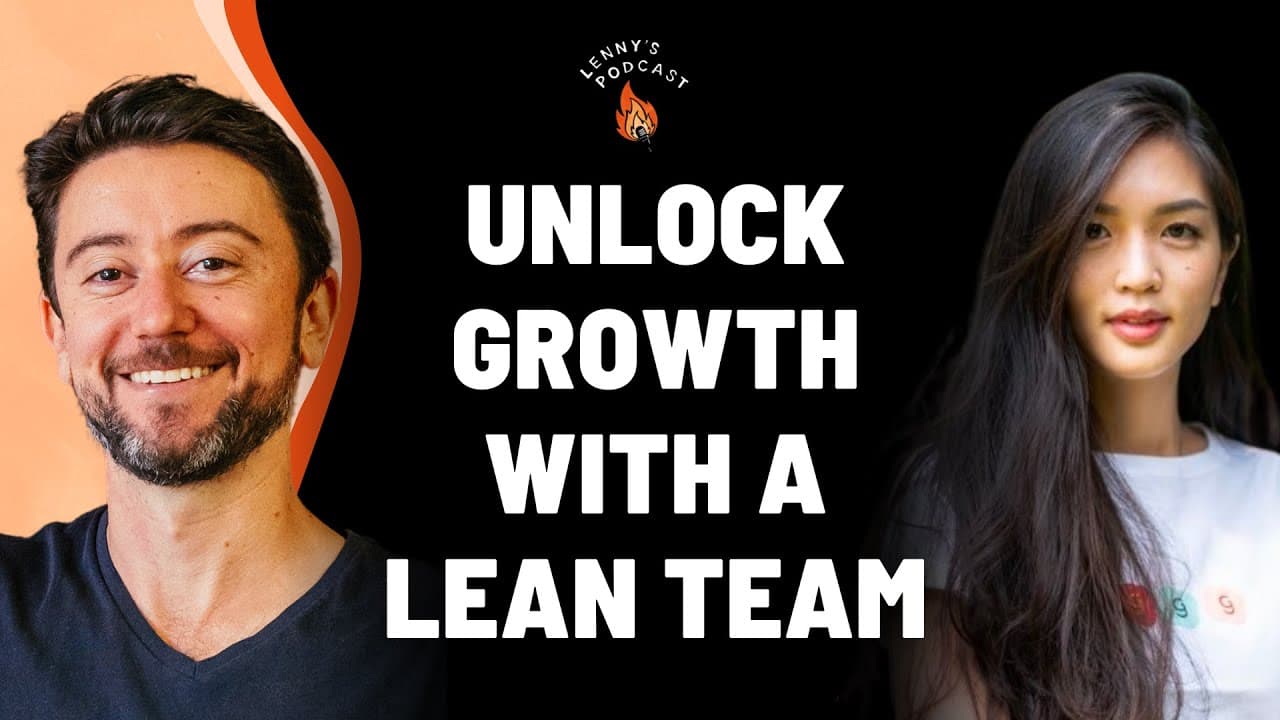
Growth teams can be built with scrappy strategies, focusing on clear value propositions, fast experimentation, and robust data collection. Start with identifying high leverage metrics, hire for a versatile growth mindset, and design analytics that directly tie actions to business impact. These steps accelerate onboarding and scale across products.
Transcript
i felt like it was a problem that was very solvable and we ended up renting a stadium to just hire like 60 000 drivers in a couple of weeks so i think looking back it was certainly a risk like when i got there it was in a house and i realized i've probably made a huge mistake but we were growing very quickly already even at that small scale of like... Read More
Key Insights
- X is the value of scrappy hiring where you prioritize potential and context over pedigree, enabling rapid team formation even at early stages.
- The key to growth is owning a clean analytics stack and routing experiments to measurable outcomes, so teams can learn what actually moves the needle.
- Growth unlocks come from identifying high leverage metrics and aligning incentives with those metrics, not chasing vanity dashboards.
- The approach to onboarding and data quality acts as a catalyst for faster activation and long term retention, especially in complex markets.
- A founder or leader should combine cross functional skills with a willingness to take calculated risk and iterate quickly to find sustainable growth paths.
- Building a growth team requires structural clarity and the right balance of specialists and generalists who can move fast.
- Non profit initiatives like Generation Girl show how leadership skills and STEM access can influence long term tech ecosystems beyond a single company.
- Stories from GoJek and Kumu demonstrate how scale in Southeast Asia is achievable with stubborn focus on user value and efficient data use.
- More videos from this channel:
- More from this channel: Lenny's Podcast
Install to Summarize YouTube Videos and Get Transcripts
Explore YouTube Video Summarizer or Get YouTube Transcript Extractor
Questions & Answers
Q: A real search query question about the video (e.g. 'How to...', 'What is...', 'Why does...', 'When should...'). Question 1
How can a company hire for growth with a scrappy approach and still build a scalable team? Crystal explains that starting with a small, versatile growth team focused on core value drivers is effective. Prioritize candidates who can blend product sense with data literacy, and structure incentives around measurable results. Early wins justify expansion.
Q: Question 2
What role do analytics and experimentation play in growth according to Crystal? Analytics provide the backbone for decision making, while experimentation tests the impact of changes in a controlled way. A robust stack supports self service so teams can run quick experiments, learn from outcomes, and iterate without waiting for centralized approvals.
Q: Question 3
Why does Crystal emphasize high leverage metrics over vanity metrics in growth programs? High leverage metrics directly correlate with business impact and scale as the product matures. Vanity metrics can mislead teams, causing scope creep and misallocated resources. Focusing on meaningful metrics accelerates learning and improves retention and revenue.
Q: Question 4
How did GoJek and Kumu illustrate scalable growth in Asia, and what can founders learn from that? The examples show growth at scale through data driven decisions, multi service platforms, and rapid experimentation. Founders should leverage local market dynamics, maintain speed, and align product evolution with user needs rather than imitating existing models.
Q: Question 5
What practical steps does Crystal suggest for onboarding and data quality to unlock growth? Start with a reliable CSV or data import experience, reduce friction in sign up, and ensure data integrity for analytics. A flawless onboarding experience reduces churn, increases activation, and improves long term retention by getting users to their aha moment faster.
Q: Question 6
How important is hiring for a growth lens in a startup’s early stages, and what should leaders look for? Leaders should hire people who can operate across product, data, and marketing. Look for curiosity, comfort with ambiguity, and a bias for action. Early hires should demonstrate end to end impact from experiments to revenue signals.
Q: Question 7
What does Crystal say about the relationship between risk tolerance and growth, especially in fast moving markets? She notes that taking calculated risks is essential to capture rapid growth opportunities. Teams should frame experiments with clear hypotheses, set guardrails, and iterate quickly to validate or pivot based on outcomes.
Q: Question 8
How can non profits like Generation Girl influence tech ecosystems and growth best practices? By widening access to STEM, leaders cultivate diverse pipelines and perspectives. This broader impact strengthens future product teams and drives long term growth through more capable, inclusive leadership across the tech landscape.
Summary & Key Takeaways
-
Crystal describes a scrappy path to building growth at scale, emphasizing fast hiring, strong data foundations, and prioritizing metrics that drive revenue. She shares practical tactics to unlock growth without large teams, including owning analytics and aligning incentives with measurable outcomes. The conversation also covers hiring structures and non profit work to broaden access to STEM.
-
A focus on analytics stack choices and experimentation platforms underlines how to avoid vanity metrics. The guidance highlights planning experiments, avoiding misaligned dashboards, and ensuring teams can self-serve data to inform decisions. The result is faster learnings and more reliable growth signals across multiple product lines.
-
The interview illustrates career pivots from banking to tech in Southeast Asia, showing how market context and user needs shaped growth strategies at GoJek and Kumu. It also touches on the importance of founder and team fit, risk tolerance, and building a path to scale through data-driven product leadership.
Read in Other Languages (beta)
Share This Summary 📚
Summarize YouTube Videos and Get Video Transcripts with 1-Click
Try YouTube Summary with ChatGPT & Claude or YouTube Transcript Generator
Explore More Summaries from Lenny's Podcast 📚





Summarize YouTube Videos and Get Video Transcripts with 1-Click
Try YouTube Summary with ChatGPT & Claude or YouTube Transcript Generator