How to scale Meta ads with 10 proven creative iterations
TL;DR
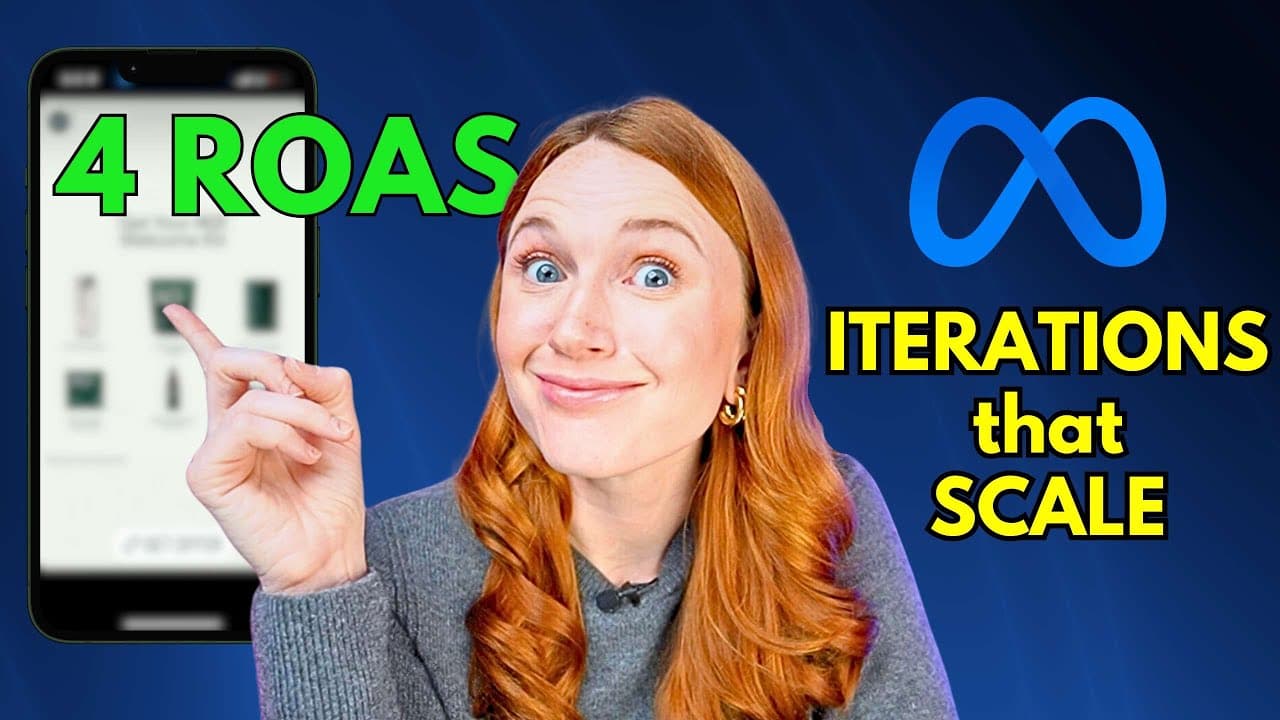
The main takeaway is to split testing between new creatives and iterations, dedicating about 90 percent of tests to net new creatives and 10 percent to iterations. A winning ad can be further boosted through messaging, visuals, format changes, creator variety, green screen overlays, and journey or desire based variations. This approach has driven large ad spend success including a $2 million test with a three ROAS result.
Transcript
a huge thanks to story blocks for sponsoring this video what iteration should you make on winning creatives should you even bother iterating on losing creatives this is the exact iteration I made recently that spent $2 million and had a three row o what's up marketers I have a hot take that tends to surprise people when looking at your creative tes... Read More
Key Insights
- 90 percent of tests should be new creatives while only 10 percent are iterations, to avoid creative fatigue and maintain fresh messaging.
- Messaging iterations are the easiest and often most effective, where you swap messaging while keeping the creative structure intact.
- Visual iterations emphasize testing different hooks and formats such as green screen, split screen, and grid styles to refresh impact.
- Format iterations involve applying successful messaging to new formats to broaden reach and engagement.
- Creator iterations test using different creators to reproduce winning scripts or briefs across diverse audiences.
- Green screen over a winning asset can turn a known winner into video content or a react style ad without starting from scratch.
- Understanding the user journey in messaging lets you push the creative further up the funnel with educational or humorous angles.
- Exploring human desires in ads, such as family or power, can yield new angles that resonate deeper with viewers.
Install to Summarize YouTube Videos and Get Transcripts
Explore YouTube Video Summarizer or Get YouTube Transcript Extractor
Questions & Answers
Q: How should you allocate testing between new creatives and iterations?
You should allocate about 90 percent of your tests to net new creatives and only 10 percent to iterations. This helps avoid iteration fatigue and keeps the overall ad set looking fresh. It also ensures you are continually discovering new winning concepts rather than optimizing a single idea too far. This balance is emphasized as a core takeaway for scalable Meta ads testing.
Q: What is the value of messaging iterations and how are they done?
Messaging iterations are valuable because they update the most important part of the creative while keeping the same overall structure. The process involves looking at top performing creatives, extracting messaging points such as testimonials or superlatives, and altering them to fit the current ad while maintaining the core concept. This technique was used to achieve a $2 million spend with a three ROAS on a winning creative.
Q: What role do visuals play in iteration and what formats work well?
Visual iterations focus on how the visuals support the message, including the hook and presentation style. Tests include green screen, split screen, and grid formats. These variations can refresh the impact of a winning asset and adapt it to evolving viewer preferences, especially as we move into 2025. The goal is to keep the messaging constant while changing the look and feel.
Q: How can format iterations extend the life of a winning message?
If a piece of messaging is proven to work, applying it across different formats can extend its performance. This means converting a successful video message into various image assets and other formats to test how the same core idea performs when presented differently. This approach helps avoid relying on a single format and adds resilience to the asset lineup.
Q: What is a creator iteration and how is it used effectively?
A creator iteration tests a winning script or brief with new creators to broaden audience reach. The idea is to keep creative briefs consistent while varying the creator and demographic to reveal new performance drivers. Diversity in creators and allowing different personal styles often yields better scaling potential than sticking with one familiar talent.
Q: How can green screen overlays aid in testing winning ads?
Green screen overlays let you react to a winning asset by placing it into a new context or reacting to it, which can convert a known winner into engaging video format. This technique works across images and videos and helps create fresh, dynamic formats without needing to shoot entirely new material.
Q: How should you think about the user journey when making iterations?
Think of iterations as targeting different stages of the user journey. By making messaging more educational, humorous, or curiosity-driven, you can push the creative further up funnel and extend performance longevity. This approach often results in longer-lasting engagement and a deeper connection with the audience.
Q: Which human desires are effective in ad testing and why?
Focusing on human desires such as family, beauty, romance, power, and other strong motivators can yield more compelling ads. Incorporating a family angle or other relatable desire into top performing creatives often boosts emotional resonance and engagement, contributing to longer ad lifespans and potentially better ROAS.
Summary & Key Takeaways
-
A practical framework is presented for creative testing on Meta ads, prioritizing new creatives while still testing a core set of iterations to squeeze additional performance.
-
The video walks through 10 specific iterations, from messaging changes to format shifts and creator swaps, with real world results and tips for testing.
-
The creator emphasizes avoiding iteration paralysis by maintaining diversity in visuals and formats to prevent fatigue and scale beyond the initial winning concept.
Read in Other Languages (beta)
Share This Summary 📚
Summarize YouTube Videos and Get Video Transcripts with 1-Click
Try YouTube Summary with ChatGPT & Claude or YouTube Transcript Generator
Explore More Summaries from Dara Denney 📚
Summarize YouTube Videos and Get Video Transcripts with 1-Click
Try YouTube Summary with ChatGPT & Claude or YouTube Transcript Generator