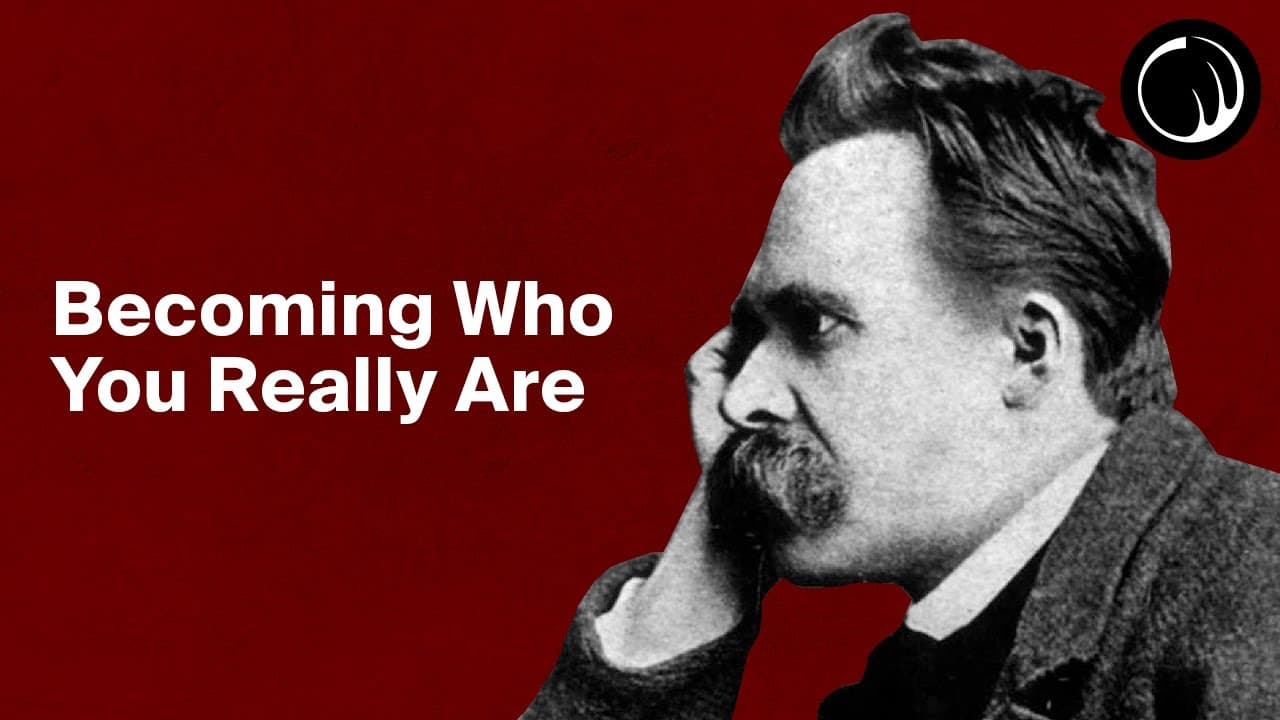
How Can You Become Who You Really Are? The Philosophy of Friedrich Nietzsche
TL;DR
Nietzsche finds meaning without faith by creating personal values, pursuing self-mastery, and turning unavoidable suffering into purposeful growth. After Christian belief lost its authority, he warned that nihilism could fill the resulting void. His alternative is self-overcoming: continually moving toward an idealized, life-affirming self through creativity and disciplined transformation. Read on to see how the overman and will to power support this path.
Transcript
Positioned at the forefront of perhaps the most significant shift in Western history, having both predicted the cause and consequence, and going on to provide grandiose, revolutionary ideas as possible solutions, Friedrich Nietzsche is one of the most influential and significant thinkers of modern history. The particular crossroads that Nietzsch... Read More
Key Insights
- Nietzsche’s central problem is the crisis created when Western religious faith declines and leaves its inherited morality without a secure foundation. He feared that humanity, lacking a sufficient replacement for faith, would fall into widespread pessimism, meaninglessness, and nihilism.
- The declaration that God is dead is a warning rather than a celebration. Nietzsche believed humanity had undermined Christian belief, but had not yet accepted the scale of the resulting responsibility to create new values, purposes, and justifications for living.
- Nietzsche rejects universal, objective truth in favor of interpretation. The search for meaning outside earthly life can weaken engagement with present experience, while subjective interpretation allows individuals to discover and create significance through their own perspectives, choices, and expressions.
- Creative expression is a means of communicating deeper truths and restoring meaning. Nietzsche valued music, philosophy, literature, theater, and related arts, but recognized that cultural institutions could become academic, commodified, and unreliable, making individual creativity especially important.
- The overman is an idealized version of the self who has overcome fear and deficiency. Its value lies less in literal attainment than in providing a demanding personal standard that continually directs an individual toward independence, confidence, growth, and life-affirming goals.
- The will to power is expressed through the desire for personal growth and self-mastery. In this account, power does not necessarily mean physical strength or domination over others. It can mean psychological and spiritual strength developed through disciplined transformation of oneself.
- Self-overcoming is a continuous cycle of dissatisfaction, improvement, and rediscovery. By pursuing a personally chosen, life-affirming ideal, an individual can transform suffering into purposeful effort and generate meaning without depending on a collective belief system or objective moral order.
- Suffering becomes destructive when it appears meaningless, not merely because it is painful. Nietzsche opposed Schopenhauer’s preference for minimizing suffering and instead treated hardship as material that can be embraced and directed toward strength, growth, and a personally chosen reason for living.
Install to Summarize YouTube Videos and Get Transcripts
Explore YouTube Video Summarizer or Get YouTube Transcript Extractor
Questions & Answers
Q: How does Nietzsche propose finding meaning without religion?
Nietzsche proposes creating personal values grounded in subjective, earthly experience rather than relying on universal certainty. Creative expression, self-mastery, and continuous growth toward a life-affirming ideal give suffering a chosen purpose. He calls this recurring process of transformation self-overcoming.
Q: What did Nietzsche mean when he said “God is dead”?
Nietzsche was describing the collapse of Christian faith and the European morality, rationales, and values built upon it. The declaration was a warning rather than a celebration. He feared that humanity had removed its traditional source of meaning without creating a sufficient replacement.
Q: Why did Nietzsche consider nihilism a major danger?
Nietzsche believed declining Christian faith could leave people without a clear system of values or purpose. If they abandoned inherited certainty without accepting responsibility for creating new values, pessimism and despair could follow. Nihilism was the dangerous empty path he sought to overcome.
Q: What is Nietzsche’s concept of the overman?
The overman represents an idealized, confident, and independent version of the self that has overcome fears and deficiencies. It is not an endpoint that must be completely reached. Instead, it provides a demanding standard that continually directs a person toward growth and life-affirming goals.
Q: What does the will to power mean in Nietzsche’s philosophy?
The will to power is expressed as the drive toward growth, self-mastery, and greater psychological strength. It does not necessarily mean physical strength or domination over others. It directs a person’s energy toward disciplined improvement and transformation.
Q: How does self-overcoming create meaning in life?
Self-overcoming organizes life around repeated dissatisfaction, improvement, and rediscovery. By continually striving toward a personally chosen ideal, a person gives direction to effort and hardship. Suffering then becomes material for development rather than merely senseless pain.
Q: Why did Nietzsche believe suffering could be embraced?
Nietzsche regarded suffering as unavoidable and believed it becomes especially destructive when it appears meaningless. Unlike Schopenhauer’s preference for minimizing suffering, Nietzsche treated hardship as fuel for psychological strength. A chosen reason for living can make suffering purposeful within the process of self-overcoming.
Q: How did Nietzsche’s life influence his philosophy?
Nietzsche’s father suffered from a terminal brain disease and died at age 35, and Nietzsche’s younger brother died the following year. Nietzsche later abandoned Christian faith, left academia amid dissatisfaction and poor health, and lived a largely isolated life while traveling in Europe. During illness, failed love, damaged relationships, and depressive and nihilistic states, walking, thinking, writing, and pursuing philosophy gave him solace and meaning.
Summary & Key Takeaways
-
Nietzsche’s philosophy responds to the weakening of Western Christian faith and the moral framework built upon it. He feared that losing this foundation without replacing it would produce nihilism and despair. His alternative placed responsibility for meaning on individuals, who must create values rooted in their subjective, earthly experience rather than universal certainty.
-
The overman represents an idealized, powerful version of the self that has overcome its fears and deficiencies. Although this ideal cannot be fully reached, striving toward it sustains continuous development. Nietzsche called this process self-overcoming, a recurring cycle of dissatisfaction, improvement, and rediscovery that gives direction and value to personal suffering.
-
Nietzsche interpreted the will to power primarily as the drive toward growth, self-mastery, and psychological strength, rather than simply physical dominance over others. He argued that suffering is unavoidable and can become meaningful when directed toward a chosen purpose. A personal reason for living can therefore make difficult conditions bearable and redeeming.
Read in Other Languages (beta)
Share This Summary 📚
Summarize YouTube Videos and Get Video Transcripts with 1-Click
Try YouTube Summary with ChatGPT & Claude or YouTube Transcript Generator
Explore More Summaries from Pursuit of Wonder 📚
Summarize YouTube Videos and Get Video Transcripts with 1-Click
Try YouTube Summary with ChatGPT & Claude or YouTube Transcript Generator